

Debt is almost never the real problem. Pricing, margin, staffing, product mix, draws-versus-distributions discipline, and the relationship the owner has with his own numbers — that is where the bleeding usually starts. Business consulting at Hamilton & Merchant is the operating-side companion to our debt and contract work, and for most clients the consulting conversation produces more lasting cash than any single negotiation does. Negotiation produces relief. Consulting produces the operating change that lets the relief hold.
We are not management consultants in the McKinsey sense. We do not run engagements measured in millions of dollars or hundreds of slides. The consulting we do is the conversation a senior advisor would have with a smart owner over a series of long mornings — about pricing, about staffing, about which lines of the P&L are quietly bleeding, about the cultural and operating habits that produced the current cash gap, and about what specifically has to change for the gap not to reopen in eighteen months.
The cases that come back, and the cases that don't
Across our 2024–2026 caseload, clients who engaged on the debt only had a measurably higher rate of returning for a second engagement within eighteen months. Clients who engaged on debt and operating together resolved cleanly and stayed resolved. The numbers below are why we will no longer take a debt-only mandate from a client we think is going to need to call us again.
- ~40%Of debt-only engagements that returned for a second debt engagement within 18 months
- ~8%Of debt + operating engagements that returned for a second engagement in the same window
- ~3 ptsMedian operating-margin improvement in the twelve months after consulting engagement closeout
- 2–4 wkTypical pacing of consulting sessions during an active engagement
What we actually look at in a consulting engagement
Consulting at Hamilton & Merchant covers six operating dimensions, and almost every engagement touches all six because the connections between them are where most cash actually leaks. An owner who feels he has a "pricing problem" usually has a pricing problem plus a staffing problem plus a product-mix problem, and the cash gap is the sum of all three, not any one in isolation.
- Pricing. When was the last price increase? What is the spread between top-tier and standard-tier? How is pricing communicated to the customer at the point of sale? Most distressed businesses have not raised prices in three to five years, and most have a top-tier offering that is materially under-priced relative to its cost.
- Margin by product or service line. What is the fully-loaded gross margin on each of the top five revenue lines? Almost every owner can name the top line by revenue. Almost no owner can name the top line by gross profit, and the two are often different.
- Staffing model. Headcount, role mix, fixed-vs-variable cost split, productivity by role. The single most common pattern in distressed businesses is staffing that grew during a good quarter and was never pruned during the slow ones.
- Owner compensation discipline. Draws-versus-distributions habits across the trailing twelve months, the relationship between draws and operating cash flow, and the conversation about what changes if revenue returns to the prior level versus stays compressed.
- Cash visibility. Thirteen-week rolling cash forecast, owner's view of the bank account at any given hour, bookkeeper reconciliation cadence, and the discipline of opening the statement on Sunday morning instead of skipping it. The owners who survive crises usually have visibility. The owners who do not, rarely do.
- The honest one. The thing the owner has not let himself look at — the customer who is twenty-eight percent of revenue, the service line he privately knows is unprofitable, the family-member on the payroll, the bookkeeping that has not been independently reviewed in two years. We name it gently but plainly, because nothing in the engagement holds if it stays unnamed.

Consulting is mostly listening before talking
The first three sessions of a consulting engagement are almost entirely listening. We ask the questions, we take notes, we ask follow-ups. The recommendations come later, and they come anchored to specific things the owner said earlier in the conversation, not to a template. That is the difference between consulting that holds and consulting that bounces off after closeout.

The six questions we ask in the first hour
Every consulting engagement opens with the same six questions. Some owners can answer four of them. Almost no owner can answer all six on the first call. The questions are not a quiz — they are diagnostic, and the silence after a question is more informative than the answer often is.
Where the silence usually lands
Distribution of "I don't know, off the top of my head" responses on the six opening questions, across new consulting engagements in 2024–2026. The questions are not difficult. The silence is informative.
- Gross margin on top 3 lines? ~78%
- Last price increase by line? ~62%
- Payroll as % of revenue, trended? ~55%
- Owner draw as % of net? ~48%
- Smallest job last year — profitable? ~70%
- If no advances existed, does cash cover? ~82%
What an engagement actually looks like, week by week
-
Session 1 · Listening + numbers pull
Trailing twelve months of P&L, balance sheet, cash flow, AR aging, AP aging, and bank statements. Plus a long conversation. We do not recommend anything in session one.
-
Session 2 · The honest map
We come back with a one-page map of what we see: the pricing position, the margin distribution, the staffing model, the cash discipline, and the honest item. Owner reacts. Conversation is direct.
-
Session 3 · The plan
Three to five operating moves, prioritized, with owner sign-off on each one. We do not put items on the plan the owner has not agreed to in the room.
-
Sessions 4–8 · Execution support
Working sessions on the plan items. Pricing letters drafted, role conversations rehearsed, cash forecast built. We do as much of the work alongside the owner as the owner wants.
-
Closeout · The two-sentence summary
What changed, what is supposed to hold, and the trigger conditions for calling us back if something drifts. The summary is short on purpose.
We are not paid to flatter the owner. We are paid to be the one person in the room who will say plainly what nobody at the kitchen table has been willing to say. — Spencer Holt
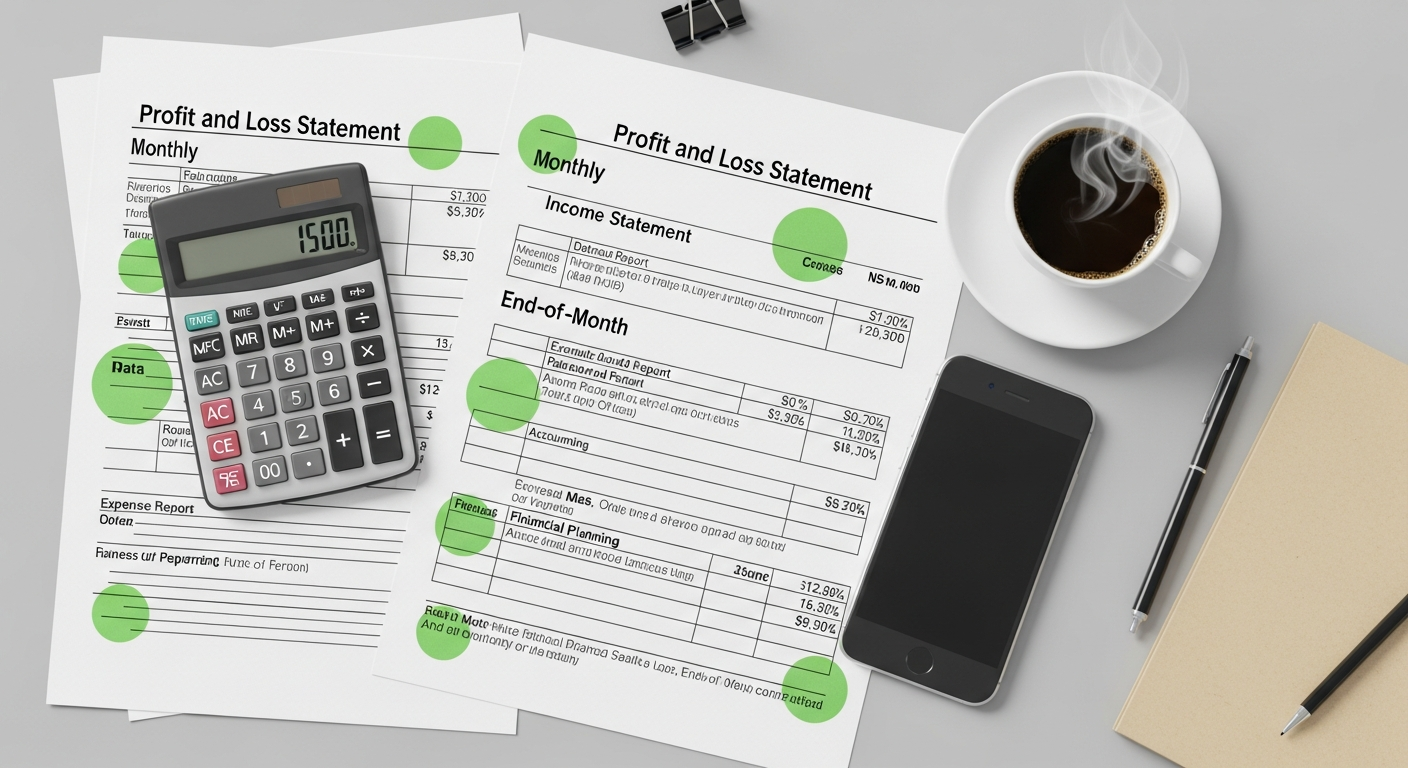
What consulting will not do for you
Consulting is not magic. We cannot raise prices for you — the owner has to send the letter. We cannot change a staffing model in your absence — the conversations have to happen face to face. We cannot read your bank statement on Sunday morning — that habit lives with the owner or it does not exist at all. What consulting can do is map the picture honestly, sequence the operating moves intelligently, and stay with you while the moves get made. The rest is the owner's work, and that is the part that determines whether the engagement holds.
We are also not a substitute for an accountant, a CFO, or a CPA. The consulting work runs alongside the accountant's work — and one of the most common engagement moves is to widen the accountant's scope so that the operating questions get someone watching them on the other 358 days a year we are not in the room.
The answers come from the operator
Consulting that produces lasting change is consulting where the operator says the answer first and the consultant confirms it. The opposite — where the consultant arrives with the answer and the operator nods — almost never produces operating change that holds past the closeout meeting. The good strategy work is done collaboratively, on a wall, in the room. The deck is for the binder afterward.
What you walk away with
- A one-page operating map of pricing, margin, staffing, draws, cash visibility, and the honest item.
- A prioritized three-to-five-move plan with owner sign-off on each item.
- A thirteen-week cash forecast you can update yourself.
- A short written summary of what changed and what has to hold, in your own words.
- A widened accountant-scope conversation so the operating picture has someone watching it after we leave.
Common questions
How long does a consulting engagement run?
Typical engagements are six to twelve working sessions over eight to sixteen weeks. We pace the sessions to whatever cadence the operating moves need — sometimes weekly during execution, sometimes monthly during steady-state.
Do you take consulting-only engagements, or only as a companion to debt work?
Either. About one-third of our consulting work is consulting-only, for owners who do not have a debt problem but do have a margin or operating problem they want help diagnosing.
Is this for businesses my size?
We work with businesses from about $750K in annual revenue up to about $30M. Above that, the engagement architecture shifts and we usually coordinate with a CRO from our partner network. Below that, the engagement is usually shorter and tighter.
What is the fee structure?
Consulting is fee-for-service, billed by session. No upfront retainer. Specific session fees are disclosed in writing before any work begins. Most engagements end up in the low five figures over the full term.
Will you talk to my accountant or my bookkeeper?
Yes, and we usually want to. Coordinating with the accountant on scope, cadence, and reporting is often the most valuable single move of a consulting engagement.
Want a real conversation about the operating picture?
Call or text (407) 993-1416, or send us a message. The first conversation is free, and we will tell you whether consulting is what your situation actually needs.