

Business debt does not behave the same way in every state, and the differences between jurisdictions are some of the most consequential and most overlooked variables in the whole field. The state in which the business is organised, the state in which the contract was signed, the state whose courts have jurisdiction over a dispute, and the state in which the owner personally resides can each be different, and each of them shapes some part of the outcome. This page lays out where Florida sits on the most consequential dimensions, with a comparative read on a handful of other states we work in often.
The disclaimer first. State law is detailed, and the case law inside each state shapes the doctrine in ways no general-purpose summary can capture. Use this page to know what questions to ask. Do not use it as a substitute for licensed counsel in your jurisdiction.
Why Florida often turns out to be the favourable answer
Florida is, on most of the dimensions that matter for distressed-business owners, one of the more protective states in the country. That is not an accident. The state has, over a long history, developed a body of statute and constitution that protects the personal residence, the spousal estate, retirement accounts, and certain financial instruments very strongly. Combined with the absence of a state personal income tax, this has made Florida a destination jurisdiction for residency-establishment as part of asset-protection planning.
The five protections most often cited:
- Constitutional homestead protection. Article X, Section 4 of the Florida Constitution protects the primary residence of a Florida resident from forced sale by most creditors, with limited exceptions for mortgages, mechanic’s liens, and certain tax liabilities. The protection has acreage limits but no value cap, which is one of the broadest protections in the country. By contrast, Texas and Oklahoma also have strong homestead protections, but most other states have meaningful value caps that make their protections less robust.
- Wage exemption for head of family. Florida Statutes § 222.11 exempts the wages of a head of family up to a defined dollar level (currently $750 per week) from garnishment. Most states track only the federal Consumer Credit Protection Act minimum, which is meaningfully thinner.
- Tenancy by the entireties. Florida common law recognises tenancy by the entireties for both real and personal property held by a married couple, protecting that property from the individual creditors of either spouse. A handful of other states recognise this form (Maryland, Virginia, Tennessee, and a few others), but many states recognise it only for real estate, and a substantial number do not recognise it at all.
- Annuity and life insurance protection. Florida Statutes § 222.13 and § 222.14 provide broad creditor exemption for the proceeds of life insurance and the cash surrender value of annuity contracts on Florida residents. These provisions are notably broader than what most other states offer.
- Retirement account protection. Florida Statutes § 222.21 exempts qualified retirement accounts from creditor process, layered on top of federal ERISA protection.
The cumulative effect of these provisions is that a Florida-resident owner whose primary assets are organised within the homestead, tenancies by the entireties, qualified retirement accounts, life insurance, and annuities is, in many situations, very meaningfully protected against personal exposure on business debt — even where personal guarantees have been signed. This is not a substitute for asset-protection planning by counsel; it is the bedrock on which that planning sits.
Confessions of judgment: where the difference is dramatic
A confession of judgment is a contractual provision — historically common in MCA funding agreements — in which the borrower agrees in advance that, on default, the lender may immediately enter judgment in a designated court without the borrower being heard. For years, New York was the dominant jurisdiction for these instruments, and a New York confession of judgment could be entered in a matter of days against a borrower who had never set foot in the state.
The landscape changed substantially. New York amended its CPLR in 2019 to limit the use of confessions of judgment to defendants who are actually New York residents, dramatically narrowing the practice. As of the current state of the law, confessions of judgment outside New York are governed by the law of each individual state, and many states either limit them severely or do not enforce them at all.
Florida is among the states that does not enforce confessions of judgment in the same way New York historically did. Florida law generally requires due process — notice and an opportunity to be heard — before judgment, and the historical practice of pre-default consent to judgment without notice has been substantially constrained.
The practical implication: an MCA agreement that contains an out-of-state confession of judgment clause needs to be examined carefully. Whether the clause is enforceable, in which state it can be enforced, and what the practical exposure is, all turn on facts that need to be reviewed by counsel. Owners who have signed such agreements and are now facing an aggressive funder posture should not assume the confession of judgment will be entered automatically; they should also not assume it will not. The answer is in the details.

Garnishment: where states diverge sharply
Wage garnishment is one of the more dramatic enforcement tools in the creditor toolkit, and the rules vary dramatically by state.
Florida. Wages of head of family up to $750 per week are exempt from garnishment under Florida Statutes § 222.11. Above that threshold, the federal Consumer Credit Protection Act floor applies. The exemption requires an affidavit to be filed; it is not automatic.
Texas, Pennsylvania, North Carolina, and South Carolina. These states are the most protective in the country; they generally do not permit wage garnishment for ordinary commercial debt at all (with limited exceptions for child support, taxes, and certain federal obligations). An owner who resides in one of these states has, on this dimension, even stronger protection than a Florida resident.
New York. Permits wage garnishment up to ten percent of gross wages or twenty-five percent of disposable earnings (whichever is less), and uses the federal CCPA structure as a floor. More aggressive than Florida.
California. Permits garnishment up to twenty-five percent of disposable earnings, applying the federal CCPA floor. More aggressive than Florida.
Account garnishment — reaching the funds in a bank account — is also state-specific, and Florida’s tenancy-by-the-entireties protection plays a significant role here for married Florida residents who hold their accounts in the entireties form.
Statutes of limitations
The window in which a creditor may sue on a debt is governed by state law, and varies meaningfully.
- Florida. Five years on a written contract, four on most oral or implied. F.S. § 95.11.
- California. Four years on a written contract, two on oral.
- New York. Six years on a written contract.
- Texas. Four years on a written contract.
- Most other states. Three to six years, with significant variation.
The age of a debt matters more than most owners realise. A debt that has aged out of the limitations window in the relevant state is no longer enforceable through litigation, though it may still appear on a credit report (the federal seven-year reporting window operates independently of the state limitations window). The key practical caution: in many states, an acknowledgement of the debt or a partial payment can restart the limitations clock. Tread carefully when communicating with collectors about old debt.
The execution and enforcement clock
Once a judgment has been entered, the speed at which it can be enforced varies by state. Florida is in the middle of the range — not as fast as some, not as slow as others — but the structure is well established.
A Florida judgment, properly recorded, becomes a lien on real property in the county of recording. The judgment itself is enforceable for twenty years; the recorded lien for ten years from recording, renewable for an additional ten. Writs of execution, garnishment, and levy each have defined procedural windows once issued.
States with faster post-judgment enforcement structures — New York and Illinois are examples — can become very uncomfortable for a judgment debtor very quickly. States with slower or more procedural structures — Texas and several southern states — create more room for negotiation post-judgment.
Choice-of-law and forum-selection clauses
Most credit agreements, MCA contracts, and commercial leases include a choice-of-law clause, a forum-selection clause, or both. The clauses are generally enforceable, with limits. They specify which state’s law governs the contract and which state’s courts will hear any dispute.
The practical effect: an owner whose business is in Florida, who signs a contract that selects New York law and a New York forum, is in a different posture than one whose contract is governed by Florida law. Choice-of-law clauses can sometimes be challenged on public-policy grounds — particularly where they would deprive a party of the protective statutes of his or her home state — but the challenge is fact-specific and not always successful.
The single most useful piece of advice we can offer on this point: read the choice-of-law and forum-selection language in every contract before you sign it, and understand which state’s rules will govern in a dispute. The variations are large enough to matter.
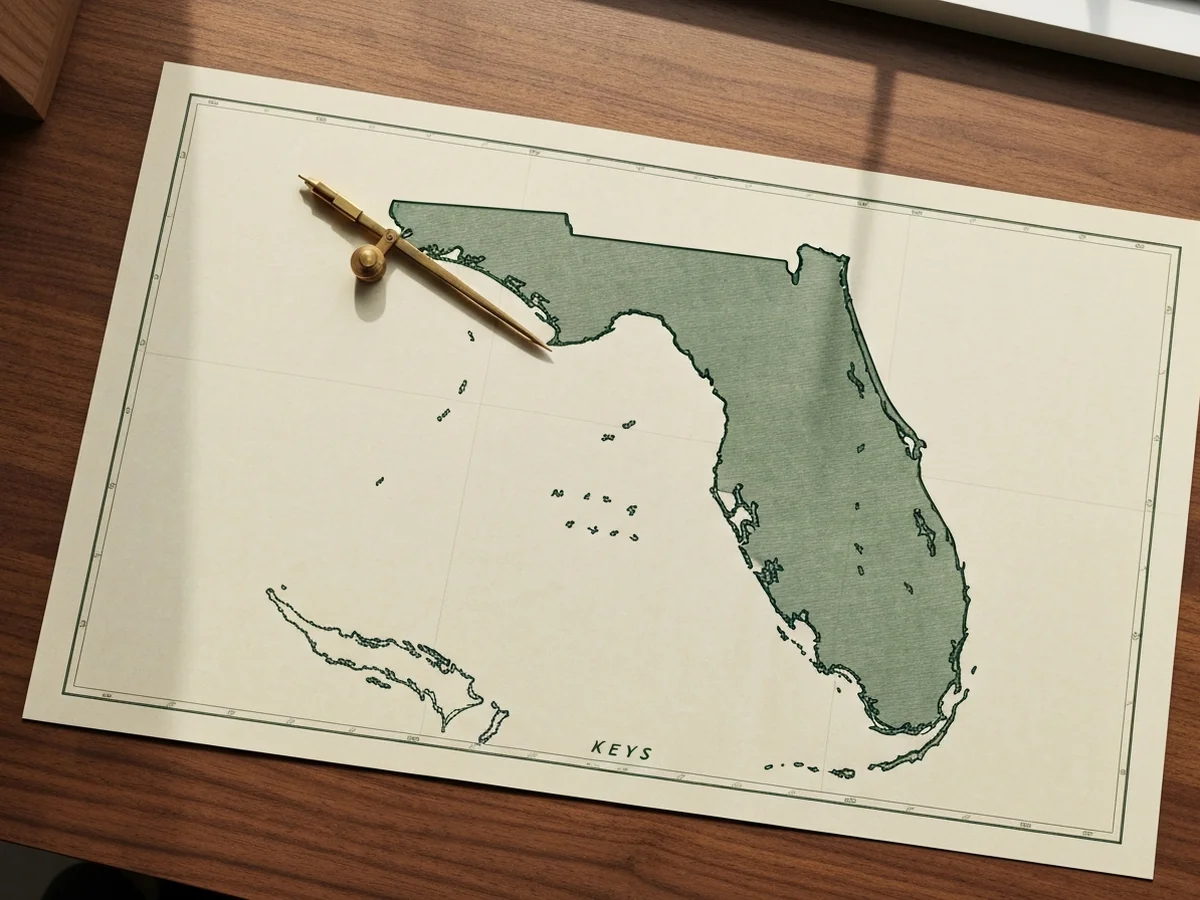
Quick comparative grid: Florida vs. four common counterparts
Plain-language summary of where Florida sits relative to four states we work in often. None of these are substitutes for counsel; they are orientation only.
- Florida vs. New York. Florida is meaningfully more debtor-protective on homestead, tenancies by the entireties, and the (now narrowed) confession of judgment landscape. New York runs a faster post-judgment enforcement track and a longer limitations window.
- Florida vs. California. Florida is more protective on homestead and on entireties property. California has its own homestead exemption (substantially raised in 2021) but is generally more permissive on enforcement.
- Florida vs. Texas. The two states are broadly similar on homestead and on debtor-protection posture. Texas does not permit wage garnishment for ordinary commercial debt; Florida does for non-head-of-family workers and above the head-of-family threshold.
- Florida vs. Delaware. Delaware is the dominant entity-formation state and has a sophisticated commercial court, but as a residency for a personal asset-protection picture it is much weaker than Florida. Many owners run businesses in Delaware-formed entities while residing personally in Florida; this is a deliberate combination.
What to do with this information
Three practical takeaways. First, when you sit with an advisor about a distressed situation, the state-law variables are part of the analysis. If the advisor has not asked which state you reside in, where the business is organised, and what jurisdictions appear in the contract, the advisor has not done the work yet. Second, if you are not yet a Florida resident and the situation is severe, residency-establishment as part of an asset-protection plan is something to discuss with counsel; it is not a quick fix and it has its own rules, but it is real. Third, the contracts you sign tomorrow are easier to live with than the contracts you signed yesterday; pay attention to the choice-of-law and forum clauses going forward, and consider negotiating them where the deal is large enough.
Want a state-law read on your situation?
Call or text (407) 993-1416, or send us a message. The first conversation is free, and we will tell you plainly which state-law variables shape your options — and where counsel needs to be involved.