
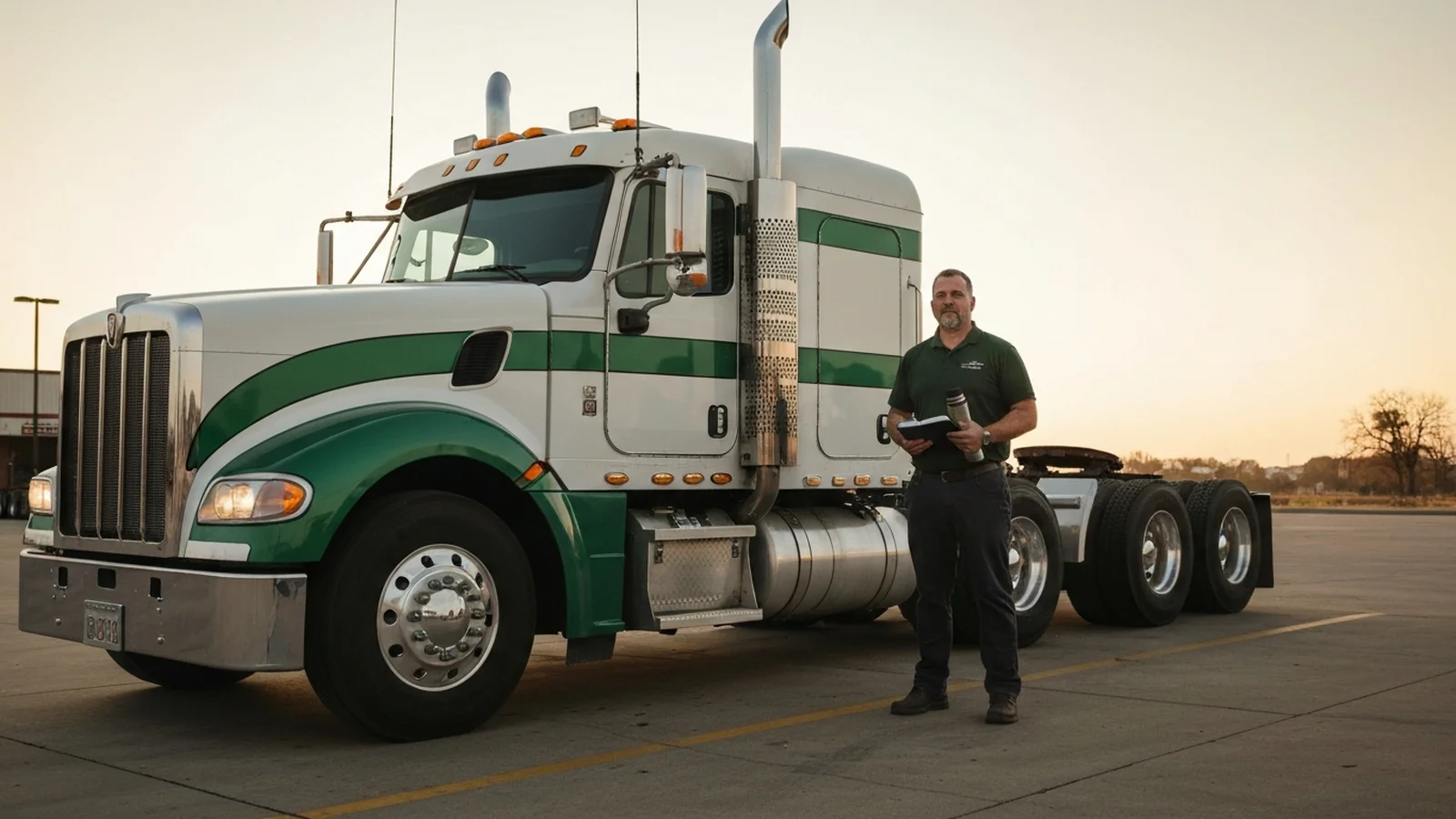
Trucking and logistics is, by some distance, the industry we see in our office most often. Owner-operators, three-truck and five-truck small fleets, regional dry-van and refrigerated carriers, last-mile delivery operators — the cash-flow profile is similar across them, and the debt patterns are some of the most predictable in any sector we touch. Trucking business debt relief, owner-operator MCA relief, fleet cash flow restructuring, and trucking company debt consolidation are all phrases owners type into a search bar at three in the morning when the math has stopped working. This page is the long version of what we tell them when the phone rings the next day.
The honest framing first: trucking is not a low-margin industry by accident. It is a low-margin industry because of structural pressures that have been building for a decade and intensified after 2022 — rate compression in spot freight, fuel volatility, equipment cost inflation, insurance premium increases, driver shortages, and the asymmetric power that brokers and shippers have over carriers on payment timing. Owners who are carrying debt did not get there because they made a bad choice in a single quarter. They got there because they ran a structurally tight business through one or two stretches that the structure could not absorb, and then reached for a financing tool to bridge the gap. The tool became the problem.
The cash-flow rhythm of an independent trucking business
Understanding why trucking debt accumulates so quickly requires understanding the cash-flow rhythm of a typical small carrier. Revenue is generated when a load is delivered. Payment, on most non-factored shipper or broker arrangements, arrives net-30 to net-45, sometimes longer. Quick-pay programs accelerate this to net-2 or net-7 at a discount of two to five percent of invoice. Factoring companies advance eighty-five to ninety-five percent of invoice within twenty-four hours, in exchange for a factor rate that, annualised, often comes out higher than owners expect.
Against that revenue, the cost structure is heavily front-loaded. Fuel is a daily cash expense, often paid by fuel card with a weekly settlement. Tolls accrue daily. Driver pay, on most W-2 arrangements, runs weekly or biweekly. Equipment loan payments — tractor and trailer — are monthly, with a fixed amortisation schedule that does not flex with revenue. Insurance premiums on commercial auto and cargo run six to ten percent of revenue for many small operators, paid monthly or financed. Maintenance is unpredictable but, in aggregate, runs ten to fifteen cents per mile across a typical fleet age. Permits, ELDs, IFTA, IRP, drug testing programs — the regulatory cost layer adds another point or two of revenue in administrative cost.
The structural mismatch is the cash-flow gap between fuel, payroll, and equipment payments going out, and freight bills coming in. A carrier running on factoring lives inside that gap. A carrier without factoring lives ahead of it on cash reserves — or, far more commonly, falls behind it and reaches for an MCA.
Common debt patterns we see in trucking and logistics
The list below is, for the trucking carriers we have worked with, depressingly consistent. Most owners exhibit three to five of these patterns at the moment they call us.
Stacked merchant cash advances
The single most common debt configuration in our trucking-relief practice. The first MCA was usually taken to bridge a fuel-cost spike, an insurance renewal, a major repair, or a slow stretch in spot rates. The daily debit was uncomfortable but manageable. Six to nine months in, a second MCA was taken to cover the gap created by the first one’s daily debits. Then a third. By the time the call comes in, the daily debits across two to four advances are running fifteen hundred to four thousand dollars a day on a business that nets, on a good week, four to six thousand dollars total. The math is no longer arithmetic; it is gravity.
Trucking MCA relief work is some of the most time-sensitive in the field. Once a stack reaches the point where the daily debits exceed the carrier’s actual operating margin, collapse can happen in three to six weeks. We have unwound MCA stacks for trucking clients many times. The work is fast, technical, and doable when caught early. The carriers who lost the business almost without exception waited two months too long to reach out.
Equipment loan distress and underwater tractors
Used Class 8 tractor values dropped sharply in 2023 and 2024 as the post-2021 freight boom unwound. Carriers who financed tractors at the peak in 2021 and 2022 are, in many cases, now carrying loans larger than the truck’s wholesale value. The lien holder, faced with a deteriorating collateral position, sometimes pushes harder; the carrier, faced with a payment that no longer makes sense against the truck’s earning capacity, sometimes considers a voluntary surrender. Neither move solves the problem cleanly. Equipment loan restructuring — rate reductions, term extensions, partial principal forgiveness on a deficiency — is real and negotiable when run by an advisor who knows the lender posture in this segment.
Factoring contract problems
Factoring agreements, on examination, often contain provisions that owners did not fully understand at signing. Recourse versus non-recourse on customer non-payment. Reserve requirements that effectively withhold meaningful working capital. Concentration penalties on shipper concentration. Termination notice periods that lock the carrier into the relationship for ninety days or longer. Buyout fees on early termination. We renegotiate factoring contracts directly when the relationship can be salvaged, and we structure the transition when it cannot.
Fuel card and quick-pay program leverage
Fuel card programs and quick-pay arrangements with brokers create their own version of receivable financing, with their own friction. We see fuel cards with monthly minimum spend penalties on small operators, quick-pay programs that effectively price in a four to seven percent discount that compounds against thin margins, and fuel-tax filings that have fallen behind because the cash that should have gone to IFTA went to fuel.
Federal payroll tax (Form 941) and IFTA
Trucking carriers are disproportionately represented in the Trust Fund Recovery Penalty population we work alongside. The reasons are mechanical: payroll runs weekly, freight payments arrive thirty to forty-five days later, and the cash sometimes simply is not in the account when the federal payroll tax deposit is due. Behind on 941 is the most dangerous category of trucking debt, full stop. Personal liability under IRC §6672 attaches to responsible persons. Recovery options narrow sharply once an assessment has been made. Trucking owners who are behind on payroll tax need to address that obligation before any other.
IFTA — the International Fuel Tax Agreement — is a separate concern. Quarterly filings that fall behind generate base-state penalties and, in some states, license suspensions that can shut a carrier down within weeks. We coordinate IFTA workouts with the relevant state revenue departments alongside any federal payroll tax work.
Insurance premium financing default
Commercial auto liability and cargo insurance premiums for small fleets are now large enough that most carriers finance them rather than paying annually. Default on a premium-finance contract triggers cancellation of the underlying insurance. Cancellation of insurance triggers immediate operational shutdown — no insurance, no rolling. We have, more than once, picked up a phone call from a carrier whose tractors were sitting because a premium-finance default had cancelled the policy that morning.

Operating challenges underneath the trucking debt
The debt is the symptom. The operating picture is what produced it. For most trucking carriers we sit with, the same handful of operating challenges show up underneath the debt.
Rate management and lane discipline
Most owner-operators and small fleets we work with are running a meaningful percentage of miles at rates that, after fully loaded cost per mile, are unprofitable. The reason is rarely incompetence; it is usually a combination of relationship inertia, deadhead avoidance, and the absence of a disciplined cost-per-mile benchmark. The lane-by-lane profitability review — what does this load actually pay after fuel, driver, equipment, insurance, and overhead allocation — is one of the highest-value operating exercises a trucking carrier can run, and it is one of the least commonly run.
Maintenance reserves and the wreck math
Tractors and trailers fail. The question is not whether; it is when. Carriers who run without a maintenance reserve absorb the failure with cash that was earmarked for something else — usually a payment to a creditor — and the creditor moves to default. Carriers who run with a per-mile maintenance reserve, even a small one, absorb the failures inside the operating cash. The reserve discipline is small in any given week and enormous in any given quarter.
Driver retention versus driver economics
Driver pay is the largest single cost line in most carriers’ operations. Carriers competing on rate-per-mile pay risk losing drivers to better-paying competitors; carriers competing without it run into the same wall through turnover cost. The right question is not what the per-mile pay is; it is what the fully loaded cost of a one-driver turnover is in lost loads, training, recruiting, and customer disruption. Most carriers we sit with are under-investing in retention because they are measuring the wrong line.
Compliance burden and the back-office gap
ELD compliance, hours-of-service, drug testing, FMCSA scoring, IFTA, IRP, permit renewals, insurance certificates, customer onboarding paperwork — the regulatory and administrative load on a small trucking operation is substantial, and it is the area where small-carrier back offices most consistently underinvest. The cost of catching up after a missed filing is almost always larger than the cost of staying current. Many of the carriers we work with would benefit immediately from a part-time bookkeeper or fractional back-office service.
Florida and the trucking corridor
Florida is a major trucking origin and destination state — produce and citrus moving north, dry van and refrigerated freight moving in both directions to the Northeast and Midwest, port-related drayage out of Jacksonville, Miami, and Tampa. The Florida Department of Highway Safety and Motor Vehicles administers IRP and IFTA, and Florida Department of Revenue handles state tax collection. Florida-resident owner-operators benefit from the same homestead and entireties protections that apply to other Florida-resident business owners, which can be meaningful where personal guarantees are in play. The federal authority of the IRS, FMCSA, and Department of Transportation does not vary by state, but the practical experience of how state-level enforcement runs against carriers does — Florida is generally a more procedural and less aggressive state-level enforcement environment than some Northeastern jurisdictions.
What we do for trucking and logistics carriers, specifically
Our trucking-relief work is built around the patterns above. The engagement is shaped by the situation, but most cases share the same operational core.
- MCA stack analysis and unwind. We pull every advance, document the daily debits, calculate the implied APRs, and run the negotiation directly with the funders. Stack collapses are time-sensitive. We move fast.
- Equipment loan restructuring. Tractor and trailer loan workouts directly with the lender. Rate reductions, term extensions, and deficiency negotiation when the collateral picture has deteriorated.
- Factoring contract review and renegotiation. Recourse, reserve, concentration, and termination provisions reviewed and renegotiated. Where the relationship cannot be salvaged, we structure the transition.
- Federal payroll tax and IFTA coordination. Form 941 workouts coordinated with our tax-defense partners. IFTA arrears coordinated with state revenue.
- Lane and customer profitability review. The operating-side work that makes the relief durable. Lane-by-lane cost-per-mile analysis, customer concentration assessment, and the rate-discipline framework that keeps the carrier from accumulating the next stack.
- Insurance premium-finance coordination. Restructuring premium-finance arrangements before cancellation triggers operational shutdown.
- Compliance and back-office scoping. Identifying the back-office gaps that are quietly producing the operating drift, and coordinating the right-sized solution.

The trucking client we will not take
Two situations where we will tell a trucking owner that we are not the right firm. First, the carrier whose insurance has already been cancelled, whose authority has been revoked by FMCSA, and whose drivers have already been let go — the situation is no longer a debt-restructure situation; it is a wind-down, and a Chapter 7 filing or assignment for the benefit of creditors is usually the right path, and we will refer the carrier to counsel rather than take an engagement that cannot produce the relief the carrier is hoping for. Second, the carrier whose operating economics are structurally unsalvageable — lane mix, customer mix, and equipment cost combine to produce a per-mile loss that no debt restructure can fix. We will say so honestly. The kindness is in the directness.
For everyone else, the situation is workable. Trucking debt is, in our experience, one of the more recoverable industries. The patterns are familiar, the negotiation territory with funders and equipment lenders is well-mapped, and the operating fixes — lane discipline, maintenance reserves, factoring optimisation, back-office cleanup — are not exotic. The work is doable. The carriers who get to it early get to keep their authority, their trucks, and their livelihood. The carriers who wait do not.
What a Hamilton & Merchant engagement actually looks like for a trucking and logistics business
Owners ask, on the first call, what an engagement actually looks like in practice. The answer varies by situation, but for a typical owner-operator, small fleet, or regional carrier carrying MCA funders (typically multiple), equipment finance companies on tractors and trailers, factoring companies, and the IRS on Form 941, the engagement runs in five recognisable phases over roughly three to seven months.
Week one: assessment and clock mapping. We pull the full debt picture — every creditor, every contract, every personal guarantee, every lien position. We build the thirteen-week cash forecast against current revenue. We map the legal-process clocks running on each item: cure windows on contractual defaults, response windows on any served complaints, statutory windows on any tax notices, prompt-payment windows where they apply. We deliver a one-page summary by the end of the first week so the owner knows what is actually running and what is not.
Weeks two through four: priority creditor contact and stack stabilisation. We open communication with the funders holding the largest MCAs and the IRS where 941 has accumulated and any creditors whose clocks are short enough to require immediate response. Where MCA debits are running close to operating margin, this is the phase in which stack stabilisation begins. The goal is to halt the trajectory toward collapse and create the breathing room in which the longer negotiation work can run.
Months two and three: substantive negotiation. Direct negotiation with each major creditor on the actual terms — principal reduction where it is available, rate restructure, term extension, and modified payment schedules calibrated to the realistic cash flow of the business. We typically achieve thirty to fifty-five percent on negotiable MCA principal during this phase. Tax-side work, where it applies, runs in parallel through our partner network.
Months three through six: operating-side coordination. While the debt-side negotiations close out, we run the operating-side work that prevents the next round of debt from accumulating. This is the work most other firms in our category skip. For owner-operators who track cost per mile by lane, we coordinate the corresponding discipline. The operating-side work is what makes the debt-side relief durable.
Months six and beyond: stabilisation and follow-through. The debt picture is now restructured. The operating discipline is in place. We circle back monthly through the stabilisation period, confirming the new structure is holding and that the early warning signs of recurrence are not building. Engagements close cleanly when the owner is running the business under the new structure with confidence.
Frequently asked questions about trucking and logistics business debt relief
How quickly can a owner-operator, small fleet, or regional carrier get relief from MCA daily debits?
Stack stabilisation typically begins within the first two to three weeks of engagement. Substantive principal renegotiation runs over the following sixty to ninety days. The exact timeline depends on the number of advances, the cumulative size of the daily debits, the funders involved, and how aggressively each funder responds to a structured restructure proposal. Stack collapse can be averted in most cases when the engagement begins before the cumulative daily debits exceed actual operating margin.
Will my credit be damaged by working with a debt-relief firm?
The debt itself, not the firm, is what affects credit. A debt that is being negotiated, settled, or restructured will produce reporting that reflects those events, and the credit profile may move accordingly. The alternative — letting the debt progress to default, judgment, and enforcement — almost always produces worse credit consequences than a structured restructure. We are direct about the credit implications of each option before any of it begins.
Do I need to file bankruptcy to deal with this?
In the great majority of trucking and logistics business situations we work, no. Direct creditor negotiation, contract and lease renegotiation, and (in the right cases) out-of-court workout agreements resolve the situation without a filing. Bankruptcy remains an option where it fits, and we will tell you plainly when it does. We do not run bankruptcy filings ourselves; when one is the right path, we coordinate with a bankruptcy attorney we trust. See our alternatives to bankruptcy page for the full layered analysis.
What does this cost?
Our engagement fees are scaled to the work and disclosed in writing before any paid work begins. The first conversation is free and there is never an obligation. For trucking and logistics business engagements, fees typically run a small percentage of the relief produced, structured so the math is plainly favourable for the client. We do not collect fees in advance of work delivered.
What is the single most dangerous mistake to avoid?
For most trucking and logistics business owners, do not let an insurance premium-finance default progress to cancellation — the operational shutdown that follows is harder to recover from than any debt restructure. The category we describe carries personal-liability or operational-shutdown consequences that are meaningfully larger than the immediate pressure that produced the temptation. We talk about this on every first call.
How do I know when to call?
The signal we tell trucking and logistics business operators to watch for is cumulative daily debits across two or more advances exceeding gross daily revenue on a typical week. By the time that signal is visible, the work is still entirely doable, and the engagement is faster and cheaper than it will be in another quarter or two. The owners we work with who closed cleanly are almost without exception the ones who reached out around that signal rather than waiting for it to escalate.
Are there Florida-specific considerations I should know about?
Yes. Florida-resident owner-operators benefit from the homestead and entireties protections that matter when personal guarantees are in play, and Florida Department of Highway Safety and Motor Vehicles administers IRP and IFTA. Where the situation involves a Florida nexus — the business is Florida-organised, the owner is Florida-resident, the contracts include Florida choice-of-law, or any combination — we run that analysis early. See our state differences page for the broader comparative read.
Will you work with my existing accountant or attorney?
Yes, and we usually prefer to. The accountant who knows the books is an asset. The attorney who has been advising on the specific contracts is an asset. We coordinate with existing professionals as part of our standard practice and bring in our own partner network only where additional capability is needed. The point is to assemble the right team for the situation, not to replace the team that is already in place.
What happens if my situation cannot be resolved without bankruptcy?
We tell you plainly, on the first call where we can see it, and we coordinate with bankruptcy counsel from our partner network. We stay in the room through the filing decision and through the early phase of any case rather than handing off and disappearing. The kindness, in those situations, is in the directness about what is actually fitting and what is not.
What to bring to the first call
The first conversation is free and is most useful when you bring a few specific items. None of these are required — we will work with whatever you have — but the more of them you have ready, the faster we can get to the substantive part of the conversation.
- A list of every creditor, with current balance, contractual rate or factor rate, monthly or daily payment, and date of most recent statement.
- The two most recent monthly profit-and-loss statements (or a reasonable approximation if your books are not closed monthly).
- The most recent two months of bank statements from the operating account.
- A short list, in your own words, of the items you are most worried about — the ones that wake you up at three in the morning. We start with those.
- Any formal correspondence you have received from creditors or tax authorities in the past sixty days.
If you do not have these, call anyway. We have run intake conversations with nothing more than the owner’s memory and a coffee. The point of the items above is to make the conversation faster, not to make it possible.
Trucking debt out of control? Stack collapsing?
Call or text (407) 993-1416, or send us a message. The first conversation is free. Owner-operators and small fleets specifically — we move fast on these cases because the clock runs fast.