
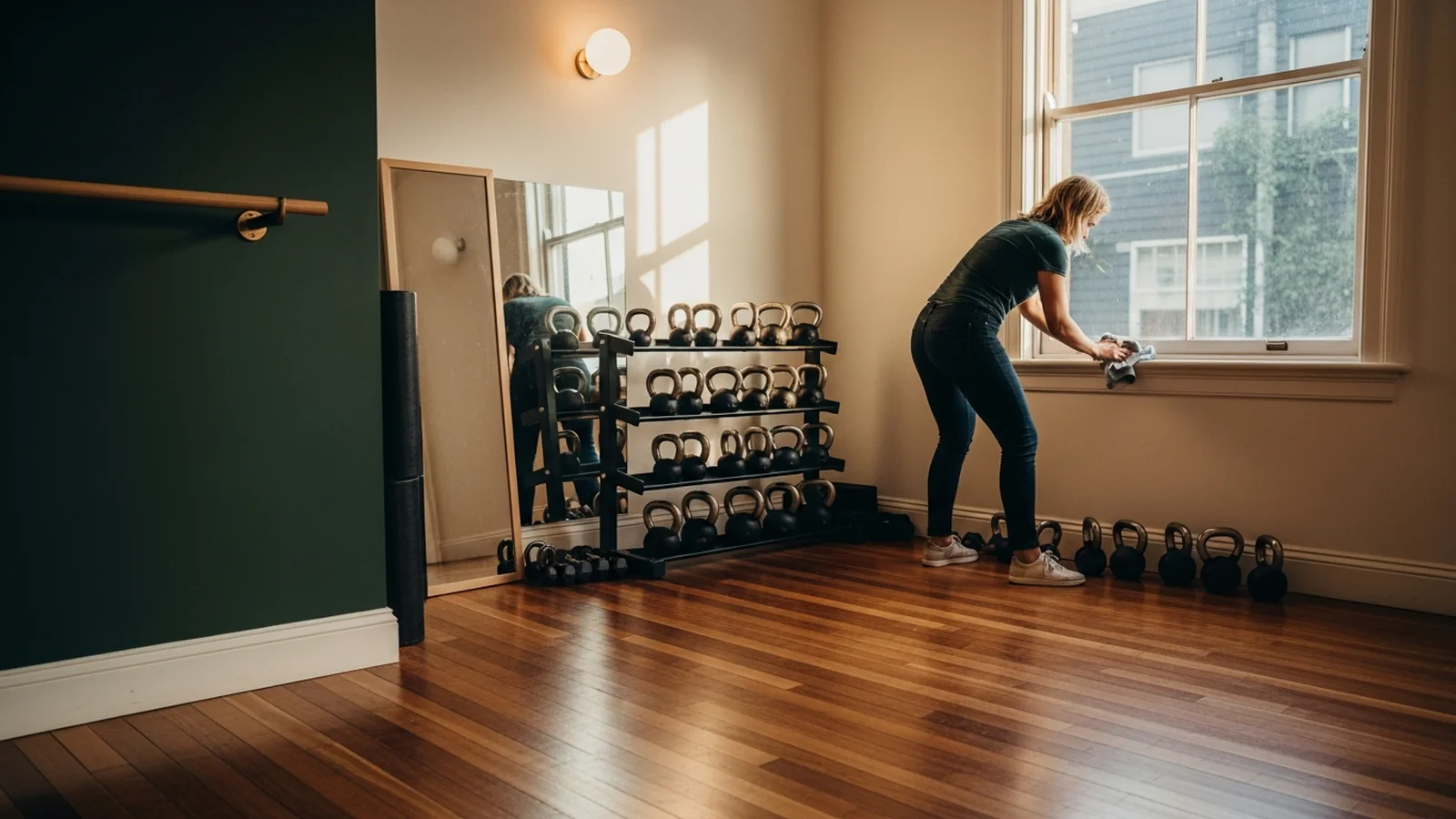
Independent gyms, boutique fitness studios, CrossFit boxes, yoga studios, Pilates studios, martial-arts academies, personal-training operations, and small-format strength-and-conditioning facilities share a common debt profile and a common operating profile. Gym business debt relief, fitness studio MCA help, boutique fitness equipment loan workout, and independent gym lease renegotiation are the searches we see when an operator who has been running a real community for years is finally finding that the financing structure underneath the studio has not held up against the post-2020 environment. This page is the long version.
The fitness operators we work with almost always have something the bigger competitors do not: a real community, a real coaching culture, real member retention. The trouble lives in the financing structure that supports the physical facility — the lease, the equipment, the build-out debt — against the membership revenue that the post-2020 recovery did not bring back to the original projections. Most of the cases we work fall into a recognisable shape, and the shape is repairable.
The cash-flow rhythm of an independent gym or fitness studio
Revenue arrives, in most modern operations, through recurring monthly billing — auto-debit memberships, package sales, drop-in revenue, personal-training revenue, retail at the front desk, and (in some operations) corporate or insurance contracted revenue. The recurring billing is one of the structural advantages of the fitness category; cash flow is steady and largely predictable on a month-to-month basis, which is why fitness operations are often described as recession-resistant relative to other small-business categories. The advantage is real but limited; recurring billing only stays steady if member churn stays low, and member churn is sensitive to the operator’s coaching culture, facility condition, and economic environment in ways that any small interruption can disturb.
Against this revenue, the cost structure is dominated by two large fixed lines. Rent on the facility is typically eight to fifteen percent of revenue, sometimes higher in higher-rent urban markets. Equipment financing on the strength training, cardio, specialty, and (for boutique studios) sport-specific equipment is monthly amortising and can be six figures of installed cost depending on the facility size and concept. Coaching, instructor, and front-desk payroll runs biweekly. Insurance, utilities, music licensing, software, marketing, and various subscription costs round out the recurring expense base.
The mismatch is not in the timing — recurring billing handles the timing well — but in the level. When membership volume falls below the level the lease and equipment financing were sized for, the gap between revenue and fixed cost opens, and the working-capital line, the equipment loan, the rent itself, or some combination begins to accumulate.
Common debt patterns we see in gyms and fitness studios
The post-2020 EIDL and recovery loan stack
The single most common pattern in our 2025 and 2026 fitness case files. Operators who took out PPP, EIDL, and various private loans through the 2020-2022 stretch to keep the facility open through closures, capacity restrictions, and the slow recovery. The PPP loans were generally forgiven. The EIDL loans, however, are amortising thirty-year obligations at a fixed rate, and the deferral periods have long since expired. Many operators carrying EIDL balances are finding the monthly payments increasingly heavy as rent has climbed, payroll has moved up, and membership volume has not fully recovered to 2019 levels in many specific markets.
EIDL workouts are a defined category of work. The SBA has structured hardship-payment options that can reduce the monthly burden, and we coordinate these directly with the SBA on behalf of clients.
Equipment loan distress on the original buildout
The equipment financing on the original facility build-out — strength platforms, racks, dumbbell sets, cardio machines, specialty equipment, sound and AV systems — was typically structured against an opening-membership volume assumption. When the assumption proves optimistic in the post-2020 environment, the equipment payment becomes uncomfortable. We restructure equipment loans directly with the lender. Most equipment lenders in the fitness space hold UCC-1 security interests against the equipment and prefer a restructure to a repossession-and-resale that, in the current secondary-market environment, would not recover full balance.
Lease arrears and personal-guarantee exposure
Most independent fitness leases include a personal guarantee from the operator. When rent has fallen behind, the landlord’s leverage extends past the studio itself to the operator’s personal assets. The renegotiation is usually workable; the post-2020 small-format retail and gym-format real-estate environment in most markets has favoured tenants meaningfully, and landlords who would have been inflexible in 2018 are open to deferrals, restructures, and modified-rate going-forward arrangements that protect both sides.
Stacked merchant cash advances
Less common in fitness than in trucking or restaurants but increasingly present. When working-capital options have run out, MCA funders approach gym operators with sales pitches calibrated to the recurring billing the studio holds. The first advance covers a real gap. The second covers the gap created by the first. The unwind methodology is the same we use across other industries.
Member-billing platform and processing-cost optimisation
Gym member-billing platforms (the SaaS that handles auto-debit billing, member management, scheduling, and front-desk operation) charge a combination of subscription fees and processing fees on each membership debit. The cumulative cost is one of the higher operating-cost lines in a typical studio, and one of the most consistently overpaid. Reshopping the platform and the processing relationship on a defined cadence is operating-side work that consistently recovers margin without touching the member relationship.
Sales tax compliance on retail product and (in some states) on memberships
Sales tax treatment of fitness memberships varies meaningfully by state. Florida, for example, taxes admissions to most physical-fitness facilities under §212.04, Florida Statutes — an exposure that catches some operators by surprise. Retail product at the front desk — supplements, apparel, equipment — is taxable separately. Studios that have not been remitting sales tax cleanly are accumulating exactly the kind of personally-liable, administratively-collectible arrears we describe elsewhere on this site.

Operating challenges underneath the gym and fitness debt
Member retention and the churn-rate question
The single most consequential operating variable in fitness economics. Acquisition cost per member is high; the lifetime value depends entirely on retention. Operators who measure churn weekly and act on the early-warning members — the ones whose attendance has dropped before they cancel — recover meaningful lifetime value without acquiring a single new member. Most operators do not measure churn on a defined cadence and discover the membership erosion on the monthly billing report after it has already happened.
Pricing on a cadence
Most independent fitness operators have not raised pricing in two to four years, while rent and labour have moved meaningfully. The compounded margin compression is one of the largest single drivers of debt accumulation in this category. Modest, well-communicated price increases — with grandfather periods for long-standing members and clean communication of the cost reasoning — almost always produce more revenue than the membership attrition they cause.
Coach productivity and class-utilisation analysis
For class-format studios, the relationship between class capacity, actual attendance, instructor cost, and the resulting per-class economics is the operating math that determines profitability. Studios that measure class utilisation by time slot and by instructor, and that act on the data — consolidating low-attendance classes, adjusting instructor scheduling, optimising the schedule for member demand — recover meaningful margin without changing the offering. The discipline is mechanical and underused.
Personal-training revenue and the additional-revenue layer
Personal training, semi-private training, specialty programming, and corporate or insurance contracted revenue are higher-margin layers that sit on top of the base membership revenue. Studios that build these layers cleanly are usually meaningfully more profitable than those that do not. The conversation about whether to build them, and how, is one of the operating-side conversations we have early in fitness engagements.
Florida-specific considerations
Florida health studios are regulated under Florida Statutes Chapter 501, Part XI, the Health Studio Act — which requires registration with the Department of Agriculture and Consumer Services, written membership contracts with three-day rescission, and various consumer-protection provisions on prepaid memberships. Compliance is mechanical when run cleanly. Sales tax on physical-fitness facility admissions is administered by the Florida Department of Revenue. Florida-resident operator-owners benefit from the homestead and entireties protections discussed elsewhere on this site, which matter when EIDL or other personally-guaranteed debt is in the picture.
What we do for gyms and fitness studios, specifically
- EIDL and SBA workouts. Coordinated with our SBA-workout partner network.
- Equipment loan restructuring. Direct negotiation with fitness-equipment lenders.
- Lease renegotiation. Direct negotiation with the landlord on rent reductions, deferrals, restructures, and (where it fits) clean exits.
- MCA stack unwind. Time-sensitive negotiation with funders.
- Member-billing platform and processing-cost reshop. Operating-side cost recovery without member-side disruption.
- Florida Health Studio Act compliance review. Where membership-contract or registration issues are surfacing.
- Sales tax workout. Where state sales-tax debt has accumulated on memberships or retail.
- Member retention, pricing, and class-utilisation review. The operating-side work that prevents the next round of debt from accumulating.

The fitness operator we will not take
Studios whose lease has been terminated, whose senior coaching staff has departed, and whose member base has collapsed below the breakeven volume of the lease are usually past the point of debt restructure. The path forward is usually a wind-down, a small-asset sale to a competitor, or a relocation under a substantially different model, and we will refer to counsel rather than take an engagement that cannot produce the relief the operator is hoping for. For the rest — gyms and studios with a real community, a real coaching culture, real recurring billing, and a debt picture that has run ahead of cash flow but not past recovery — the situation is workable.
What a Hamilton & Merchant engagement actually looks like for a gym or fitness studio
Owners ask, on the first call, what an engagement actually looks like in practice. The answer varies by situation, but for a typical independent gym, boutique fitness studio, CrossFit box, yoga or Pilates studio, or personal-training operation carrying EIDL servicers, equipment finance on the original buildout, lease landlords, and MCA funders, the engagement runs in five recognisable phases over roughly five to ten months.
Week one: assessment and clock mapping. We pull the full debt picture — every creditor, every contract, every personal guarantee, every lien position. We build the thirteen-week cash forecast against current revenue. We map the legal-process clocks running on each item: cure windows on contractual defaults, response windows on any served complaints, statutory windows on any tax notices, prompt-payment windows where they apply. We deliver a one-page summary by the end of the first week so the owner knows what is actually running and what is not.
Weeks two through four: priority creditor contact and stack stabilisation. We open communication with the SBA on EIDL, the landlord on the lease, and the equipment lender and any creditors whose clocks are short enough to require immediate response. Where MCA debits are running close to operating margin, this is the phase in which stack stabilisation begins. The goal is to halt the trajectory toward collapse and create the breathing room in which the longer negotiation work can run.
Months two and three: substantive negotiation. Direct negotiation with each major creditor on the actual terms — principal reduction where it is available, rate restructure, term extension, and modified payment schedules calibrated to the realistic cash flow of the business. We typically achieve modest on EIDL; larger relief on negotiable private positions during this phase. Tax-side work, where it applies, runs in parallel through our partner network.
Months three through six: operating-side coordination. While the debt-side negotiations close out, we run the operating-side work that prevents the next round of debt from accumulating. This is the work most other firms in our category skip. For operators who measure churn weekly and act on early-warning members before they cancel, we coordinate the corresponding discipline. The operating-side work is what makes the debt-side relief durable.
Months six and beyond: stabilisation and follow-through. The debt picture is now restructured. The operating discipline is in place. We circle back monthly through the stabilisation period, confirming the new structure is holding and that the early warning signs of recurrence are not building. Engagements close cleanly when the owner is running the business under the new structure with confidence.
Frequently asked questions about gym or fitness studio debt relief
How quickly can a independent gym, boutique fitness studio, CrossFit box, yoga or Pilates studio, or personal-training operation get relief from MCA daily debits?
Stack stabilisation typically begins within the first two to three weeks of engagement. Substantive principal renegotiation runs over the following sixty to ninety days. The exact timeline depends on the number of advances, the cumulative size of the daily debits, the funders involved, and how aggressively each funder responds to a structured restructure proposal. Stack collapse can be averted in most cases when the engagement begins before the cumulative daily debits exceed actual operating margin.
Will my credit be damaged by working with a debt-relief firm?
The debt itself, not the firm, is what affects credit. A debt that is being negotiated, settled, or restructured will produce reporting that reflects those events, and the credit profile may move accordingly. The alternative — letting the debt progress to default, judgment, and enforcement — almost always produces worse credit consequences than a structured restructure. We are direct about the credit implications of each option before any of it begins.
Do I need to file bankruptcy to deal with this?
In the great majority of gym or fitness studio situations we work, no. Direct creditor negotiation, contract and lease renegotiation, and (in the right cases) out-of-court workout agreements resolve the situation without a filing. Bankruptcy remains an option where it fits, and we will tell you plainly when it does. We do not run bankruptcy filings ourselves; when one is the right path, we coordinate with a bankruptcy attorney we trust. See our alternatives to bankruptcy page for the full layered analysis.
What does this cost?
Our engagement fees are scaled to the work and disclosed in writing before any paid work begins. The first conversation is free and there is never an obligation. For gym or fitness studio engagements, fees typically run a small percentage of the relief produced, structured so the math is plainly favourable for the client. We do not collect fees in advance of work delivered.
What is the single most dangerous mistake to avoid?
For most gym or fitness studio owners, do not let a Health Studio Act compliance issue progress to a DACS complaint — the registration-suspension consequences compound the cash situation rather than relieving it. The category we describe carries personal-liability or operational-shutdown consequences that are meaningfully larger than the immediate pressure that produced the temptation. We talk about this on every first call.
How do I know when to call?
The signal we tell gym or fitness studio operators to watch for is EIDL payment plus rent plus equipment debt running uncomfortably against current monthly recurring billing. By the time that signal is visible, the work is still entirely doable, and the engagement is faster and cheaper than it will be in another quarter or two. The owners we work with who closed cleanly are almost without exception the ones who reached out around that signal rather than waiting for it to escalate.
Are there Florida-specific considerations I should know about?
Yes. Florida health studios operate under the Health Studio Act (Chapter 501, Part XI), which requires DACS registration and contract-rescission compliance, and physical-fitness facility admissions are subject to state sales tax under §212.04. Where the situation involves a Florida nexus — the business is Florida-organised, the owner is Florida-resident, the contracts include Florida choice-of-law, or any combination — we run that analysis early. See our state differences page for the broader comparative read.
Will you work with my existing accountant or attorney?
Yes, and we usually prefer to. The accountant who knows the books is an asset. The attorney who has been advising on the specific contracts is an asset. We coordinate with existing professionals as part of our standard practice and bring in our own partner network only where additional capability is needed. The point is to assemble the right team for the situation, not to replace the team that is already in place.
What happens if my situation cannot be resolved without bankruptcy?
We tell you plainly, on the first call where we can see it, and we coordinate with bankruptcy counsel from our partner network. We stay in the room through the filing decision and through the early phase of any case rather than handing off and disappearing. The kindness, in those situations, is in the directness about what is actually fitting and what is not.
What to bring to the first call
The first conversation is free and is most useful when you bring a few specific items. None of these are required — we will work with whatever you have — but the more of them you have ready, the faster we can get to the substantive part of the conversation.
- A list of every creditor, with current balance, contractual rate or factor rate, monthly or daily payment, and date of most recent statement.
- The two most recent monthly profit-and-loss statements (or a reasonable approximation if your books are not closed monthly).
- The most recent two months of bank statements from the operating account.
- A short list, in your own words, of the items you are most worried about — the ones that wake you up at three in the morning. We start with those.
- Any formal correspondence you have received from creditors or tax authorities in the past sixty days.
If you do not have these, call anyway. We have run intake conversations with nothing more than the owner’s memory and a coffee. The point of the items above is to make the conversation faster, not to make it possible.
Independent gym or fitness studio carrying post-2020 debt that has outlasted the recovery?
Call or text (407) 993-1416, or send us a message. The first conversation is free. We work with fitness operators regularly and know the EIDL, equipment, and lease territory.