

You've been served, and somewhere between the panic and the instinct telling you to stuff the papers in a drawer, you're staring at a document that reads like it was written to scare you. It was. A lawsuit from a merchant cash advance funder is a deadline, not a verdict, and what you do with the next thirty days matters more than almost any decision you've made about this business in years. Let's get you through it, step by step, starting right now.
My name is Spencer Holt, and I want to tell you about a man named Earl Prewitt, who runs a marine supply and boat repair shop out of Port Canaveral, Florida — twenty-two years in business, seven people on payroll, and more barnacles scraped off more hulls than either of us could count. Earl took a merchant cash advance the way a lot of good operators do: not out of recklessness, but because a slow hurricane season backed up his parts orders while a key supplier wanted paid net-fifteen and his own customers were paying him net-forty-five. Seventy thousand dollars, at a 1.35 factor rate, meaning he owed back $94,500 through a daily ACH debit of a little over three hundred dollars, five days a week, storm season or not.
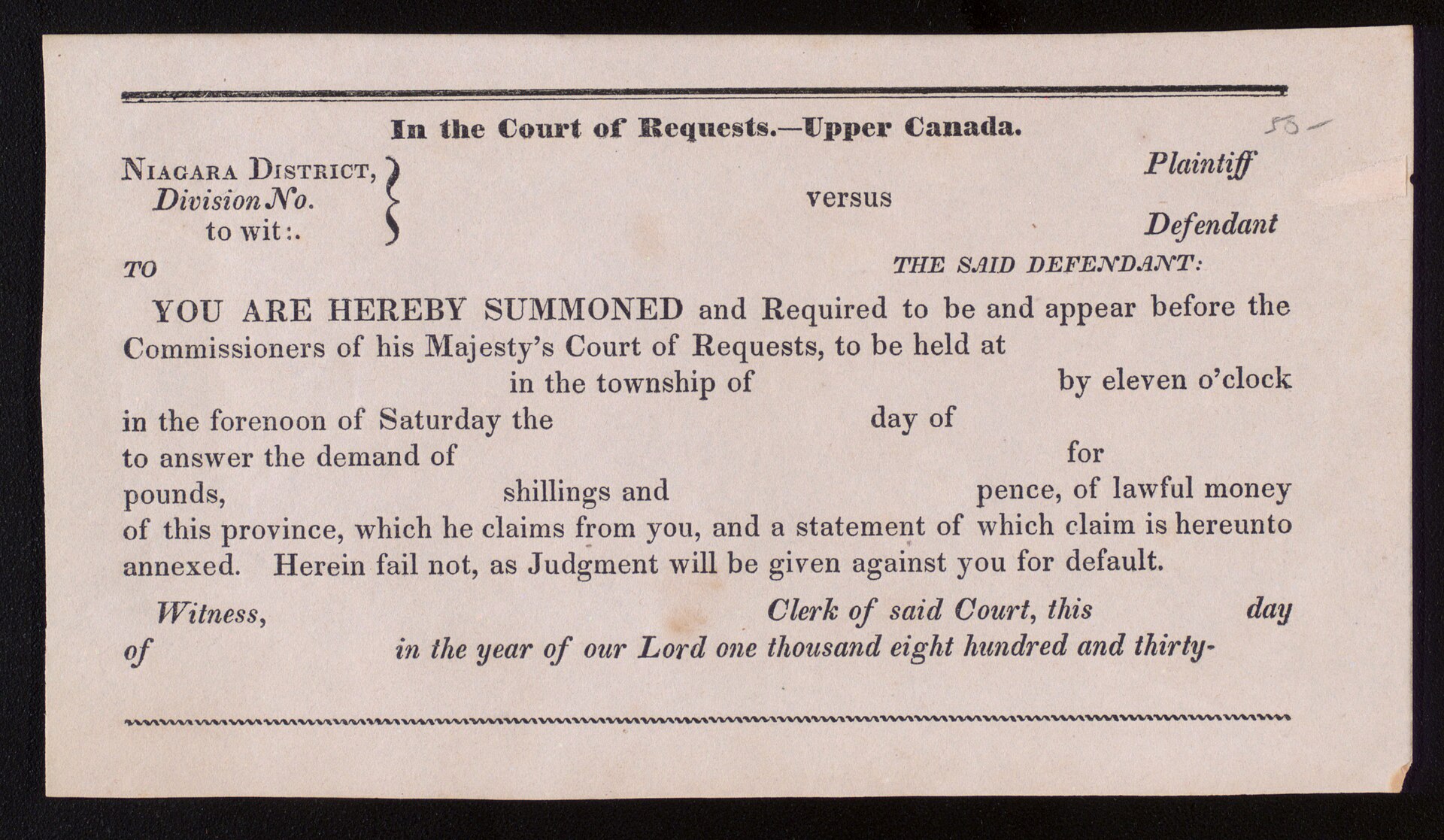
Eight months in, a slow winter and a blown outboard on his own work boat put him behind. He missed four debits in a row. About ninety days after that, a process server found him at the shop counter and handed him a summons and complaint with the funder's name on it — alleging breach of contract and demanding $71,300, the accelerated remaining balance under the contract's default formula, plus a default fee and the funder's attorney's fees, which the agreement let them collect from him. Earl's first instinct, he told me later, was to shove the papers in a drawer and hope the whole thing sorted itself out. That instinct, more than any dollar figure in the complaint, is the thing I need to talk you out of today.
A few things before we get into it. Earl is a composite — built from patterns we see regularly, not any one real client, though his numbers and his outcome are realistic. I'm not a lawyer, and Hamilton & Merchant is not a law firm; when a lawsuit needs a legal defense, a motion, or a courtroom appearance, we coordinate with vetted outside counsel rather than pretend that's our job. Nothing in this article is legal advice about your specific case, and nothing here promises a specific outcome for yours — results vary, sometimes a lot, depending on your contract, your state, and how fast you move. What follows is the honest, practical version of what the first thirty days after being served should look like.
Hold your horses, take a breath, and let's get into it — starting with the clock on your desk, and exactly what Earl did, day by day, to turn a $71,300 demand into a number he could actually live with.
A Lawsuit Is a Deadline, Not a Verdict
I want to start with the single most important reframe in this whole article, because almost every owner I talk to in the first phone call has it backwards. Getting sued by a merchant cash advance funder feels like the end of something. It is not. A summons and complaint is the beginning of a legal process, with rules the funder has to follow, a timeline that runs in your favor as much as theirs, and real opportunities for you to answer, negotiate, or defend before anyone takes a dime. A judgment is the end of something. A lawsuit is just a deadline.
Let me cut to the chase on why that distinction matters: it changes what you do next. Owners who treat a lawsuit like a verdict tend to do one of two things, and both are wrong. Some go quiet, assuming the outcome is already decided and there's no point spending energy on something that feels hopeless. Others panic into a rushed, bad decision — agreeing to whatever the first person on the phone offers, just to make the fear stop. Neither one is a plan. Both usually cost more than doing this right would have.
I'll also clear up something that trips a lot of owners up right out of the gate: a lawsuit is not the same thing as a confession of judgment, even though both can end with a court judgment against you. If you signed a confession of judgment clause — sometimes called a cognovit clause — the funder can potentially skip the lawsuit entirely and go straight to a judgment, without ever serving you a complaint or giving you a chance to answer. That's a different, faster, and in some ways more dangerous animal, and we've covered it in detail separately: Confession of Judgment Explained. If what you're holding is an actual summons and complaint, with a case number and a court and a deadline to respond, you're in the more common, and frankly more workable, situation. You've been sued the ordinary way, which means you get to participate in what happens next.
That participation is the whole game. A funder who sues you still has to prove its case if you contest it, still has to spend real money and time doing so, and still faces the very real chance that a judge or a jury doesn't simply hand them everything the complaint asks for. None of that is guaranteed to go your way either — I'm not going to stand here and tell you a lawsuit is good news. But it is not the closed door it feels like at eleven at night with the papers still sitting on your kitchen table. It's a deadline. Deadlines can be met. Let's talk about this one specifically.
The Clock Starts the Day You're Served
Here's what I need you to do today, before you finish reading this article if you have to: find the exact date on your summons, or find out from the clerk of court, and write down the real deadline to file your answer. Not a guess. Not what a friend's cousin says happened in their case. The actual date that applies to yours.
I'm going to be careful here, because this varies by state, by court, and even by how you were served, and getting it wrong is not a place to guess. Some jurisdictions give you as little as twenty days from service. Others give more, and the method of service can change the calculation too. I'm not going to hand you one number and have you treat it as gospel for your case — confirm the actual number, fast, from the summons itself, the clerk's office, or someone qualified to tell you.
What I can tell you with total confidence, because it's true in every state I've ever worked a case in: the clock does not pause because you're busy, because you're scared, because you're waiting to see if the funder is bluffing, or because you're still deciding whether to hire someone. It runs from the day you were served, on a calendar that doesn't care about your slow season.
So here's the practical move. The moment you have that date, put it in three places: your phone calendar, a paper calendar somewhere you'll actually see it, and — if you're talking to us or to an attorney — tell them the exact date in the first conversation, not the third. Then work backward. If you're planning to hire counsel, you need time before the deadline, not the day of. If you're planning to answer on your own, which I'd caution against for anything beyond the simplest case, you need time to actually read the complaint and understand what it's alleging, which is exactly what we're covering next.
Earl's summons gave him a window that felt tight the moment he read it. He told me the deadline scared him more than the dollar amount on the complaint did. That's normal. It's also exactly why the first thing we did on his file was confirm that date, in writing, before we talked about anything else.
What the Complaint Actually Says
Complaints in these cases tend to follow a predictable shape, and knowing that shape ahead of time takes some of the mystery, and some of the fear, out of reading one. Most merchant cash advance lawsuits allege breach of contract: you agreed to a fixed schedule of payments under the merchant agreement, you stopped making them or fell short, and the funder is asking the court to enter judgment for what the contract says you now owe.
That last part is where owners usually get their first real shock. The number in the complaint is almost never just the payments you actually missed. Most MCA contracts include a default or acceleration clause that lets the funder demand the entire remaining balance the moment you're in default — not the three or four payments you fell behind on, but everything left on the schedule, all at once. On top of that accelerated balance, the complaint will typically tack on a default fee, and often the funder's attorney's fees and court costs, because most of these agreements include a clause shifting those costs onto you if they have to sue to collect. That's how a merchant who felt like they were a few thousand dollars behind opens a complaint demanding tens of thousands more than that.
Remember what you're dealing with under the hood: legally, an MCA is a purchase of your future receivables at a discount, priced as a factor rate rather than an interest rate, which is exactly why the total payback number can look so much larger than what you actually received. If you want the full arithmetic on how a factor rate turns into a real dollar cost, we've broken it down separately in Merchant Cash Advance: The True Cost Math, and it's worth reading before your first settlement conversation, so you know exactly what number you're negotiating against.
One more thing to check the moment you open that complaint: who's actually named as a defendant. If you signed a personal guarantee — and most merchants who take an MCA did, often without fully registering what they were initialing — the funder can, and often does, name you personally alongside your business. That changes what's at risk. A judgment against an LLC with no assets is a very different problem than a judgment against you, personally, with a house and a savings account behind it. We've written a full piece on exactly what a personal guarantee exposes: Personal Guarantees: The Four Words. And if you're not even sure whether you'd technically defaulted before any of this showed up, that decision point, and what it does and doesn't mean, is its own subject: When to Stop Paying an MCA. Read your complaint's caption line first, though. It tells you who's actually being sued, and it's not always just the business you thought you were protecting.
~40%
Roughly four in ten small employer firms carrying business debt describe keeping up with it as a financial challenge, in recent Federal Reserve findings — the same pressure that leads to the missed payments most MCA lawsuits follow.
Source: Federal Reserve Small Business Credit Survey, 2025 Report on Employer Firms
The Real Danger Isn't the Lawsuit. It's Doing Nothing.
I've sat with a lot of owners over thirty-one years, and I'll tell you plainly what actually sinks people in this situation. It's almost never the lawsuit itself. It's the decision, made quietly, to not respond to it — to let the deadline pass because answering feels pointless, or expensive, or like it's just delaying something inevitable.
Here's what happens when you miss the answer deadline. The funder can ask the court for a default judgment. In plain terms: because you didn't show up to contest anything, the court enters judgment against you based on what the funder alleged, without ever testing whether those allegations hold up. No hearing where you get to explain the reconciliation request that got ignored, or the payment that bounced through no fault of yours, or the fact that the amount claimed is wrong. In most default situations, the judge simply enters the number the funder asked for, because nobody stood up to dispute it.
And a judgment isn't the end of the story — it's the beginning of what a judgment actually lets a creditor do: recording a lien against real property you own, pursuing a writ of garnishment against your bank accounts, and in some states compelling you to sit for a debtor's examination under oath about everything you own. A UCC-1 lien your funder likely already filed at the start of your relationship is a claim, not a seizure. A judgment followed by a levy or garnishment is a different animal entirely, and it generally requires that judgment to exist first. We've written the full mechanics of that chain, lien to levy, in UCC Liens and Your Bank Account.
Default judgments are also harder to undo than most owners assume. Vacating one generally requires showing the court a real reason — improper service, excusable neglect, a meritorious defense you never got the chance to raise — and that's a legal motion, filed by a lawyer, on its own tight timeline. It is not simply a matter of showing up late and apologizing. Prevention is enormously easier than the cleanup. That's not a scare tactic. That's thirty-one years of watching which owners came out of this okay, and which ones didn't.
Your Options Once You've Been Served
Once you've confirmed the deadline and read the complaint closely, it's time to get your ducks in a row, because you've got real decisions to make, and I want to walk through them honestly, since the right answer depends on your situation, not a one-size-fits-all script.
Answer and defend
Filing a formal answer to the complaint is, in almost every case, the non-negotiable first move, even if you fully intend to settle. An answer responds to each allegation, raises any defenses that apply, and — most importantly — keeps a default judgment off the table while you work everything else. This is generally a job for an attorney, not a form you fill out at the kitchen table at midnight; a poorly drafted answer can waive defenses you didn't know you had. Getting you in front of vetted outside counsel, fast, is a core part of what we do.
Negotiate directly
Many MCA lawsuits are, underneath the legal formality, a negotiation wearing a court case's clothes. Funders who sue still generally want cash, sooner, more than they want to grind through years of litigation against a merchant who's genuinely fighting back. Answering the complaint doesn't close the door on a negotiated resolution. If anything, it often opens one, which we'll get into shortly.
Settle
Settlement, whether it happens before a hearing, mid-litigation, or on the courthouse steps, is how a large share of these cases actually end — not with a trial, but with a negotiated number both sides can live with. We've written a full walkthrough of how that negotiation typically works, funder by funder, in How to Settle With an MCA Funder, and it's worth reading in full once you know you're staying in the fight rather than defaulting. Our debt reduction and negotiation work covers this in practice, case by case.
Get counsel for defenses specific to your contract
Whether you have genuine legal defenses worth raising, and how strong they are, depends entirely on the specific language in your contract, your state's law, and the facts of what happened. That's not something I can tell you from a blog post, and it's not something you should guess at either. It's a licensed attorney's job to evaluate your contract and your facts and tell you honestly what's realistic. We'll walk through the general categories of defenses that sometimes apply in the next section, but I want to be straight with you now: general education is not the same thing as a legal opinion about your case.
None of these four paths are mutually exclusive. Most merchants we work with answer the complaint to stop the clock on default while working a settlement in parallel, with a lawyer reviewing any contract-specific defenses along the way. It's not answer or negotiate. Usually, it's both, at once.
Possible Defenses, and Why They Belong to a Lawyer
I get asked constantly, usually in the first phone call, some version of: don't these contracts have to be illegal somehow? I understand the instinct. The math on a stacked MCA position can feel almost impossible to justify, and it's natural to hope there's a legal silver bullet sitting in the contract. Sometimes there's something worth raising. Often there isn't. I'm going to walk through the general categories honestly, without pretending I can tell you which apply to your contract, because I can't. Only a licensed attorney reading your actual agreement can do that.
Usury and re-characterization arguments
Because an MCA is structured as a purchase of future receivables rather than a loan, it's priced with a factor rate instead of an interest rate, which is exactly why the usury caps that limit interest rates on loans generally don't apply. In some cases, an attorney may examine whether a particular agreement, in practice, looks more like a disguised loan than a genuine receivables purchase — fixed payments regardless of sales, no real adjustment for revenue, guarantee terms that read like a lender's, not a buyer's. Whether that argument has any traction depends enormously on the specific contract language and the state's law, and it's a real, technical legal question, not a general truth about all MCAs.
Unconscionability
Courts, in some circumstances, will decline to enforce contract terms found to be so one-sided, or procured under such unequal bargaining power, that enforcing them offends basic fairness. This is a high bar, applied narrowly, and it takes a specific, fact-heavy argument, not just a general sense that the deal turned out badly for you. Still, it's a theme a lawyer may explore depending on how the contract was presented and signed.
Breached reconciliation rights
Many MCA agreements include a reconciliation, or true-up, clause meant to let you request an adjustment to your daily or weekly debit if sales genuinely drop. If you followed that procedure correctly and the funder ignored it, refused it without basis, or made it functionally impossible to use, that can sometimes support an argument that the funder breached the contract first, which matters, because a party who breaches first has a harder time enforcing the rest of the deal against you. Whether that happened, and whether it holds up, again depends on your paperwork and your state.
I'm not going deeper than this because I'd be doing you a disservice pretending a blog post can evaluate your contract. What we do is get your documents in front of vetted outside counsel, fast, so someone qualified can tell you plainly whether any of this applies to you — not in general, but to your actual signed agreement.
Why Getting Sued Can Actually Increase Your Leverage
Here's something that surprises almost every owner I explain it to: getting sued, as bad as it feels, often hands you more leverage than you had the week before, not less. I'm not saying it feels that way. I'm saying it's often true, and understanding why changes how you approach the next thirty days.
Before a funder files suit, the threat of litigation is just that: a threat, a line in a collections call, something they can say without it costing them anything. Once they've actually filed, that threat is spent. Filing costs real money — court fees, attorney hours to draft and serve the complaint, and now an open file that has to be tracked, staffed, and eventually closed one way or another. A funder that sues a merchant who fights back, who answers on time, raises defenses, and clearly isn't going to roll over, is staring down the prospect of discovery, motion practice, and a trial that costs more the longer it drags on, with no guarantee of collecting the full judgment even if they win one.
That math changes behavior. I've watched files that sat with a junior collections rep for months suddenly get reassigned, the moment an answer is filed, to someone with actual authority to discuss a number. Litigation is expensive and uncertain for funders too, and a merchant who's clearly not an easy mark, who has counsel, who's asking hard questions about the reconciliation clause or the fee calculation, is a more expensive, less certain case to keep fighting than one where the merchant went silent and a default judgment is sitting there for the taking.
None of this means litigation is free leverage with no downside, or that you should provoke a lawsuit hoping for a better deal. That's backwards, and dangerous. What it means is that once you're already sued, panic is the wrong response and paralysis is worse. A filed lawsuit, answered promptly and taken seriously, is very often the moment a stuck negotiation starts moving again. Earl's case moved exactly like that. The funder's collections desk had gone quiet on his calls for weeks before the complaint was even filed. Three days after his attorney filed an answer, the funder's own litigation counsel called ours with a number attached.
What Not to Do in the First 30 Days
I won't beat around the bush on this one. I've watched good outcomes get ruined by a handful of repeat mistakes, and I'd rather you hear about them from me now than learn them the expensive way.
Don't move or hide assets
I understand the impulse. If a judgment might come, protect what you have. Resist it completely. Moving money, transferring property, or retitling assets to keep them away from a creditor while litigation is pending can constitute a fraudulent transfer, which courts can unwind, and which can turn a straightforward debt case into one involving allegations of fraud. That's a dramatically worse position than the one you're in now. It doesn't protect you. It exposes you to more.
Don't ghost the funder or their attorney
Silence doesn't slow a lawsuit down. It speeds up the part that hurts you, a default judgment, while doing nothing to stop the part that might help you, a negotiated resolution. Even if you're working with counsel and mostly staying quiet by design, someone should be responding to what needs a response, on the record, by the deadlines that apply.
Don't rely on verbal promises
A phone call where a collections rep says "we'll knock it down to X if you just start paying again" is not a settlement, and it won't protect you if you rely on it and later find yourself still facing the full judgment amount. Nothing is real until it's in writing, signed, and specific about what happens the moment money moves. I've seen this exact mistake cost owners a resolution they thought they already had.
Don't miss the answer date
I've said this already and I'll say it again here because it belongs on this list plainly: missing the deadline to respond is, by a wide margin, the single most damaging mistake available to you in these first thirty days. Everything else on this list is a bad decision. This one can end the case before you've had a chance to make any decisions at all.
One more, less dramatic but still costly: don't take out a new merchant cash advance to try to cover the disputed debt or your legal costs. Stacking a new advance onto a business that's already being sued over an old one almost never ends well. The new funder prices the risk it sees on your bank statements, the payment gets worse, not better, and you've added a fifth wheel to a situation that was already hard to steer.
$100M+
The FTC has pursued enforcement actions resulting in more than $100 million in combined monetary judgments and settlements against merchant cash advance and small-business finance companies in recent years, over practices including deceptive marketing and abusive collection tactics — funders don't always play by the rules either.
Source: Federal Trade Commission (FTC)

Keeping the Business Running While You Fight This
A lawsuit doesn't happen in a vacuum. Your business still has to open tomorrow, pay the people who show up, and serve the customers who don't know or care that there's a case number attached to your bank account. Protecting that operational reality matters just as much as anything happening in the legal process, and it's the part owners most often let slide while they're consumed with the case itself.
Keep your essential obligations current, in this order: payroll, then the suppliers and vendors your business genuinely cannot function without, then rent or your facility costs, then everything else. That's not a legal ranking, it's a survival ranking — a business that keeps its people and keeps its lights on is worth infinitely more, to you and in any eventual settlement, than one that folds while the case is still pending. A negotiated resolution requires a business still standing to negotiate on behalf of.
Keep your books current and accessible. If settlement talks open up, and they very often do even mid-litigation, the same documentation that helps in any MCA negotiation helps here: current bank statements, a clear picture of revenue, and an honest accounting of what else you owe. A business that can produce clean numbers fast, when a window to negotiate opens, moves faster than one still digging through a shoebox of receipts.
Be careful with new financing while this is pending. New debt, especially anything with another lien or daily debit, muddies your financial picture right when it needs to be clearest, and can raise hard questions in settlement talks about a hardship claim.
Communicate carefully, and only as much as necessary, with employees and key vendors. You don't owe your whole staff a briefing on ongoing litigation, and oversharing invites anxiety, or worse, finds its way back to the funder's side. But a landlord or key supplier who hears it secondhand tends to react worse than one you addressed directly, on your own terms.
And keep serving your customers like nothing is different, because to them, nothing should be. Earl kept the shop open every single day this played out, same hours, same crew, same quality of work on every boat that came through the door. Whatever was happening in a courtroom two counties over never touched what his customers experienced at the counter. That's not a small thing. That's the business you're fighting to protect.
Earl's Thirty Days: How This Actually Played Out
I promised you Earl's numbers, day by day, so let me deliver on that instead of leaving him as a hypothetical.
Day one, the day he was served, Earl called us before he called anyone else, before his accountant, before his brother-in-law, before he'd even told his shop manager what the papers were. We confirmed his answer deadline that same afternoon and got his documents — the original contract, the payment history, his bank statements — in front of vetted outside counsel within forty-eight hours.
By day six, his attorney had reviewed the complaint and the underlying contract and identified one real, specific issue worth raising: Earl had submitted a reconciliation request during his slow winter, in writing, following the procedure his contract described, and the funder had never responded to it before declaring default. That didn't erase what he owed. It gave his attorney a legitimate basis to answer the complaint with a real defense on the table, not just a denial for the sake of denying.
The answer was filed on day fourteen, six days ahead of his deadline. Three days later, day seventeen, the funder's litigation counsel called Earl's attorney directly — a very different conversation than the collections calls Earl had been getting for weeks beforehand. That's the leverage shift we talked about earlier, playing out in real time on an actual file.
Negotiations ran for about two more weeks. The funder's opening position asked for the full $71,300 plus ongoing interest. Earl's attorney and our negotiation team countered with documentation: the reconciliation request that had gone ignored, three months of bank statements showing the genuine winter slowdown, and a clear picture of what Earl's business could actually pay without shutting its doors. They landed on $39,600, a little over 55 cents on the dollar of the amount claimed, paid as a lump sum Earl funded partly from savings and partly from a short-term loan against a piece of equipment he owned free and clear. The case was dismissed with prejudice on day twenty-nine, one day inside his self-imposed thirty-day goal.
I'll be straight with you about two things. First, Earl's outcome is realistic, not guaranteed — a different contract, a different state, or no reconciliation paper trail might land somewhere else entirely, and some cases don't settle this cleanly. Second, the roughly $31,700 difference between what was claimed and what he paid can sometimes count as cancellation-of-debt income, reportable on a Form 1099-C. That's a conversation for his CPA, not for us, but one worth having before tax season surprises him.
1 in 4
NFIB's small business surveys continue to find that roughly one in four owners cite financing costs or debt payments as a significant ongoing pressure on their business — the backdrop most MCA lawsuits get filed against, Earl's included.
Source: NFIB Small Business Economic Trends, 2025
What Hamilton & Merchant Actually Does
I want to pull back the curtain on our part in this, the same way I do with every owner who calls us, because I think you make better decisions when you know exactly what you're hiring, and what you're not.
When someone calls us the same week they've been served, the first thing we do is get the documents in one place: the merchant agreement, the summons and complaint, your payment history, and your recent bank statements. We do not file answers, draft motions, or appear in court — that's a licensed attorney's job. Our part is knowing which vetted outside counsel handles this kind of case well, in your state, and getting your file to them before the deadline is ever in danger.
While that legal review is happening, we work in parallel on the practical side, which is where a debt relief advisor earns their keep: opening a line with the funder or their litigation counsel, organizing the documentation that actually moves a negotiation, and working toward a resolution your business can sustain — a settlement, a structured payment plan, or, in some cases, a determination that bankruptcy counsel needs to be part of the conversation. Not sure which fits? We compare them honestly in Bankruptcy vs. Settlement vs. Restructuring.
We do this work every week, for merchants at every stage: some who call us the day they're served, like Earl did, and some who call us after a default judgment has already entered, when we're working with counsel on damage control instead of prevention. I'll tell you honestly which owners have the most options: the ones who call early. That's not a sales pitch. It's just what thirty-one years of this work has shown me, case after case.
If you want the fuller picture of what we do for merchants dealing with MCA debt generally, not just litigation, that's our merchant cash advance relief page. But if you're standing where Earl stood on day one, don't read another page first. Call, or reach us through our contact form.
Your First 30 Days: A Step-by-Step Plan
Enough framing. Here's the actual order of operations, the same one I walk clients through, broken into steps you can start today.
Days 1–3: Confirm the Facts
- Find the exact answer deadline on your summons, or confirm it with the clerk of court, and calendar it in at least two places.
- Read the complaint fully, and note the amount claimed, who's named as a defendant, and what specifically is alleged.
- Pull your original contract and find the default formula, the guarantee language, and the reconciliation clause, if one exists.
- Call Hamilton & Merchant at (407) 993-1416 or a qualified attorney — today, not after you've decided how you feel about it.
Days 4–10: Get Counsel and Get Organized
- Get your documents — contract, complaint, payment history, bank statements — in front of vetted outside counsel.
- Pull three to six months of bank statements and build a simple picture of your revenue trend.
- If you ever submitted a reconciliation request, find the paper trail: the date, the method, and whether the funder responded.
- Keep payroll, rent, and essential suppliers current. Don't let litigation stress bleed into missed operational payments that create new problems.
Days 11–30: Answer, Then Negotiate
- File your answer well before the deadline, not on it.
- Once the answer is filed, open or continue settlement talks, backed by real documentation, not just a phone call.
- Get any settlement in writing, signed, and specific about what happens the moment payment clears. Never rely on a verbal number.
- If a settlement involves forgiven debt, ask your CPA how it affects your taxes before you spend the savings.
- Confirm the case is actually dismissed or resolved in writing once payment clears. Don't assume it closed itself.
If you'd rather talk it through with a person than a checklist, that's exactly what we're here for. Call or text Hamilton & Merchant at (407) 993-1416, or reach out through our merchant cash advance relief page. The first conversation is free, and we'll tell you honestly what your case actually looks like, not what scares you most at eleven at night.
I've sat across from a lot of owners holding a summons like it was a death certificate for their business. Most of the time, it isn't. Keep your chin up. Thirty days from now, you can be the owner who answered, who got ahead of it, and who's back to running the business instead of dreading the mailbox. The ball's in your court now. Use it better than the funder expects you to.
Just got served? Don’t sit on it.
Call or text Hamilton & Merchant at (407) 993-1416, or send us a message. The first conversation is free — no sales pitch, no judgment, just honest answers about your situation.