

An owner in Riverside or San Bernardino County can start with one page that lists every merchant cash advance, the daily or weekly debit on each, and what the business actually collects in a week. California diesel averaged $8.155 a gallon in the week of October 26, 2026, so a debit that stays fixed while fuel climbs is the worry to plan around before the next payment comes out.
Picture an owner like Marisol, a composite I made up to keep the numbers concrete. She runs a six-truck carrier out of Fontana, hauling containers from the Los Angeles-area ports to warehouses in the Inland Empire. In a strong month she bills $200,000; in a slow month, $140,000. She took one merchant cash advance last spring for a tractor repair, and it collects $1,000 every business day.
Marisol is not a real client, and nothing here describes a real business. I use her because a worked example teaches better than a rule, and I like to define a term before I use it, so expect short definitions and round numbers.
This page covers the freight and warehouse economy of the Inland Empire, California’s truck and worker-classification rules as of October 2026, the courts and wage limits that matter if a dispute reaches a judge, and how to prepare for a first conversation. Hamilton & Merchant is not a law firm or a CPA firm, and nothing here is legal or tax advice. Where a step needs a professional, use your own California-licensed attorney or CPA.
How large is the freight and warehouse economy in the Inland Empire?
It is very large, and it grew in the pieces that matter to this page. The Riverside-San Bernardino-Ontario area had 200,600 transportation and warehousing jobs in September 2026, up 2.1 percent from a year earlier, and 129,300 of them were in warehousing and storage.
200,600
Transportation and warehousing jobs in Riverside and San Bernardino counties in September 2026, 2.1 percent more than a year earlier.
Source: California Employment Development Department, Riverside-San Bernardino-Ontario MSA release, October 16, 2026
Truck transportation accounted for 31,800 jobs, up 1.3 percent over the year, and general freight trucking for 23,100 of those. Couriers and messengers moved the other way, to 18,300 jobs, down 4.2 percent. In May 2025 the area counted 40,230 heavy and tractor-trailer drivers at a mean wage of $30.83 an hour. Their location quotient was 1.77. A location quotient compares a job’s share of local employment with its share nationwide; for hand freight movers it was 2.14, more than double the national concentration.
Air cargo adds to the picture: Ontario International Airport handled 835,129 tons in 2025, up 5.3 percent. Industrial vacancy in the core of the market was 7.2 percent in the third quarter of 2026, and new leasing fell 28 percent from the second quarter to 11.2 million square feet during the summer slowdown. Unemployment was 5.7 percent in September 2026, against 5.1 percent for California and 4.0 percent for the nation.
The two counties held an estimated 4,769,007 residents on July 1, 2025, and 272,380 of the area’s jobs in May 2025 were in transportation and material moving, 15.9 percent of all local employment. That is a region where roughly one job in six is in transportation and material moving. Drivers, dock crews and warehouse tenants share one freight calendar. So do the debits that sit on top of it.
What does a fixed daily debit do to a freight business’s cash cycle?
It makes any gap in the cash cycle visible every morning. The cash cycle is the stretch between paying for fuel, drivers and repairs and collecting from the customer, and a daily debit leaves the account on each business day wherever that stretch stands.
Here is Marisol’s month in round, hypothetical numbers. Her advance collects $1,000 on each of 20 business days, which is $20,000 a month. Against $200,000 in billings that is 10 percent; against $140,000 in a slow month it is about 14 percent. For context, operating margins for truckload and refrigerated carriers across the industry were below 1.0 percent in 2025, so the cushion is thin when a debit equal to a tenth of billings leaves the account.
Now add the customer’s calendar. Suppose a broker pays 45 days after delivery. A load delivered on September 1 pays in mid-October, but its fuel and driver pay were due that week, and roughly 32 business days of debits came out in between. The cash cycle is 45 days long, the debit cycle is one day long, and the bank balance absorbs the difference.
Volume swings are real here. The Port of Long Beach handled 997,177 containers’ worth of cargo (TEUs, twenty-foot equivalent units) in September 2026, its busiest month in 115 years and about 25 percent more than a year earlier. A slower month has different arithmetic, and the debit does not check the port calendar.
A daily debit runs on the bank’s calendar. A freight invoice runs on the broker’s calendar. The gap between those two calendars is where cash trouble starts.
You can test your own numbers in the MCA cost calculator. Some contracts include a reconciliation clause, a term that can tie payments to actual sales, and the reconciliation right explains how to find out whether yours has one. For the seasonal side, see MCA payments in the slow season.
How is invoice factoring different from a merchant cash advance?
Factoring is a sale of your invoices to a factoring company; a merchant cash advance is sold as a purchase of a share of your future receipts, repaid by daily or weekly debits. The difference to look for is what the money is tied to: specific invoices in one case, the deposits in your bank account in the other. Courts look at the actual terms of a contract to decide how to treat it, so neither label settles anything on its own.
California’s commercial financing disclosure rules, in effect since December 9, 2022, reach both commercial factoring and merchant cash advances. The Los Angeles page explains those rules in full, so I will not repeat them here.
For a carrier, the practical question is which receivable each contract claims. A business that has both a factoring agreement and an advance may find that two contracts describe ownership of the same invoices or deposits, so an attorney should read how each one defines what it covers before another is signed. Business financing compared lines up an advance, a line of credit and a term loan side by side.
What does diesel above $8 a gallon do to a carrier’s weekly math?
It can move the fuel line by thousands of dollars a week. California on-highway diesel averaged $8.155 a gallon for the week of October 26, 2026, which is $3.221 above a year earlier. The West Coast average was $7.329 and the national average $6.352, and those prices include taxes.
$8.155
California’s average price for a gallon of on-highway diesel, taxes included, in the week of October 26, 2026.
Source: U.S. Energy Information Administration, Gasoline and Diesel Fuel Update, week of October 26, 2026
Back to Marisol. Suppose her six trucks burn 1,800 gallons a week between them. At $8.155 that is $14,679 a week; at the year-earlier price of about $4.93 it would have been $8,881. The difference is about $5,800 a week. Her advance collects $1,000 a business day, or $5,000 a week, so the fuel increase alone is larger than everything the advance takes in a week.
Part of that price is tax. The California diesel tax rate that interstate carriers report under IFTA is 97.9 cents a gallon from July 1, 2026, up from 97.1 cents. The industry’s average cost per mile in 2025 was $2.336, or $1.854 without fuel, which leaves about 48 cents for fuel; every other line, from tires to insurance, has its own number.
I cannot see Marisol’s customer contracts, so I will not guess whether a fuel surcharge covers any of the gap. That is the first thing to read on her side of the page. If the gap has lasted for weeks, lowering an MCA daily payment walks through the ways a payment can come down.
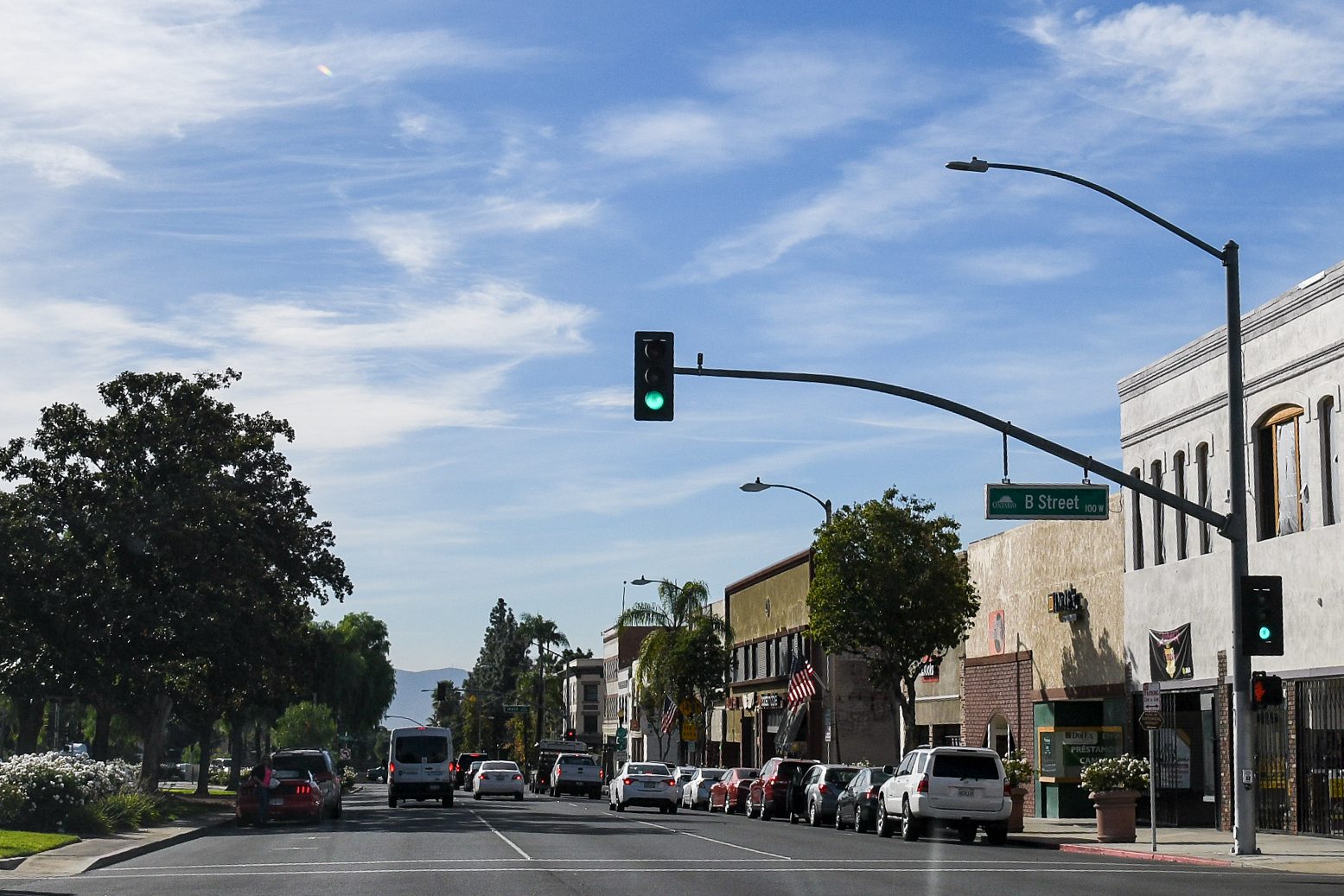
What is the status of California’s Advanced Clean Fleets rule for drayage trucks?
The California Air Resources Board’s rulemaking to remove the drayage and high-priority fleet sections of Advanced Clean Fleets was approved by the Office of Administrative Law and filed with the Secretary of State on September 10, 2026. The board’s guidance says the regulation does not apply to private fleets, though it still reaches state and local government fleets.
Drayage means moving a container by truck over a short distance, for example between a port terminal and a nearby warehouse. For an Inland Empire carrier like Marisol’s, that is the work that connects the ports to the warehouses described above, which is why the rule matters here.
The short background
The original rule would have kept new trucks that are not zero-emission off California’s drayage registry and moved large private fleets toward zero-emission trucks on a schedule. Under the settlement of a lawsuit led by Nebraska, the board agreed not to enforce those requirements for conduct from November 1, 2023 until final action on the repeal. The repeal covers Title 13 sections 2014 through 2014.3 (drayage) and 2015 through 2015.6 (high priority and federal fleets) of the California Code of Regulations. Trade reports give September 10, 2026 as the date the removal took effect, but the board’s rulemaking page lists only the filing, so check the board’s notice or ask your attorney before relying on a date.
What did not change at the ports
The ports run their own programs. Every truck entering a marine terminal at the Ports of Los Angeles and Long Beach must be on the Ports Drayage Truck Registry. Cargo owners or their agents pay a Clean Truck Fund Rate of $10 per TEU on loaded containers moved by nonexempt trucks, and the ports’ tariff bars charging it to truck drivers. Zero-emission trucks are exempt, and a temporary exemption for certain low-NOx trucks registered by December 31, 2022 runs until December 31, 2027.
What it means next to an advance
If you financed a truck, charger or trailer to meet a deadline, put that payment on the same page as your advance debit. Whether a change in the rule affects a signed equipment contract is a question for your attorney, not for a web page.
Which other California truck rules still cost Inland Empire carriers money?
Three still apply to heavy diesel trucks: the engine-year rule, an annual program fee, and the port programs above. Since January 1, 2023, a diesel vehicle over 14,000 pounds operating in California must have a 2010 or newer engine and emission system, with few exceptions, and a vehicle that does not comply can be denied DMV registration.
The Clean Truck Check program charges owners of almost all non-gasoline heavy-duty vehicles over 14,000 pounds an annual compliance fee: $32.13 now, rising to $33.12 for compliance deadlines on or after January 1, 2027. It applies to trucks registered outside California when they operate here. These amounts are small beside the fuel bill, but they are fixed dates on the cash calendar, and I want them on the page with the debit.
Myth With Advanced Clean Fleets removed for private fleets, California has no truck rules left to plan for.
Fact: The 2010-or-newer engine rule, the Clean Truck Check fee ($32.13 now, $33.12 from January 2027) and the port registry and Clean Truck Fund Rate all remain.
Myth If I own my truck, AB5 does not apply to me.
Fact: Labor Code section 2775.5, in effect since January 1, 2026, says vehicle ownership alone does not decide a driver’s classification, and the ABC test remains the benchmark. How it applies to a given arrangement is a question for an employment attorney.
Myth A judgment lets a creditor take my whole paycheck.
Fact: California Code of Civil Procedure section 706.050 caps an earnings withholding order at the lesser of 20 percent of weekly disposable earnings or 40 percent of the amount above 48 times the minimum hourly wage. Your own attorney decides how that and any other rule applies to you.
Myth A case decided in another state never reaches a California court.
Fact: A creditor can ask a California superior court to enter judgment on a sister-state judgment. The debtor is served with notice and has 30 days after service to move to vacate it.
Does AB5 apply to owner-operators who haul for a carrier in California?
AB5’s ABC test is the starting point. A worker is treated as an employee unless the hiring entity shows all three conditions: the worker is free from its control and direction, in the contract and in fact; the work is outside the usual course of its business; and the worker is customarily engaged in an independently established business of the same nature.
Where the court history stands
The U.S. Supreme Court declined on June 30, 2022 to hear the California Trucking Association’s challenge, which left in place the Ninth Circuit decision allowing AB5 to be enforced against motor carriers. On May 16, 2025 the Ninth Circuit upheld AB5 in a separate case brought by an owner-operator association, concluding that it neither discriminates against interstate commerce nor imposes an excessive burden on it. Ask an employment attorney whether any later ruling has changed that picture.
What is new in 2026
SB 809 took effect January 1, 2026. Its new Labor Code section 2775.5 says owning a vehicle, personal or commercial, does not by itself decide whether a driver is an employee or an independent contractor. A second new section creates an amnesty program that lets construction trucking employers settle misclassification claims with the Labor Commissioner by January 1, 2029, and a third addresses reimbursement of employees’ vehicle expenses, with specific terms for construction trucking. The special treatment for construction trucking subcontractors had applied only through December 31, 2024.
The business-to-business exception
Some arrangements are judged under the older Borello test if every requirement of the exception is met. Examples of the requirements: a written contract that sets the payment amount and due date, a separate business location, and the worker supplying its own tools, vehicles and equipment. The Labor Commissioner publishes a separate chart for the motor carrier industry.
Questions worth bringing to an employment attorney: which of the exceptions, if any, fits each driver arrangement; whether the written contracts match how the work is actually done; whether vehicle expenses are being reimbursed where the law requires it; and whether the 2026 amnesty program applies to your work.
Why does this belong on a debt page? A wage, tax or reimbursement question draws on the same cash that pays an advance. If you hire drivers or contract with owner-operators, ask your own employment attorney and CPA how these rules apply, and add any exposure they identify to your one-page list. The trucking and logistics page covers the debt side of this industry.
Which California courts could hear a merchant cash advance case in the Inland Empire?
A case can be filed in the Superior Court of Riverside County or San Bernardino County, or a contract can point somewhere else. Within California, the amount in dispute sorts the case. Small claims is generally capped at $12,500, or $6,250 if the plaintiff is a business. Limited civil cases are $35,000 or less, and unlimited civil cases are over $35,000.
San Bernardino County’s civil divisions sit in Rancho Cucamonga (8303 Haven Avenue), San Bernardino (247 West Third Street) and Victorville (14455 Civic Drive). Riverside County has courthouses in Riverside, Moreno Valley, Temecula and Murrieta, among other places; the court papers name the courthouse that has your case.
$35,000
The dividing line in California between a limited civil case and an unlimited civil case.
Source: California Courts Self-Help Center, Civil cases in California
A lawsuit begins with a summons and a complaint, and the summons starts a response clock. The last chapter gives the number of days and how they are counted, because that is the date I would put on the calendar first.
When the contract names another state
A contract can name another state’s courts. In July 2025 the California Supreme Court held that a forum-selection clause is not unenforceable only because the chosen court offers no jury trial, and it described such clauses as presumptively enforceable while leaving open that other public-policy reasons can exist to refuse enforcement. Whether a particular clause holds up is a question for your own attorney.
California also bars entering a judgment by confession in its superior courts, except for judgments obtained or entered before January 1, 2023. The San Diego page explains that ban.
What happens if a funder wins a judgment in another state?
The judgment can be brought to California for enforcement, and the debtor receives notice and a 30-day window to respond. California’s sister-state judgment procedure starts with a sworn application to a superior court; the clerk enters judgment; and the creditor serves notice of the entry on the debtor.
From service of that notice, the debtor has 30 days to move to vacate the judgment on any ground that would be a defense to an action on the sister-state judgment. A writ of execution generally cannot issue until at least 30 days after notice is served. The clock starts at service, so calendar the day the notice arrives and call your own California attorney the same day. For the wider picture, see out-of-state MCA judgments.
How much of a paycheck can a judgment creditor take in California?
A California earnings withholding order is capped by Code of Civil Procedure section 706.050 at the lesser of two amounts: 20 percent of the individual’s weekly disposable earnings, or 40 percent of the amount by which those earnings exceed 48 times the state minimum hourly wage. Disposable earnings are what is left after deductions the law requires. If a local minimum wage is higher than the state’s, the local rate is used.
Take weekly disposable earnings of $1,500 and the 2026 minimum wage of $16.90. Forty-eight times $16.90 is $811.20, and $1,500 less $811.20 is $688.80. Forty percent of that is $275.52. Twenty percent of $1,500 is $300. The lesser figure is $275.52, so that is the most an order could take in that week. This is arithmetic on a statute, not a prediction about anyone’s case. A wage order comes into play when a judgment is against an individual, for example under a personal guarantee; personal guarantees and the four words explains what to look for.
A bank account is reached by a different process, a court-ordered levy. The Bay Area page explains California levies and exemptions.
Quick check
A different driver has weekly disposable earnings of $1,200 under an earnings withholding order, and the state minimum wage is $16.90. What is the most that can be withheld that week?
See the answer
$155.52. Forty-eight times $16.90 is $811.20; $1,200 less $811.20 is $388.80; 40 percent of that is $155.52. Twenty percent of $1,200 is $240, and the lesser of the two is $155.52.
Which costs come before an advance payment in California in 2026 and 2027?
Wages, payroll taxes, fuel and compliance fees come first on the calendar, and several rise in 2027. The table lists the ones worth checking first for a freight or warehouse business.
| Cost | 2026 | Scheduled for 2027 |
|---|---|---|
| Statewide minimum wage | $16.90 an hour | $17.40 an hour from January 1, 2027 |
| Clean Truck Check annual fee | $32.13 per vehicle | $33.12 for compliance deadlines on or after January 1, 2027 |
| Port Clean Truck Fund Rate (paid by cargo owners) | $10 per loaded TEU moved by nonexempt trucks | Temporary low-NOx exemption runs until December 31, 2027 |
| Diesel tax rate, interstate reporting | 97.9 cents a gallon from July 1, 2026 | Adjusts each July 1; no 2027 figure yet |
The 2027 minimum wage step looks small until you multiply it. It is $0.50 an hour. A warehouse with 20 workers paid at the minimum and working 2,000 hours each in a year (a hypothetical) adds 40,000 hours times $0.50, or $20,000 in annual wages, before any payroll tax on that amount.
Payroll adds two more lines. The 2026 State Disability Insurance withholding rate is 1.3 percent, and there has been no wage ceiling on it since January 1, 2024. Unemployment Insurance applies to the first $7,000 of each employee’s wages in a year. California law also says that a person in charge of the affairs of a corporation or limited liability company that employs workers can be personally liable for the amount due, including penalties and interest, if that person willfully fails to pay payroll contributions or withholdings. That is why the payroll tax creditor belongs on your cash calendar before any advance conversation, and what to do when you can’t make payroll is worth reading before the week it happens.
How do heat rules and the warehouse quota law affect a warehouse payroll?
They add duties and costs that do not pause for a slow month. California’s indoor heat rule applies to most indoor workplaces, including warehouses, and requires water, rest, cool-down areas and training when the indoor temperature reaches 82 degrees; further controls apply at 87 degrees where feasible. Outdoor employers must have shade in place when temperatures exceed 80 degrees. Cal/OSHA issued a heat alert on September 9, 2026.
The warehouse quota law covers employers that control 100 or more employees at a single warehouse distribution center, or 1,000 or more at California warehouse distribution centers. It prohibits quotas that prevent meal or rest periods, bathroom use or compliance with health and safety laws, and it requires written notice of any quota. In June 2024 the Labor Commissioner cited one warehouse operator $5,901,700 for violations at two distribution warehouses, in Moreno Valley and Redlands.
I grew up in a California military family, with my dad in the Navy, so I learned early that nothing moves unless somebody schedules it. A warehouse operator who staffs shifts, keeps the building cool and carries an advance is scheduling all of it at once, and each rule above is one more line for the cash calendar.
Compliance costs do not wait for a good month. An advance debit does not either. Put them on the same page and you see the real size of the week.
What free business resources exist in the Inland Empire?
Several free or low-cost resources serve owners in Riverside and San Bernardino counties. I describe them neutrally; Hamilton & Merchant is not affiliated with any of them.
- The Inland Empire Small Business Development Center offers no-cost, one-on-one, long-term business advising, with service locations in Riverside, Ontario and Temecula.
- SCORE is a network of volunteer business mentors that offers mentoring, webinars and local training events, and a regional small business development center network offers consulting and training across Orange, Riverside and San Bernardino counties.
- The Lawyer Referral Service of the Riverside County Bar Association is certified by the California State Bar and can be reached at (951) 682-7520 for western Riverside County.
- The San Bernardino County Bar Association’s Lawyer Referral Service meets State Bar standards and offers free consultations in many subjects, with a nominal appointment fee for others.
If you book a session with a business adviser, bring the one-page list and the cash calendar described in the chapters above; an adviser can only work with what is on the table. Business advisers can help with cash-flow planning and forecasts. For a legal question, such as how a judgment, a guarantee or a forum clause applies to you, the attorney referral services are the right door. The rights as a debtor page covers the general picture.
When should an Inland Empire owner get help with merchant cash advance debt?
Get help when the debit stops fitting inside the freight calendar, and before court papers arrive. These are the signs I would not wait on.
- The debit is larger than a week’s deposits can carry after fuel and payroll, two weeks in a row.
- You are taking a second advance, using a card or delaying a tax deposit to cover the first debit. The stacking spiral shows how that pattern grows.
- A written notice from a funder, court papers, a frozen account or word that your customers have been contacted has arrived. See responding to a funder’s notice and the frozen account guide.
- You signed a personal guarantee and do not know what it covers.
What a first conversation covers
Hamilton & Merchant is based in Orlando, Florida, with no office in the Inland Empire, so the first conversation happens by phone. It is free and confidential. It covers where you stand, what each contract says, and which kind of help fits: a lawyer, a restructuring, a settlement program, or a plan you run yourself. You can call (407) 993-1416, or start with the free MCA diagnostic. How a first conversation works explains the steps.
Come with questions, too, including how a person would treat a factoring agreement or fuel card next to the advance. Ask who would actually do any work for you, whether that person or firm is a law firm, how and when fees are charged and in what amounts, and what the conversation can and cannot tell you about a personal guarantee. A clear answer to each is a good sign. A vague answer is information.
What to bring
- Every advance contract you signed, including any personal guarantee.
- The last three months of bank statements.
- A list of every advance with its daily or weekly debit.
- Any court papers you have received.
In a settlement program, the regular payments usually stop while each funder is negotiated, and that puts the advances in default. A default can bring a lawsuit, added fees, damage to credit and a claim on any personal guarantee. Some funders agree to a settlement and some don’t, and results vary. How to settle with an MCA funder walks through the process.
Good help does this
- Explains every fee in writing before work begins.
- Tells you to bring court papers to your own California attorney.
- Describes results as uncertain.
Good help never does this
- Promises a result, a savings figure or a timeline.
- Asks for payment before saying what the work is.
- Tells you to ignore a lawsuit.
To tell which kind of help fits, read lawyer or debt relief company and how to vet a business debt relief company.
What should an Inland Empire owner do this week?
Do these in order. Each takes less than an hour, and together they put you in a position to decide.
- Write the one-page list: each advance, the funder, the debit amount, how often it collects, the balance if you know it, and whether you signed a guarantee.
- Divide each month’s total debits by that month’s billings, as we did for Marisol (10 percent and about 14 percent). Note the busiest and slowest months of the last year.
- Build the cash calendar: fuel, payroll, tax deposits, the Clean Truck Check fee date, equipment payments and every debit.
- Check for court papers. If you are served, you have 30 days, counting weekends and court holidays, with day 1 the day after service; if the papers were left with someone and then mailed, it is 40 days after mailing. Search your business name on the San Bernardino Superior Court’s Case Information & Documents page and on the Riverside Superior Court’s website, and call your attorney the same day.
- Read each contract for four things: where disputes go, whether you guaranteed it, whether it has a reconciliation clause, and what it says about a debit that does not clear.
- Gather the documents listed above and call (407) 993-1416 for the free, confidential first conversation, or book a no-cost session with a business adviser first.
If you decide the next step is a lawyer, that is a good outcome too. The goal this week is not a decision; it is a clear page.
Questions owners in Inland Empire ask
What can an Inland Empire business owner do about merchant cash advance debt?
Start with a one-page list of every advance: the funder, the daily or weekly debit, the balance if you know it, and whether you signed a personal guarantee. Then compare those debits with a week of deposits after fuel and payroll, and gather your contracts, three months of bank statements and any court papers. Hamilton & Merchant offers a free, confidential first conversation at (407) 993-1416.
Is California’s Advanced Clean Fleets rule still in force for drayage trucks?
The Air Resources Board’s amendments removing the drayage and high-priority fleet sections were approved by the Office of Administrative Law and filed with the Secretary of State on September 10, 2026. The board’s guidance says the regulation does not apply to private fleets but still reaches state and local government fleets. Port rules differ: trucks entering Los Angeles and Long Beach marine terminals must still be on the Ports Drayage Truck Registry.
Does AB5 apply to owner-operator truckers in California?
It can apply. AB5’s ABC test treats a worker as an employee unless the hiring entity shows all three conditions, and the Ninth Circuit upheld the law against an owner-operator association’s challenge on May 16, 2025. Since January 1, 2026, Labor Code section 2775.5 says owning a vehicle does not alone decide classification. Some arrangements are judged under the older Borello test if every exception requirement is met. Ask an employment attorney.
How much of my paycheck can a creditor take after a judgment in California?
California Code of Civil Procedure section 706.050 caps an earnings withholding order at the lesser of 20 percent of weekly disposable earnings or 40 percent of the amount above 48 times the minimum hourly wage. With weekly disposable earnings of $1,500 and the 2026 state minimum of $16.90, the lesser figure is $275.52. That is arithmetic on a statute, not a prediction; your own attorney decides how it applies to you.
How long do I have to respond to a lawsuit in California?
After you are served with a summons and complaint, you have 30 days to file an answer or other legal response, counting weekends and court holidays, with day 1 the day after service. If the papers were left with someone and then mailed, the period is 40 days after mailing. Search your business name on the San Bernardino or Riverside Superior Court website, and call your own attorney the same day.
Which court hears a merchant cash advance lawsuit in Riverside or San Bernardino County?
A case can be filed in the Superior Court of Riverside County or San Bernardino County, unless the contract points to another court. Small claims is generally capped at $12,500, or $6,250 if the plaintiff is a business; limited civil cases are $35,000 or less and unlimited civil cases are over $35,000. San Bernardino County’s civil divisions sit in Rancho Cucamonga, San Bernardino and Victorville.
Running a business in the Inland Empire?
Call Hamilton & Merchant at (407) 993-1416 for a free, confidential first conversation, or send us a message. Hamilton & Merchant is based in Orlando, Florida, and is not a law firm; nothing on this page is legal or tax advice.
Sources
- California Employment Development Department, Riverside-San Bernardino-Ontario MSA labor market release, October 16, 2026.
- U.S. Bureau of Labor Statistics, Occupational Employment and Wages in Riverside-San Bernardino-Ontario, May 2025, July 9, 2026.
- U.S. Energy Information Administration, Gasoline and Diesel Fuel Update, week of October 26, 2026.
- California Department of Tax and Fee Administration, Special Notice L-1031, IFTA and Interstate User Diesel Fuel Tax rate change, June 2026.
- American Transportation Research Institute, Analysis of the Operational Costs of Trucking, 2026 update, July 2026.
- California Air Resources Board, Advanced Clean Fleets Guidance, 2025 Amendments.
- California Air Resources Board, Advanced Clean Fleets amendments rulemaking page.
- Sidley Austin, CARB Proposes to Repeal Advanced Clean Fleets Regulation, August 7, 2025.
- Trucking Info, California to Officially Repeal Advanced Clean Fleets Rules, May 2025.
- CCJ, California finalizes repeal of zero-emission truck rules.
- Port of Los Angeles, Clean Truck Program.
- California Air Resources Board, Truck and Bus Regulation.
- California Air Resources Board, Annual Vehicle Compliance Fee update 2027, and Clean Truck Check.
- California Department of Industrial Relations, Labor Commissioner, FAQ on independent contractors and employees.
- The Trucker, AB5 will be enforced on California’s trucking industry after Supreme Court denies hearing, July 1, 2022.
- California Attorney General, Statement regarding the Ninth Circuit’s decision in Owner-Operator Independent Drivers Association v. Bonta, May 16, 2025.
- Snell & Wilmer, Worker classification and reimbursement: changes under SB 809.
- California Department of Financial Protection and Innovation, Commercial financing disclosure regulations effective December 9, 2022.
- Small Business Trends, What is Invoice Factoring and How Does it Work?
- California Code of Civil Procedure section 1132, text at RulesofCivilProcedure.com.
- California Courts Self-Help Center, Civil cases in California, and Small claims in California.
- California Courts Self-Help Center, Summons and Complaint.
- Superior Court of California, County of San Bernardino, court home page; CourtReference.com, Riverside County California Courts.
- Gibson Dunn, EpicentRx, Inc. v. Superior Court, decided July 21, 2025.
- California Globe, Sister State Money Judgments.
- California Code of Civil Procedure section 706.050, text at CourtRules.net and RulesofCivilProcedure.com.
- California Department of Industrial Relations, Minimum Wage FAQ, and news release 2026-66, August 13, 2026.
- California Employment Development Department, Determine Taxable Wages and Calculate Taxes, and Information Sheet: Limited Liability Entities (DE 231LLC).
- California Department of Industrial Relations, Cal/OSHA indoor heat protections, news release 2024-59, and September heat alert, news release 2026-72.
- California Department of Industrial Relations, Labor Commissioner, Warehouse Quotas (AB 701) FAQ, and news release 2024-46, June 18, 2024.
- FreightWaves, New Long Beach record as volume nears 1M containers.
- Air Journal of Trade, Surge in international travel propelled Ontario International Airport to record year in 2025.
- CBRE, Inland Empire Industrial Figures Q3 2026.
- U.S. Census Bureau via FRED, Resident Population in Riverside-San Bernardino-Ontario, CA (MSA).
- Inland Empire Center for Entrepreneurship, Small Business Development Center team; City of Corona, Resource Agencies.
- Riverside County Bar Association Lawyer Referral Service, listing; San Bernardino County Bar Association, Public Service.