

A New York area owner who is behind on merchant cash advances can start by collecting every contract and bank statement, noting which county each document names, and asking for a free, confidential first conversation. New York law shapes these deals through disclosure rules, confessions of judgment filed at a county clerk, and bank restraints under Article 52. The usual worry is a notice reaching the operating account before payroll.
Picture an owner like Marisol, who runs a 40-seat restaurant in Queens. A slow month and a dead walk-in cooler sent her looking for fast cash last spring. She now has three advances, and together they pull $850 from her business account six days a week, which is $5,100 a week. Her bookkeeper keeps asking which debit belongs to which funder. Marisol is made up, not a client, and her numbers are round on purpose.
A merchant cash advance, or MCA, is sold as a purchase of a share of a business's future receivables, and the funder collects through frequent debits. Courts look at the actual terms of a contract to decide how to treat it. The guide on when advances are a tool and when they are a trap covers the basics, so this page spends its words on New York and North Jersey: the disclosure statute, the 2019 change to confessions of judgment, how a restraint reaches a bank account, and the costs downstate owners pay first.
I am an accounting and debt specialist at Hamilton & Merchant. We are not a law firm and not a CPA firm, and nothing here is legal or tax advice. Hamilton & Merchant is based in Orlando, Florida, with no office in the New York area, so a first conversation happens by phone. Where a step needs a lawyer or a CPA, please hire your own, licensed in New York or New Jersey.
Which New York area businesses are most exposed to daily debits?
Businesses that take in cash every day but pay their biggest bills monthly can feel a fixed debit most, because it lands hardest on the thin part of the cycle. In this region that pattern can fit restaurants, storefront retail, building trades, and livery and trucking operators.
Statewide, the Office of the State Comptroller counted 422,137 small businesses in 2023, which is 98.9 percent of New York businesses, employing about 3.7 million people or 44.7 percent of state jobs. In the city, the Comptroller's 2020 restaurant report, using 2019 data, found about 23,650 restaurant and bar locations and roughly 317,800 jobs, about one in 12 private-sector jobs, with about 80 percent of the places employing fewer than 20 people. Taxable restaurant sales had returned to pre-pandemic levels by the sales tax year ending 2023, and the costs that come due each week are covered further down. The restaurant page covers that industry in more depth.
11%
Share of New York City storefronts that stood empty in the City Comptroller's June 2026 analysis, about 15,700 spaces, with parts of Lower Manhattan, Northern Brooklyn and Western Queens near or above 20 percent.
Source: New York City Comptroller, Who's Minding the Storefront?, June 4, 2026
The same analysis found that 84 percent of the 96,500 storefronts a small business occupied in early 2020 were still operating or had been taken over by another small business. Visitors are one source of demand for storefronts like those. NYC Tourism + Conventions counted 65 million visitors in 2025, with international arrivals at 12.5 million, down 3.2 percent. A business that plans its cash around tourists can feel a dip like that quickly, while a fixed daily debit stays where it is unless the contract has a reconciliation clause.
Can an advance contract send a dispute to New York law and New York courts?
It can, within limits. New York's General Obligations Law lets the parties to a transaction of at least $250,000 choose New York law even when the deal has no other connection to the state. A companion section allows a New York lawsuit against an out-of-state party when the transaction is at least $1 million, the contract names New York law, and that party consented to New York courts.
Smaller advances fall under the general rules on forum clauses, which I leave to your attorney. For an owner in Queens, Brooklyn or Nassau County a New York clause is no distant inconvenience, because the courthouse is in your own region. For an owner in Bergen, Hudson or Essex County in New Jersey, the clause matters more, and the guide to an out-of-state MCA judgment explains how a New York judgment travels.
The state also has an enforcement side. In February 2024 the Attorney General announced a court judgment of more than $77 million from New York County Supreme Court against three funding companies and four individuals in an enforcement case. That is one public case, and it says nothing about any single contract. The study of FTC and state enforcement actions lists the public cases.
What does New York's commercial finance disclosure law require?
It requires the provider to put the cost of an offer in writing and to obtain your signature on that disclosure. Article 8 of the Financial Services Law and the Department of Financial Services rule at 23 NYCRR Part 600, adopted effective February 1, 2023, cover commercial financing up to $2,500,000, including sales-based financing, which is the category an MCA falls into.
The law defines sales-based financing as money repaid over time as a percentage of sales or revenue, and a fixed payment that is reconciled to a percentage of sales counts too. A "provider" is whoever extends the specific offer, and it also includes someone who presents offers for a third party, so a broker can fall inside the law.
What the disclosure page must show
At the time of a specific offer the provider must state the financing amount, the finance charge, the estimated APR, the total repayment, the projected length of repayment, the payment amount and how often it is due, other fees, the cost of paying off early, and any collateral. A finance charge is simply the dollar cost of the money. If an offer's disbursement is $50,000 and the total repayment is $70,000, the finance charge is $20,000.
APR means annual percentage rate, the cost expressed as a yearly rate. An MCA has no fixed schedule, so the law has the provider estimate the rate under federal Regulation Z using projected sales, either from your past sales over a window of one to twelve months or by an opt-in method that involves state review and annual reporting to the Department, due April 30 each year. When a funder requires an old advance to be paid off from a new one, a separate section adds disclosures about the payoff charges and the dollar amount subtracted from your funding.
Who falls outside it
The exemptions include transactions over $2.5 million, financial institutions, and providers who make five or fewer commercial financing transactions in New York in twelve months. The $2.5 million is the aggregate a recipient may receive under the agreement, not the size of one advance.
The sections on what must be shown at the offer do not address what happens to a signed contract when a disclosure was missing or wrong, so that question goes to your own attorney. Keep your copy of the disclosure page with the contract either way. The study of state MCA laws compares New York with other states.
Here is how I would use the page with Marisol's file. First, find the cash actually delivered to her account and the total repayment shown; the gap is the dollar cost, and she can see it before any rate is discussed. Second, look at the payment amount and frequency shown on the page and compare it with the debits on her bank statement. Third, check whether the page was signed and dated before the money arrived. A mismatch on any of the three is a fact to write down and hand to her attorney, not a conclusion for her to draw alone.
Read the county named in the confession before the price named in the contract. The county is what limits where a confession can be filed.
Does New Jersey have its own disclosure law for merchant cash advances?
I could not find an enacted New Jersey commercial financing disclosure statute as of October 29, 2026, and a New Jersey attorney should confirm the current status because bills on the subject have been reported. What New Jersey does have is a ban on confessions of judgment in business financing.
P.L. 2019, chapter 430 defines business financing to include a cash advance. It provides that business financing may not be extended to a New Jersey concern under a contract containing a judgment by confession, and a confession provision that does not comply is invalid and unenforceable against the concern. A contract signed by a Hoboken business and one signed by a Brooklyn business can therefore treat the same clause very differently.
New Jersey's wage floor also differs from New York's. It is $15.92 an hour for most employees in 2026 and rises to $16.48 on January 1, 2027, while the rate for seasonal employers and employers with fewer than six employees is $15.23 now and $16.25 next year. Owners with locations on both sides of the river work with two different wage floors. Those near South Jersey can compare the Philadelphia page, owners with New England sites can read the Boston page, and the state differences guide sets the rules side by side.
What changed for confessions of judgment in New York in 2019?
The amendment to CPLR 3218, effective August 30, 2019, tied where a confession can be filed to where the business actually is. The affidavit must state the county where the defendant resides, and it can be filed within three years only with the clerk of that county or of the county where the defendant resided at the time of filing.
A confession of judgment is a signed statement, often inside a financing contract, in which the business agrees in advance that a judgment may be entered against it for a stated sum. The funder files it with a county clerk instead of suing first. Before 2019 a funder could file against an out-of-state debtor in New York, and the amendment ended that.
For a business entity the statute says it resides in any county where it has a place of business. A restaurant group with locations in Kings and Queens counties therefore has two counties where a confession could be filed. A government agency enforcing civil or criminal law may file in any county. The guide to confessions of judgment shows what one looks like.
Three items are worth finding on any confession you signed: the date, because the filing window is three years from execution; the county or counties named; and the stated sum, which may differ from what you still owe.
Quick check
A restaurant LLC with its only location in Kings County signed a confession of judgment in 2025. Can the funder file it with the clerk in New York County?
See the answer
Under CPLR 3218 the filing goes to the clerk of the county where the affidavit said the defendant resided, or where it resided when filed, and a business entity resides where it has a place of business. With one location, that points to Kings County. Whether a particular document is valid is a question for your own attorney.

Which courts hear an advance dispute around New York City?
The Civil Court of the City of New York takes money actions up to $50,000, and larger cases go to the Supreme Court in the county, where the Commercial Division takes cases that meet its county threshold. Those thresholds vary widely across the region, as the table shows.
| Court and place | Dollar line | What it means |
|---|---|---|
| Civil Court of the City of New York, five boroughs | Up to $50,000 | Money actions that do not exceed the limit |
| Commercial Division, New York County | $500,000 | Highest threshold in the region |
| Commercial Division, Nassau | $200,000 | Long Island, west |
| Commercial Division, Kings | $150,000 | Brooklyn |
| Commercial Division, Queens, Suffolk, Westchester | $100,000 each | Queens, Long Island east, Hudson Valley south |
| Commercial Division, Bronx | $75,000 | Lowest on this list |
The Commercial Division figures leave out interest, costs and fees, and I did not find a threshold listed for Richmond County, so check the current rule before relying on any line. Papers in any of these courts come with deadlines of their own.
Dollar lines turn into real questions quickly. Suppose a funder claims $38,000 from Marisol's company in Queens: that is within the Civil Court's limit. Suppose a funder claims $180,000 from a Brooklyn contractor: that clears the Commercial Division line in Kings County, which is $150,000. Both examples are hypothetical, and the line is measured before interest, costs and fees, so the same dispute can sit on either side of it depending on how the papers state the amount.
CPLR 3213 lets a plaintiff suing on an instrument for the payment of money only serve a motion for summary judgment together with the summons, in place of a complaint. Courts decide whether a given contract qualifies. If papers arrive with a motion attached, the answering deadline is the first date on your calendar, and the court can require your papers before the hearing day. Do not set that envelope aside. Your own New York attorney should see it the day it comes, and the lawsuit survival guide and the study of court decisions explain how these cases tend to be argued.
How does a bank restraint work in New York?
After a funder holds a judgment, its attorney can issue a restraining notice under CPLR Article 52 and serve it on your bank. The statute lets the creditor's attorney issue it as an officer of the court, and the bank then holds money in the account that belongs to the judgment debtor.
The judgment can come from a lawsuit or from a confession filed with a clerk. A New York money judgment can be enforced against any debt owed to you, due now or later, and against property you can transfer or assign. For a restaurant, a balance in the operating account is the visible target, and customer receivables can be one too.
A restraint on a bank lasts until a year after service or until the judgment is satisfied or vacated, whichever happens first. A judgment debtor served with a notice may not sell or transfer property in which they have an interest until the judgment is satisfied or vacated.
An information subpoena is a list of written questions a creditor can send to find assets, and the answers must be given in writing, under oath, within seven days of receipt. It deserves the same urgency as a summons. If a notice arrives, I would do three things the same day: send a copy to your attorney, photograph the date it was served, and read the guide to a frozen business bank account. The page on what an MCA funder can seize adds detail.
What does New York's exempt income law protect?
CPLR 5222(i) says a restraining notice does not apply to an amount up to the greater of 240 times the federal minimum wage or 240 times the state minimum wage in effect when the earnings are payable. At the downstate wage of $17.00 an hour, that works out to $4,080 in 2026, a figure to confirm with your attorney.
$4,080
The 2026 figure for New York City, Nassau, Suffolk and Westchester under the formula of 240 times the $17.00 minimum wage; the rest of the state is $3,840.
Source: New York CPLR 5222(i), applied to the 2026 minimum wage from the New York State Department of Labor
The subsection speaks of a judgment debtor's bank account, and whether it reaches a company's account as opposed to a person's is a question for your own attorney. A separate claim process in CPLR 5222-a applies to a natural person's account. A person who receives the exemption notice and forms generally has twenty days to serve a claim, and if the creditor objects the court holds a hearing where the creditor must prove the amount that is not exempt.
Those protections matter most when a funder has a judgment against the owner personally, through a guarantee. Nothing in this chapter promises that any particular dollar is safe. Your attorney decides how the law applies to you, and the guide to your rights as a debtor has the wider picture.
How far can a judgment reach a New York owner's home and paycheck?
It depends on whether the judgment is against the business alone or also against you through a personal guarantee. Read the four words that create a guarantee before you assume either answer.
Where a judgment is entered against an individual, several New York rules apply. A docketed judgment affects transfers of your real property in that county for ten years from the filing of the judgment-roll. Judgments carry interest at nine percent a year, so a $100,000 judgment adds $9,000 of interest in a year. An income execution on wages may take no more than ten percent of what you receive, within disposable-earnings limits.
A principal residence is partly protected by CPLR 5206, which covers houses, co-op shares and condominium units above liens. The statute's top tier covers Kings, Queens, New York, Bronx, Richmond, Nassau, Suffolk, Rockland, Westchester and Putnam counties, and the Department of Financial Services lists the adjusted top-tier amount as $204,825, effective April 1, 2024, with the next adjustment scheduled for April 1, 2027. A mortgage balance comes off first, so the protected figure is about equity.
Myth A New York court clerk has to approve every judgment before it exists.
Fact: A confession of judgment is filed with a county clerk under CPLR 3218 without a lawsuit being started first. That is why the county and the date on the document matter.
Myth The 2019 change means no confession can be filed against a New York business.
Fact: The amendment limits where one can be filed, to the county named in the affidavit or where the business resided at filing. A business is treated as residing in every county where it has a place of business.
Myth If my contract names New York, only a Manhattan court can hear it.
Fact: Cases of up to $50,000 can be heard in the Civil Court, and the Commercial Division has different dollar lines in each county. Where a specific case lands depends on the amount and the papers.
Myth A disclosure page with an APR on it means the deal was reviewed by the state.
Fact: The law requires the numbers to be shown at the offer and signed. What a missed or inaccurate disclosure changes for a signed contract is a question for your own attorney.
What costs come first for a New York City business?
Payroll, payroll-linked taxes, rent and sales tax come first, and each has a date. Looking at them first tells you how much room a daily debit really has.
The minimum wage rose on January 1, 2026 to $17.00 an hour in New York City, Long Island and Westchester and $16.00 in the rest of the state. On January 1, 2027 it stays at $17.00, because an inflation off-ramp condition was met. Four full-time workers at the floor for 40 hours cost $2,720 a week before payroll taxes. Owners in Rockland, Putnam and Orange counties pay the $16.00 rate, yet they sit in the same commuter-tax zone as Long Island and Westchester, so their payroll bill is not simply a smaller version of the city's.
$17.00
The hourly minimum in New York City, Long Island and Westchester in 2026, unchanged on January 1, 2027.
Source: New York State Department of Labor, Minimum Wage
Payroll also carries the Metropolitan Commuter Transportation Mobility Tax. For quarters beginning on or after July 1, 2025 the rate in the five boroughs is 0.055 percent of quarterly payroll up to $375,000, rising to 0.60 percent between $437,500 and $2.5 million; Nassau, Suffolk and Westchester use 0.34 percent in that band. New York City's sick-leave law gives employers with 5 to 99 employees up to 40 hours of paid leave a year, and employers of any size owe 20 hours of paid prenatal leave.
Manhattan tenants below 96th Street may owe the Commercial Rent Tax, which is computed on an adjusted base rent and works out to an effective 3.9 percent of base rent. On $600,000 of base rent that is $23,400 a year before credits. Tenants with income of $5 million or less and base rent under $500,000 are effectively exempt, and returns are due June 20, with quarterly dates of September 20, December 20 and March 20 for those who file that way.
A sales tax vendor is a trustee for the state, and a responsible person of the business can be personally liable for the full amount, even if an accountant handles the filing. That is the heart of the one creditor you always pay first. Contractors and haulers add the Manhattan congestion toll: $14.40 for a small truck and $21.60 for a large one at peak E-ZPass rates, so three small trucks entering once on 22 peak days cost $950.40 a month. See the pages for contractors and trucking and logistics.
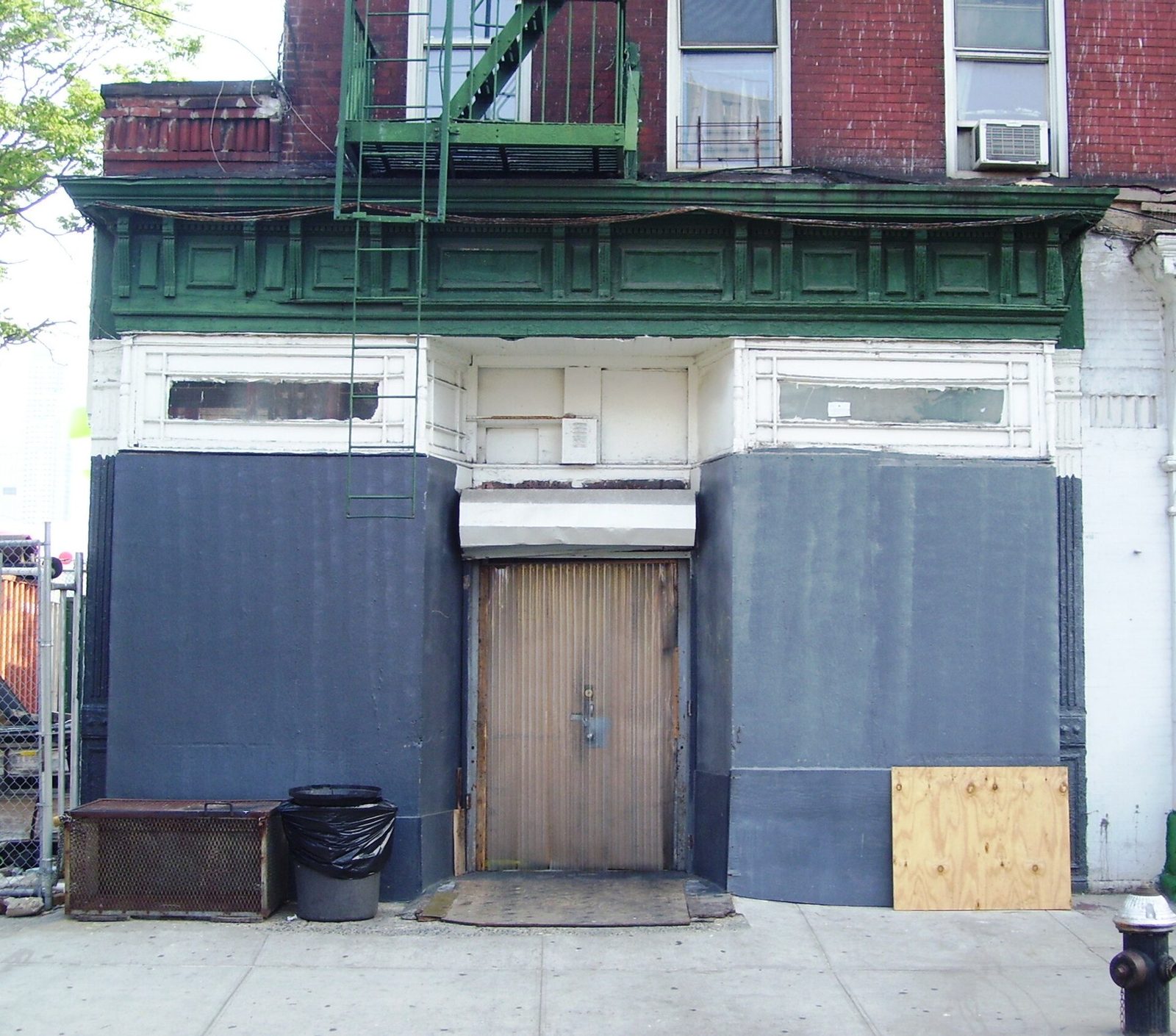
What does a fixed daily debit do to a New York restaurant in a slow month?
It takes a larger share of sales exactly when sales fall. Here is Marisol's hypothetical week. In a busy stretch she sells $5,000 a day, six days a week, which is $30,000. Her debits of $850 a day come to $5,100, or 17 percent of sales.
In a slow stretch she sells $3,200 a day, or $19,200 a week. The same $5,100 is about 27 percent of sales, leaving $14,100. Four full-time kitchen workers at the $17.00 floor cost $2,720 of that before payroll taxes, and the rent, food, utilities and the sales tax she has collected for the state all come from the same $14,100.
A fixed debit does not know that February is slow. Only the owner can do that arithmetic in time, so do it before the account is short.
NYC Tourism + Conventions forecast 66.3 million visitors for 2026, which would be a 2 percent rise, yet a yearly total says little about the quiet weeks inside it. Some contracts include a reconciliation clause, which lets a merchant ask to have the payment adjusted toward actual receipts, and its wording varies by contract. The guide to the reconciliation right explains how to read it, and the guide on slow-season payments covers planning.
The misuse that turns a tight month into a stack is taking a new advance to cover the last one's debit. The stacking guide shows how fast the math moves. To see where your own advances stand, run them through the MCA cost calculator.
Which free public resources help New York area business owners?
The city, the state and the bar associations all run public services, and none of them is a Hamilton & Merchant partner or affiliate. NYC Small Business Services lists NYC Business Solutions Centers, which provide public services for starting, running and growing a business, plus a Business Express Service Team that acts as one point of contact for city processes.
The New York Small Business Development Center network offers no-cost, confidential one-on-one advisement through 20 regional centers and more than 70 satellite locations statewide. Those centers offer one-on-one advising and guidance on small business financing, and a useful visit starts with your three latest bank statements and a list of what comes due each week for the next two months. They are not law offices. For legal questions, ask a county or state bar association for its lawyer referral service, and say that you want someone who handles commercial debt.
The guide to rebuilding cash flow works through the budget after the immediate pressure eases.
When should a New York area owner get help with merchant cash advance debt?
The sooner the signs show up, the more choices remain. The signs I would take seriously are a restraint notice, a summons or a lawyer's letter; a debit you can no longer cover without delaying payroll or sales tax; one advance paying off another; and not knowing what you still owe to each funder.
A first conversation with Hamilton & Merchant is free and confidential. It helps you understand where you stand and what kind of help fits, whether that is an attorney, a restructuring or a settlement program. Hamilton & Merchant is based in Orlando, so the call happens by phone at (407) 993-1416, and how a first conversation works shows the order of questions. Some funders agree to a settlement and some don't, and results vary.
In practice the call covers four things. We read your list of advances and debits together, so the picture is on one page. We ask whether a guarantee, a confession of judgment or a court paper is involved, and which county it names. We talk about which kinds of professionals might fit your situation, including a New York or New Jersey attorney for anything legal. And we talk about timing, such as the payroll and tax dates in the next few weeks. You leave with questions in the right order, not with a contract to sign.
In a settlement program the regular payments usually stop while each funder is negotiated, and that puts the advances in default. Default can bring a lawsuit, added fees, damage to credit, and a claim on any personal guarantee. That is why the decision belongs to you and your own attorney, and why comparing bankruptcy, settlement and restructuring comes first.
What to bring to the conversation
- Every advance contract, with the disclosure page, if you received one.
- Your last three months of business bank statements.
- A list of every advance with its daily or weekly debit.
- Any confession of judgment, summons, restraint notice or lawyer's letter.
- Your payroll and sales tax calendar for the next 60 days.
What good help does and does not do
Do this
- Explain options in plain words and name the risks.
- Send you to your own licensed attorney for legal questions.
- Let you take your time with a written agreement.
Never do this
- Promise a result or a timeline.
- Charge before any work is done.
- Tell you to ignore a lawsuit or a restraint notice.
The guides on how to vet a business debt relief company and on choosing between an MCA lawyer and a debt relief company are worth reading before you sign anything with anyone, including us. The page on merchant cash advance relief describes the general process.
What should a New York area owner do this week?
Gather facts before making decisions, and put dates on the calendar. This sequence takes a few evenings.
- Build the advance map from the note above, one row per advance.
- Mark each debit on your last three bank statements to the funder it belongs to.
- Find the disclosure page for each advance and compare its numbers with what has been debited.
- Ask your attorney or the county clerk whether any confession of judgment has been filed in a county where you have a place of business.
- Write down the dates for the Commercial Rent Tax return, if you rent in Manhattan below 96th Street, your sales tax filing and the quarterly MCTMT payment, so you can see how much room is left around them.
- Call a New York or New Jersey attorney of your own and ask how CPLR 5222 and 5222-a apply to your accounts.
- Run the free MCA diagnostic, then call (407) 993-1416 for a free, confidential first conversation.
None of these steps requires you to decide anything about a funder yet. They put you in a position where a decision, when it comes, is made from numbers on a page and not from a late-night guess.
Questions owners in New York ask
Does New York have a disclosure law for merchant cash advances?
Yes. Article 8 of the New York Financial Services Law and the Department of Financial Services rule at 23 NYCRR Part 600 require a provider to state the financing amount, finance charge, estimated APR, total repayment, payment amounts and other terms at the time of a specific offer, and to obtain the signature of the recipient. The law covers sales-based financing up to $2,500,000, with listed exemptions. Your own attorney can say how it applies to your contract.
Where can a funder file a confession of judgment against a Brooklyn or Queens business?
Under CPLR 3218, a confession can be filed within three years after the affidavit is signed, and only with the clerk of the county the affidavit named as the defendant’s residence or the county where the defendant resided at filing. A business entity resides in any county where it has a place of business, so a company with two locations can have two counties. Your own attorney can read the document you signed.
Does New Jersey allow confessions of judgment in merchant cash advance contracts?
New Jersey law (P.L. 2019, chapter 430) defines business financing to include a cash advance, and says a confession provision that does not comply is invalid and unenforceable against the New Jersey business. As of October 29, 2026, no enacted New Jersey commercial financing disclosure statute was found. A New Jersey attorney can confirm the current status and how the law applies to a specific contract.
How much money in a New York business bank account can a restraining notice not reach?
CPLR 5222(i) says a restraining notice does not apply to an amount up to the greater of 240 times the federal or state minimum hourly wage in effect when the earnings are payable. At the $17.00 downstate wage that works out to $4,080 in 2026. The text speaks of a judgment debtor’s account, and whether it reaches a company account is a question for your own attorney. Nothing here promises that any dollar is safe.
Which New York court hears a merchant cash advance lawsuit?
The Civil Court of the City of New York hears money actions up to $50,000. Larger cases go to the Supreme Court in the county, where the Commercial Division takes cases above a county threshold, such as $500,000 in New York County, $150,000 in Kings County and $100,000 in Queens. The thresholds leave out interest, costs and fees. Your own attorney can tell you where a specific case belongs.
What does a free first conversation with Hamilton & Merchant cover for a New York area owner?
Hamilton & Merchant is based in Orlando, so the first conversation happens by phone. It covers your list of advances and debits, whether a guarantee, a confession of judgment or a court paper is involved and which county it names, and which kinds of professionals might fit, including a New York or New Jersey attorney. Hamilton & Merchant offers a free, confidential first conversation at (407) 993-1416.
Running a business in the New York area with daily debits?
Call Hamilton & Merchant at (407) 993-1416 for a free, confidential first conversation, or send us a message. Hamilton & Merchant is based in Orlando, Florida, and is not a law firm; nothing on this page is legal or tax advice.
Sources
- New York State Senate, Financial Services Law section 801.
- New York State Senate, Financial Services Law section 802.
- New York State Senate, Financial Services Law section 803.
- New York State Senate, Financial Services Law section 808.
- New York State Senate, Financial Services Law section 809.
- New York State Senate, Financial Services Law section 810.
- Cornell Legal Information Institute, 23 NYCRR 600.0 and 600.1.
- New York State Department of Financial Services, press release on the commercial financing disclosure regulation, February 1, 2023.
- New York State Department of Financial Services, Small Business Financing Providers.
- New York State Department of Financial Services, Exemption from judgments adjustment table, effective April 1, 2024.
- New York State Senate, CPLR section 3218.
- New York State Senate, CPLR section 3213.
- New York State Senate, CPLR section 5222 and 5222-a.
- New York State Senate, CPLR section 5224.
- New York State Senate, CPLR section 5201.
- New York State Senate, CPLR section 5203.
- New York State Senate, CPLR section 5004.
- New York State Senate, CPLR section 5231.
- New York State Senate, General Obligations Law sections 5-1401 and 5-1402.
- New York State Senate, New York City Civil Court Act section 202.
- Cornell Legal Information Institute, 22 NYCRR 202.70, Rules of the Commercial Division.
- New York State Senate, Senate Bill S6395 (2019), chapter 214.
- New York State Senate, CPLR section 5222(i), applied to the 2026 minimum wage.
- New York State Attorney General, press release on a judgment against lenders, February 8, 2024.
- New York State Department of Labor, Minimum Wage.
- New York State Department of Taxation and Finance, MCTMT employer rates, and Business Information for Sales Tax Purposes.
- NYC Department of Finance, Commercial Rent Tax.
- NYC Department of Consumer and Worker Protection, Paid Safe and Sick Leave FAQs.
- MTA, Congestion Relief Zone toll rates, and launch press release.
- Office of the New York State Comptroller, Restaurant Industry Critical to New York City's Economy, October 2020.
- Office of the New York State Comptroller, New York City Industry Sector Dashboards: Restaurant.
- Office of the New York State Comptroller, Small Business Owners Are the Backbone of New York's Economy, March 2026.
- New York City Comptroller, Who's Minding the Storefront? press release, June 4, 2026.
- NYC Tourism + Conventions, 2025 Annual Report, March 2026.
- New Jersey Legislature, P.L. 2019, chapter 430.
- New Jersey Department of Labor and Workforce Development, Minimum wage press release, September 29, 2026.
- NYC Small Business Services, home page.
- New York SBDC, home page.