

A Baltimore-area owner with merchant cash advance debt can start by listing every advance with its daily debit and writing down the service date on any court paper, because a defendant in Maryland’s District Court has 15 days to file a notice of intention to defend. A free, confidential first conversation can then put the numbers side by side. The worry underneath is the next debit, landing while sales are still catching up.
Picture an owner like Marcus, who runs six trucks out of southeast Baltimore, hauling containers and vehicles to and from the marine terminals. In early 2024 he took two advances to buy a seventh tractor and pay a large insurance premium, and the two debits together come to $600 every business day. Marcus is a composite, not a real client, and every number here is round on purpose.
When the Key Bridge fell on March 26, 2024, his dispatch board emptied faster than any invoice cycle could refill it. The $600 kept leaving the account. Two years later the harbor is moving cargo again, yet his receivables, his tax calendar and his bank balance still carry the marks of that spring, and a new set of Maryland dates is coming at him: a 2027 payroll program, a city personal property bill, and a court system with short clocks.
I am Tammy Houston, Senior Accounting & Debt Specialist at Hamilton & Merchant, and I will define each term before I use it. Hamilton & Merchant is based in Orlando, Florida, with no office in the Baltimore area, so the first conversation happens by phone. It is not a law firm and not a CPA firm, and nothing on this page is legal or tax advice. Where a step needs a lawyer or a CPA, please hire your own, licensed in Maryland.
How did the Key Bridge collapse change cash flow for Baltimore-area businesses?
It shut the harbor’s main shipping channel to normal traffic for about eleven weeks and left a bridge rebuild that the state forecast in November 2025 would run to 2030. The channel was closed from the collapse on March 26, 2024, with limited access starting April 25, until June 10, 2024, when it was fully restored to its original 700 feet wide and 50 feet deep. Companies that move cargo sit closest to a closed channel, and the businesses that sell to their workers sit one step behind.
March 27 through June 10 holds 53 banking days once Memorial Day is set aside. A fixed debit does not pause for a closed channel. For Marcus, 53 days at $600 is $31,800 leaving his account during weeks when a large share of his loads did not exist. That arithmetic is hypothetical, but the shape is the point: income paused, the schedule did not.
A disaster loan window opened quickly and has since closed. The Small Business Administration issued an economic injury declaration for Maryland on March 29, 2024, naming nearly every county in the state as a primary county, among them Anne Arundel, Baltimore, Carroll, Harford, Howard and Queen Anne’s, and applications ended on December 30, 2024. An owner who borrowed through that program now has a repayment to fit into the monthly plan alongside everything else.
50 million tons
The Port of Baltimore handled about 50 million tons of cargo in 2025, its second-best year on record, so the harbor itself is working again.
Source: Maryland Port Administration, 2025 cargo results announcement, March 24, 2026
The rebuild is the slower story. The Maryland Transportation Authority forecast in November 2025 that the new bridge would cost between $4.3 billion and $5.2 billion and finish in 2030, two years later than first planned. In June 2026 the state’s transportation secretary said the $5 billion range still stands as the state bids the work in four separate pieces. Plans may keep moving, so I would not build a cash plan around any single opening date.
A strong year for the port says nothing about one company’s cash. Invoice terms, fuel, insurance and the debit schedule decide that. Haulers and warehouse operators can read our page on business debt for trucking and logistics for the industry side.
Which Baltimore-area industries should check their debit schedule first?
Any business whose income comes in waves should, and the metro has several. The Baltimore-Columbia-Towson area counted 1,441,400 nonfarm jobs in September 2026 (preliminary), including 294,700 in education and health services, 235,000 in government, 229,100 in trade, transportation and utilities, 135,700 in leisure and hospitality, and 86,400 in mining, logging and construction. The unemployment rate was 3.5 percent.
Each of those groups earns on its own rhythm. A restaurant is paid at the table, and Baltimore drew 28.7 million visitors in 2025 who spent $4.3 billion, $1.15 billion of it at restaurants. A contractor is paid in draws that follow a schedule of work. A dental or medical practice bills insurers and waits for claims to clear. A hauler is paid after the delivery, on whatever terms the shipper set. A daily debit treats all four the same.
A daily debit is a straight line, and a restaurant, a hauler and a contractor all earn in waves.
The port’s reach is wide. The Maryland Port Administration’s study counts 20,193 direct jobs, such as longshore work, trucking, towing and terminal operations, and 273,675 jobs linked to the port once related jobs are included. The related group depends less on the port than the direct group does, so read the larger number as reach, not as a count of jobs that would vanish.
If you own a restaurant, see restaurants and business debt. For builders and trades, our contractor page explains how draw schedules interact with a fixed debit.
How do federal shutdowns reach contractors around Fort Meade and Baltimore?
They reach them through invoices. When an agency pauses, a prime contractor may pause what it pays its subcontractors, and a small firm’s payroll, rent and advance debits continue on their original dates. Fort George G. Meade alone has over 64,000 employees across more than 115 agencies and organizations.
The shutdown that began October 1, 2025 was described by the Maryland Department of Labor as the longest in history. The same department estimated that federal employment in the state fell by 10,300 in October and November 2025 combined, and that federal jobs make up 6 percent of Maryland employment and 10 percent of its wages. The department also said furloughed employees of federal contractors may be eligible for state unemployment insurance benefits, which helps a worker but does not pay the company’s own bills.
200,000+
Maryland is home to more than 200,000 federal contractors, alongside about 260,000 federal workers.
Source: Maryland Department of Labor, news release on federal shutdown resources, October 1, 2025
If a share of your revenue comes through a federal prime contract, write down three things this week: the share of monthly revenue it represents, the payment terms in the subcontract, and what your cash balance would cover if that invoice slid by 60 days. Then set that number beside your total monthly debits. Our guide to rebuilding cash flow walks through the arithmetic.
Does Maryland have a merchant cash advance disclosure law?
I did not find one in force. Maryland has no enacted statute that I could confirm requiring a funder to show a total repayment, finance charge or estimated annual percentage rate on a merchant cash advance. The contract you signed is therefore the main document, and the 2026 session shows that the subject is live.
Senate Bill 881 of 2026 would have licensed and regulated commercial financing providers, and its House cross-file, House Bill 1007, carried the title Small Business Truth in Lending Act. The Senate passed Senate Bill 881 by a vote of 42 to 0 in March 2026 and sent it to the House Economic Matters Committee. The legislature’s bill page shows no House vote and the 2026 session has ended, so check the General Assembly site before you treat any disclosure rule as law in Maryland.
A merchant cash advance is sold as the purchase of future receivables, and courts look at the actual terms of a given contract to decide how to treat it. Our study of court decisions shows how judges have read those terms, and the state MCA laws study compares states side by side. For differences that matter if your lender or your customers sit across a state line, see how state rules differ.
Without a disclosure box, do the math yourself. Total payback minus the amount advanced is the cost, and dividing the debit by your average daily deposits shows the weight. The MCA cost calculator does both in a minute.

Which Maryland court could hear a funder’s lawsuit, and how long do I have to respond?
It depends on the amount, and the clocks are short. The District Court of Maryland has exclusive original jurisdiction over contract and tort claims up to $30,000, not counting interest, costs and attorney’s fees where the law or contract allows them. When more than $5,000 is at stake, the plaintiff may choose a circuit court instead.
Service means the formal delivery of court papers to you. After service, a District Court defendant files a notice of intention to defend within 15 days, or within 60 days when served outside Maryland. If none is filed, the court may decide liability and set damages on the plaintiff’s evidence alone on the trial date. In a circuit court, an answer is due 30 days after service. These are the two numbers I would put on the wall.
| Stage | What the rule sets | Where it comes from |
|---|---|---|
| District Court claims | Exclusive up to $30,000, before interest, costs and attorney’s fees | Courts and Judicial Proceedings 4-401 |
| Choice of court | Plaintiff may file in District or circuit court when more than $5,000 is claimed | Courts and Judicial Proceedings 4-402(d) |
| Response in District Court | Notice of intention to defend within 15 days of service | Maryland Rule 3-307 |
| Response in circuit court | Answer within 30 days of service | Maryland Rule 2-321 |
| Time to sue | Three years from when the claim accrues, unless another statute differs | Courts and Judicial Proceedings 5-101 |
| Interest on a judgment | 10 percent a year on the amount of the judgment | Courts and Judicial Proceedings 11-107 |
| Life of a judgment | 12 years, renewable for another 12 | Maryland Judiciary guidance |
In the District Court, a party may not demand a jury trial when the amount in controversy is $25,000 or less. Ten percent a year on a judgment is a real number: on $40,000 it adds $4,000 in the first year before any costs. I cannot tell you which court a particular case would land in or whether a particular claim was filed in time. A Maryland-licensed attorney can, and our lawsuit survival guide lists the questions to ask in the first call.
What happens if the contract names a court outside Maryland?
A contract can name a court in another state, and New York is one such choice. If a funder wins a judgment there, Maryland’s Uniform Enforcement of Foreign Judgments Act lets it file an authenticated copy with a Maryland clerk. The filed judgment then carries the same effect, and is subject to the same procedures and defenses, as a Maryland judgment.
The clerk mails notice of the filing to the debtor, and the filing fee is $25. Judgments of $2,500 or less go to the District Court clerk, and larger ones may go to a circuit court clerk. That puts the garnishment tools in the next two chapters within reach of a judgment from elsewhere. Our guide to an out-of-state MCA judgment covers the full path.
A confessed judgment is a clause that lets a creditor have judgment entered without a trial, and Maryland Rule 2-611 requires the written instrument and an affidavit and lets the defendant move to open, modify or vacate within the time for answering. The Washington, D.C. metro page goes deeper on Maryland confessed judgments, our guide to confession of judgment clauses covers the clause itself, and the Philadelphia page covers Pennsylvania’s version for owners who do business across the line.
How does a bank garnishment work in Maryland?
After a court enters a judgment, the creditor can ask the clerk for a writ of garnishment and have it served on your bank. The bank then freezes the money in the account up to the amount of the judgment, with costs and interest, and you have 30 days from the date the writ was served on the bank to ask the court for an exemption. Garnishment means the court-ordered holding of money owed to you by a third party, here the bank.
Here is the sequence as I read the rules, in the order a Baltimore-area owner would experience it.
- A court enters a judgment. A creditor that has one can ask for a writ of garnishment in the same case, under Rule 2-645 in a circuit court or Rules 3-645 and 3-645.1 in the District Court.
- The clerk issues the writ, and it is served on the bank. A copy is promptly mailed to your last known address.
- The bank freezes the money up to the judgment amount and files an answer with the court. The first $500 in an account is exempt without any request from you, and the bank reports the amount above $500 that it is holding.
- You have 30 days after service on the bank to file a request for release or an exemption. In the District Court the form is the Motion for Release of Property from Levy/Garnishment, numbered DC-CV-036.
- If no request is filed, the creditor may ask the court to release the unexempted funds to it.
Notice what the clock measures. It starts when the writ reaches the bank, not when the mailed copy reaches your desk, and the two dates can differ. Some federal benefit payments may be protected automatically, and the District Court rule requires the writ to say so.
A writ aimed at wages is a separate tool with its own rule. For the bank-account side, our frozen account guide explains what each stage looks like on a statement, and what a funder can seize separates a lien from a levy from a garnishment.
Quick check
A writ of garnishment is served on your bank on Monday, October 5, 2026, and the mailed copy reaches you on October 14. By what date must a request for exemption be filed?
See the answer
November 4, 2026. The 30 days run from service on the bank, October 5, not from the day you read the mail. Counting from October 14 would give you November 13, nine days too late, which is why I ask every reader to check the date on the writ itself.
What does Maryland’s exemption law protect, and what changed in 2023 and 2026?
The statute lists what a judgment creditor cannot take, and the amounts are modest. Up to $500 in a deposit account is exempt without election. Cash or property up to a combined $6,000 is exempt if the debtor elects within 30 days of the attachment or levy. Tools and instruments needed for a trade or profession are exempt up to $5,000 in value, except goods kept for sale. These are descriptions of the law, not a promise about any particular account.
The $500 rule is recent. Chapter 720 of 2023, which took effect October 1, 2023, added the no-election exemption, and it applies to writs issued after that date. The $500 sits inside the $6,000 cap, so an election adds at most $5,500 on top of it. The $500 applies separately to each bank and each writ, and if you hold several accounts at one bank, the bank decides where the $500 lands. The section’s exemptions do not apply to wage attachments.
Two 2026 bills matter. House Bill 1520 would have raised the household goods exemption from $1,000 to $5,000 and added categories such as one work vehicle. It passed the House 137 to 0 on March 23, 2026, but I found no Senate passage, and I am not treating it as law. Senate Bill 939, Chapter 400 of 2026, took effect June 1, 2026 and changed the bankruptcy exemption for owner-occupied residential property, including certain property held in a revocable trust. That change applies inside a bankruptcy case, not to a garnishment.
One question I cannot answer: the statute says “the debtor,” and whether an LLC or corporation can claim these exemptions for its own account, as opposed to an individual, is a point for your Maryland attorney. If you signed a personal guarantee, a creditor may pursue you personally as well, and the four words in a personal guarantee are worth reading with that attorney. The guide to your rights as a debtor gives the federal side.
Myth Maryland protects the whole balance of a business account from a freeze.
Fact: The no-election exemption is $500 per bank per writ. More requires a request within 30 days, and the statute caps the $500 and the elected amount together at $6,000. Whether a business entity can claim it is for your attorney.
Myth The Key Bridge disaster loans are still open to apply for.
Fact: The Small Business Administration’s application deadline for the Maryland economic injury declaration was December 30, 2024.
Myth Maryland already makes funders show an estimated APR on every advance.
Fact: I could not find an enacted Maryland disclosure law. A 2026 bill passed the Senate 42 to 0, and the legislature’s page shows no House vote.
Myth Maryland’s paid family leave payroll deductions began in 2025.
Fact: The start was pushed back more than once. Contributions are now scheduled to begin January 1, 2027.
What do Maryland’s wage and leave rules cost a small employer in 2026?
The floor is $15 an hour for most employees, and $16 in Howard County, where Columbia sits, since July 1, 2026. I found no higher local rate for Baltimore City or Baltimore County. Workers under 18 must earn at least 85 percent of the state rate, and the tipped cash wage is $3.63 an hour, with the employer covering any gap between tips and the state rate.
Round numbers show the weight. Ten full-time workers at $15 for 2,080 hours each is a $312,000 wage floor. In Howard County at $16 the same ten cost $332,800, which is $20,800 more. Those figures leave out payroll taxes. Restaurants and bars with tipped staff should check the shortfall rule against their own sales logs.
Earned sick and safe leave under Maryland’s Healthy Working Families Act adds an hour of leave for every 30 hours worked, up to 40 hours a year. Employers with 15 or more employees provide it paid, and employers with 14 or fewer provide it unpaid. At $15, 40 hours is $600 per employee per year at the cap.
Unemployment insurance taxes the first $8,500 each employee earns in a calendar year. Contributory rates run from 0.30 to 7.50 percent, and a new employer’s rate may fall between 1.0 and 2.6 percent. At 2.6 percent, the most that rate band allows a new employer, that is $221 per employee. Small amounts, but they arrive on a calendar. Our article on what to do when you can’t make payroll sets out the order of operations.
What does the FAMLI program change for Baltimore-area payrolls in 2027?
It adds a new payroll contribution starting January 1, 2027. FAMLI stands for Family and Medical Leave Insurance, Maryland’s paid leave program. Contributions had already been pushed back to July 1, 2025 when House Bill 102 of 2025, signed May 6, 2025, moved that start to January 1, 2027, and benefits are scheduled for January 2028, up to 12 weeks of paid, job-protected leave with weekly benefits capped at $1,000.
0.90%
The 2027 FAMLI contribution rate is 0.90 percent of covered wages, up to the Social Security wage base.
Source: Jackson Lewis, Maryland Employers: FAMLI Contributions Begin Jan. 2027, July 7, 2026
Here is how I would work the first line of your 2027 budget. An employer with $400,000 of covered payroll and 15 or more employees owes 0.90 percent, or $3,600 for the year. The employer may withhold up to half of that rate from employee pay, which would be $1,800, and pays the rest. Employers with fewer than 15 employees are not required to pay the employer portion, but they must remit any employee portion they withhold.
Three cautions. First, confirm the rate and wage base with the Maryland Department of Labor before you set payroll deductions, because the state’s rate notice is the controlling document. Second, benefits are scheduled to open on January 1, 2028 and no later than January 3, 2028, so plan for the first week of January 2028. Third, the program has been delayed before, and I am describing the schedule as of this writing. For the wider 2027 picture, see MCA laws and rules taking effect in 2027, and for budgeting with advance debits in the mix, our 2027 budget guide.
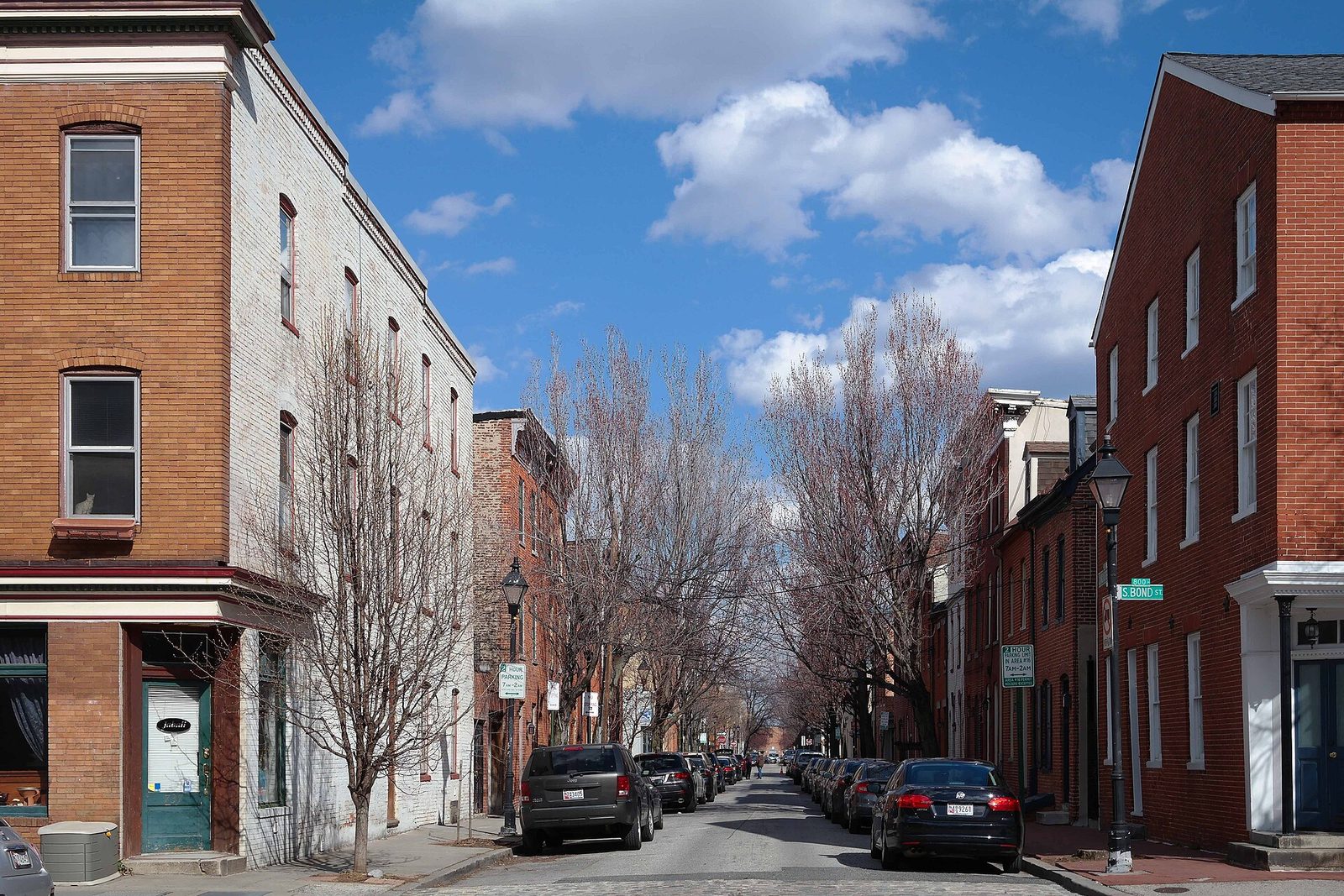
Which taxes should a Baltimore-area owner put on the calendar next to the advance debits?
Sales tax collected, payroll withholdings and the city or county property bills, because they are owed to governments whether or not an advance is being repaid. Maryland’s sales and use tax rate is 6 percent, and the statute says a vendor is a trustee for the State and is liable for collecting it. The money you collect at the register is the State’s, held for it.
In round numbers, $50,000 of taxable sales in a month puts $3,000 of sales tax through your hands. If an advance debit makes the checking balance too thin to remit it, the shortfall comes out of money that belongs to the State. Our short piece on the one creditor you always pay first makes the same point for payroll taxes.
Baltimore City sets its own rates. For fiscal 2027 they include real property tax of $2.248 per $100 of assessed value and a business personal property tax of $5.62 per $100. That second rate falls on business equipment. A shop with $150,000 of assessed equipment would see $8,430 a year, and a $1,000,000 assessed building would carry $22,480 in real property tax. Owners in the surrounding counties should read their own county’s bill, because these are Baltimore City numbers.
List each of these dates next to your debit schedule. Look at your statements for a thin balance in the days before each due date. If you see that pattern, it is time to talk to your CPA.
How do Baltimore’s seasons and events bend a daily debit?
They change the share of sales a fixed payment takes. Take a harbor-area restaurant with a $400 debit each business day. Over 21 business days that is $8,400 a month. In a $60,000 summer month the debit is 14 percent of sales. In a February when snow closes the dining room for a week and sales drop to $36,000, the same $8,400 is about 23 percent. The debit never moved; the sales did.
Weather is the visible part. At BWI the normal snowfall is 6.4 inches in January, 7.5 inches in February and 19.3 inches for the season. The spread around that normal is wide: the 2009–10 season measured 77.0 inches, 50.0 of them in February 2010, while 2022–23 recorded 0.2 inches. A budget built on the normal can be wrong in either direction.
Events matter too. Baltimore’s 2025 visitors numbered 28.7 million, 16.3 million of them on day trips, so a game day, a festival weekend or a convention can move a restaurant’s week. A construction firm’s curve follows the frost and the permit office instead. A trucking firm follows ship calls, and the port logged 2,223 vessel calls in 2025. Whatever drives your curve, the debit does not follow it, and our piece on slow season and MCA payments walks through ways to measure the gap.
What public and community resources can a Baltimore-area owner use?
Several local services are open to owners before any paid help is hired. Hamilton & Merchant is not affiliated with any of them, and I list them neutrally so you can compare.
- The Maryland Small Business Development Center’s Baltimore region offers no-cost, confidential business consulting to owners in Baltimore City and Baltimore County, by appointment, at offices on the University of Maryland-Baltimore City and Stevenson University campuses.
- SCORE’s Greater Baltimore chapter offers free business mentoring and serves Baltimore City and Baltimore, Harford and Howard counties.
- The University of Baltimore School of Law’s Community Development Clinic offers free, non-litigation legal services, including contract review, to small businesses located in underserved neighborhoods, with law students working under faculty supervision.
- The Bar Association of Baltimore City runs a Lawyer Referral and Information Service that helps callers find an attorney. Ask about any consultation fee when you call.
These services help with plans, contracts and finding a lawyer. They do not replace an attorney who reads your advance contracts and any court papers. Our comparison of an MCA lawyer and a debt relief company sets out what each kind of help can and cannot do.
When should a Baltimore-area owner get help with merchant cash advance debt?
Get help when the debits start deciding which bills you pay, when you are considering a new advance to cover an old one, or when any court paper arrives. The earlier the call, the more choices stay open.
These are the signs I watch for in the numbers:
- The monthly debits divided by monthly deposits keep climbing, especially in the weak months you already know about.
- A renewal or a second advance is being used to cover the first one.
- Payroll, a tax payment or a vendor invoice has been late because of a debit.
- A default notice, a frozen account or a court paper has arrived. Write the date of service on the paper before you do anything else, and call a Maryland-licensed attorney the same day.
- You signed a personal guarantee, and your home or personal accounts are part of the worry.
A first conversation with Hamilton & Merchant is by phone and is free and confidential. Its purpose is to help you understand your situation and the right kind of help for it, which may be a lawyer, a CPA, a financing conversation, or a settlement program. You can run the free MCA diagnostic first if you would rather see your numbers before you speak to anyone, and how a first conversation works describes the call.
Bring what you have, and bring it even if it is incomplete:
- Every advance contract, with the date, amount advanced, total payback and the daily or weekly debit.
- The last three months of bank statements for every account, with the bank names, since the $500 exemption applies per bank.
- Any court papers, with the date and court written at the top, and any default or demand letters.
- Any personal guarantee, and your payroll and tax calendar for the next 90 days.
The best first call is one where the numbers are on the table and nobody is asking you to decide anything yet.
In a settlement program, the regular payments usually stop while each funder is negotiated, and that puts the advances in default. Default carries four risks I name together every time: a lawsuit, added fees, damage to credit, and a claim on any personal guarantee. Some funders agree to a settlement and some don’t, and results vary. Nobody can promise you an outcome, and you should not take a step like this without your own attorney’s advice.
Good help does this
- Explains the options, including the ones it does not provide.
- Asks to see the contracts and statements before it says anything about your case.
- Tells you to take court papers to your own Maryland attorney the day they arrive.
- Puts fees in writing and explains when they are due.
Good help never does this
- Promises a result, a timeline or a number.
- Charges before any work has been done.
- Tells you to ignore a lawsuit or a court deadline.
- Pushes you to make decisions about payments, accounts or debit authorizations before your own attorney has weighed in.
If a call sounds right, you can reach Hamilton & Merchant at (407) 993-1416. Our guide on how to vet a business debt relief company gives you questions to ask anyone you speak with, including us.
What should a Baltimore-area owner do this week?
Do the following in order. None of it costs money, and each step gives you an answer or a date.
- List every advance: the funder, the date, the amount advanced, the payback, and the debit and its frequency. This is the page every conversation starts from.
- Pull the last three months of statements and, month by month, divide the debits by the deposits. Write down the percentages.
- Look yourself up, under your business name and your own, on the Maryland Judiciary’s Case Search, which the court system lists under E-Services. If a District Court or circuit case appears, note the case number and the service date.
- If you hold court papers, count 15 days from service for a District Court notice of intention to defend or 30 days for a circuit court answer, and call a Maryland-licensed attorney today.
- Write the name of every bank where you hold an account, and keep the Motion for Release of Property from Levy/Garnishment (DC-CV-036) and the 30-day rule where you can find them.
- Mark three dates on the calendar: your next sales tax filing, the January 1, 2027 start of FAMLI contributions, and, if your equipment sits in Baltimore City, the personal property tax bill.
- Book a free appointment with the Maryland Small Business Development Center, and set up a first conversation if the numbers in step two worry you.
Questions owners in Baltimore ask
How much of my bank account can a creditor freeze in Maryland after a judgment?
After a judgment, a creditor can ask the clerk for a writ of garnishment, and the bank freezes funds up to the judgment amount, with costs and interest. Maryland law exempts the first $500 in a deposit account without any request, and a debtor may elect more, up to $6,000 combined, within 30 days. Whether a business can claim these is a question for your Maryland attorney.
How long do I have to respond if a funder sues my Baltimore business?
In Maryland’s District Court, a defendant files a notice of intention to defend within 15 days after service, or 60 days when served outside Maryland. In a circuit court, an answer is due 30 days after service. Write down the service date and take the papers to a Maryland-licensed attorney the same day. This is general information, not legal advice.
When do Maryland FAMLI payroll contributions start for Baltimore employers?
Contributions are scheduled to begin January 1, 2027, at a total rate of 0.90 percent of covered wages up to the Social Security wage base. Employers with 15 or more employees may withhold up to half from pay, and smaller employers must remit any employee share they withhold. Benefits of up to 12 weeks, capped at $1,000 a week, are scheduled for January 2028.
What is the Maryland minimum wage in 2026, and is Howard County different?
Most Maryland employees must be paid at least $15 an hour, and the tipped cash wage is $3.63 an hour, with the employer covering any gap below the state rate. Howard County, where Columbia sits, has required at least $16.00 an hour since July 1, 2026. The state wage page lists no higher rate for Baltimore City or Baltimore County.
Can a Baltimore business still apply for the Key Bridge disaster loans?
No. The Small Business Administration issued its Maryland economic injury declaration on March 29, 2024, and the application deadline was December 30, 2024. The Key Bridge collapsed on March 26, 2024, and the main shipping channel was fully restored on June 10, 2024. If you borrowed through the program, a repayment belongs on your monthly plan next to your daily debits.
Is there a Maryland law that makes merchant cash advance funders show the total cost?
I could not confirm one in force. Senate Bill 881 of 2026, on commercial financing, passed the Senate 42 to 0 in March 2026, but the legislature’s page shows no House vote. Check the General Assembly site before relying on any disclosure rule. Hamilton & Merchant offers a free, confidential first conversation at (407) 993-1416.
Running a business in the Baltimore area?
Call Hamilton & Merchant at (407) 993-1416 for a free, confidential first conversation, or send us a message. Hamilton & Merchant is based in Orlando, Florida, and is not a law firm; nothing on this page is legal or tax advice.
Sources
- Maryland Department of Labor, Maryland Minimum Wage and Overtime Law, 2026.
- Baker Donelson, Maryland Paid FAMLI Program: Current Status and Key Updates.
- Maryland Department of Labor, Family and Medical Leave Insurance.
- Jackson Lewis, Maryland Employers: FAMLI Contributions Begin Jan. 2027, July 7, 2026.
- Maryland Department of Labor, Earned Sick and Safe Leave notice.
- Maryland Department of Labor, Unemployment Insurance tax rates.
- Maryland General Assembly, Tax-General section 11-104 and section 11-401.
- Baltimore City Bureau of the Budget and Management Research, City Tax Rates, Fiscal 2027.
- U.S. Small Business Administration, Administrative Declaration of an Economic Injury Disaster for the State of Maryland, Federal Register Doc. 2024-07122, April 4, 2024.
- Landline, Fort McHenry Channel at Port of Baltimore fully restored, June 2024.
- WYPR, Baltimore’s Key Bridge rebuild cost balloons, schedule pushed two years, November 18, 2025.
- WTOP, Maryland transportation officials hold firm on $5.2 billion price tag to replace Key Bridge, June 3, 2026.
- Maryland Port Administration, 2025 cargo results announcement, March 24, 2026.
- Maryland Port Administration, Economic Impacts Generated by the Port of Baltimore.
- U.S. Bureau of Labor Statistics, Baltimore-Columbia-Towson, MD area economic summary, September 2026.
- Visit Baltimore, Tourism Impact Report 2025, updated August 2026.
- Maryland State Archives, Maryland Manual On-Line: Employment.
- Maryland Department of Labor, Federal shutdown resources, October 1, 2025, and new employment estimates for October and November 2025.
- Maryland General Assembly, Senate Bill 881 (2026) and House Bill 1007 (2026).
- Maryland General Assembly, Courts and Judicial Proceedings, section 4-401, section 4-402, section 5-101, section 11-107, section 11-504 and sections 11-802 to 11-805.
- Courtrules.net, Maryland Rules 2-645, 3-645.1, 3-307, 2-321 and 2-611.
- Maryland Judiciary, Judgments and Debt Collection and District Court civil cases.
- Maryland General Assembly, Chapter 720 of 2023 (Senate Bill 106), House Bill 1520 (2026) and Senate Bill 939 (2026).
- Maryland Small Business Development Center, Baltimore Region.
- University of Baltimore School of Law, Community Development Clinic.
- SCORE, Greater Baltimore chapter, and Bar Association of Baltimore City, Lawyer Referral and Information Service.
- National Weather Service Baltimore/Washington, BWI seasonal snowfall.