

A business owner in the Washington region with merchant cash advance debt can start by laying out every contract, bank statement and daily debit, then speaking with a lawyer licensed in Virginia, Maryland or the District and taking a free, confidential first conversation. Virginia restricts where a funder may sue a Virginia business, and Maryland’s rules still describe how a confessed judgment is entered. The worry is shared: the debit leaves on schedule, the payment does not.
Take Marcus, a composite owner who runs a fifteen-person information-technology support firm in Reston, Virginia, built around one federal task order and a handful of private clients. A payment from the agency once slipped by six weeks, so he took an advance of $75,000 to cover payroll. A second followed the next quarter, and a third helped pay down part of the first. Together they debit $1,100 every business day. His monthly invoice to the agency is $120,000, and it falls due on a federal calendar that the debits ignore. Marcus is not careless. He is an engineer who solved a timing problem with a tool that repeats every day.
This page is for owners like Marcus in the District, Arlington and Fairfax, Alexandria, Montgomery and Prince George’s counties, and the suburbs around them. It covers Virginia’s sales-based financing law, Maryland’s confessed judgments, how federal payment timing meets a daily debit, the courts, and what to bring to a first conversation. Hamilton & Merchant is based in Orlando, Florida, has no office in the capital region, and holds its first conversations by phone. It is not a law firm or a CPA firm, and nothing here is legal or tax advice; for those questions, hire your own professional licensed where you do business.
How is the Washington-area economy changing, and which businesses feel a daily debit first?
A fixed daily debit can press hardest on businesses paid in large, scheduled lumps, such as federal contractors and the restaurants, shops and service firms that depend on federal workers and visitors. The Census Bureau counted 6,465,724 people in the Washington-Arlington-Alexandria metro area on July 1, 2025, up from 6,415,518 a year earlier. That is a gain of 50,206 residents, yet the job counts have moved the other way.
The Bureau of Labor Statistics put the metro area at 3,292,000 nonfarm jobs in September 2026 (preliminary), down 1.8% over twelve months, with unemployment at 3.7%. Government, with federal, state and local combined, stood at 676,600 jobs, down 4.6%. Professional and business services, the group that includes consulting, engineering and technical firms, had 769,400 jobs, down 1.7%. Leisure and hospitality, where restaurants sit, had 318,400, down 1.2%, and mining, logging and construction had 172,200, down 1.4%.
-4.6%
The twelve-month change in government jobs in the Washington-Arlington-Alexandria metro area in September 2026, the largest drop among the sectors reported.
Source: U.S. Bureau of Labor Statistics, Washington-Arlington-Alexandria nonfarm employment, September 2026 (preliminary)
The Federal Reserve Bank of Richmond measured part of the change early. Its July 2025 analysis found that the metro area lost about 14,100 federal jobs, or 3.7% of its federal workforce, between January and May 2025. In the District, Maryland and Virginia alike, professional, scientific and technical services had the highest unemployment claims of any sector, and layoff notices in that sector covered 4,950 employees, 96.6% of them in the D.C. metro area. Visitors cushioned some of this: Destination DC reported more than 27.2 million visitors in 2025 and a record $11.9 billion in visitor spending, though international visitation fell 4%.
Counts like these show where job losses concentrated, not how any single business fared, and they say nothing about which firms are still waiting on a payment. For an owner, the pattern matters more than any single number. A firm that sells to the government, or to people who work for it, sees revenue arrive on someone else’s schedule. The contractor page and the restaurant page describe how that timing plays out in each trade.
What does Virginia’s sales-based financing law require?
Virginia added Chapter 22.1 to Title 6.2 of its Code, sections 6.2-2228 through 6.2-2238, in 2022. It requires providers and brokers to register, requires nine disclosures at the time of a specific offer, and limits three contract features. It uses the phrase sales-based financing, which it defines as a transaction repaid “over time, as a percentage of sales or revenue,” and it protects a recipient whose principal place of business is in Virginia. Whether a given contract falls inside those definitions depends on its terms, and that is a question for the owner’s Virginia lawyer.
Here is what the statute says, piece by piece. I define each term first, because the vocabulary is where owners get lost.
- Registration. Every provider (the company that makes the offer) and broker (the person paid to arrange it) registers with the State Corporation Commission. The initial fee is $1,000, and an annual $500 fee is due by September 15, or the registration expires.
- Disclosures. At the time of a specific offer, the provider gives the recipient nine items in the Commission’s format: the total financing amount, the finance charge, the total repayment amount, the estimated number of payments, payment details, other potential fees, prepayment terms, any collateral, and whether and how much a broker is paid.
- Exemptions. The chapter does not apply to a financial institution, to a provider or broker with no more than five such transactions with a recipient in a 12-month period, or to a single transaction over $500,000.
- Unenforceable terms. A provision that violates the chapter is unenforceable against the recipient, and the Attorney General may seek to enjoin violations.
The exemptions deserve a second look from anyone with several advances, because they decide whether the law applies at all. Marcus has three advances, and a single large contract above $500,000 would be treated differently from his $75,000 ones. The state MCA laws study lists how other states handle the same questions, and the state differences guide compares them in plain language.
Where can a funder sue a Virginia business, and what happens to a New York forum clause?
Under section 6.2-2234(A), when a provider contracts with a Virginia recipient for sales-based financing, “any cause of action arising under such contract or agreement shall be brought in a court in the Commonwealth.” A term that requires suit somewhere else is unenforceable. A forum clause is the paragraph naming the state whose courts will hear a dispute, and an advance contract may name New York. The out-of-state judgment guide explains why the clause matters, and the New York City page covers the other end of that arrangement.
Two more rules sit in the same section. A covered contract cannot require face-to-face arbitration outside the recipient’s jurisdiction, and the provider pays the arbitrators’ expenses and fees and any administrative fees. And the statute says, in one sentence, that no sales-based financing contract “shall contain any confession by judgment provision or any similar provision.”
A forum clause tells you where a lawsuit would be heard. Read it the week you sign, not the week the papers arrive.
In practice, the first step is to find the recipient’s principal place of business, which may not match the address printed on the contract. If Marcus’s firm is run from Reston, the Virginia sections are the ones to put in front of his lawyer. An owner whose headquarters are in Bethesda or the District is in a different position, and the Maryland and District sections below apply instead. A lawyer will also check the dates, because the exemption count runs over twelve months, and will read the clause with the actual contract, not a summary.

How do confessed judgments work in Maryland, and how does a defendant ask a court to vacate one?
A confessed judgment is a judgment entered on a document in which the debtor agreed in advance to it, without a lawsuit and a hearing first. In Maryland circuit courts, Rule 2-611 sets the procedure. The creditor files a complaint with the written instrument and an affidavit stating the amount due and that the instrument does not evidence a consumer loan as to which a confessed judgment clause is prohibited. If the papers comply, the court directs the clerk to enter judgment; if not, it dismisses the complaint.
The defendant then receives a notice instead of a summons. The notice tells the defendant that judgment was entered and states the deadline for challenging it. Under section (d), the defendant may move to open, modify or vacate the judgment within the time for answering, which Rule 2-321 sets at 30 days after being served, or 60 days for a defendant served outside Maryland but inside the United States. The motion has to give the legal and factual basis for a defense. Under section (e), the court acts if it finds “a substantial and sufficient basis for an actual controversy as to the merits.”
Section (f) adds a pause that matters to an owner with a bank account: unless the court orders otherwise, property sales and garnishment wait until the time for the motion expires and any motion is decided. The Maryland Court of Appeals (now the Supreme Court of Maryland) held in the 2020 case Goshen Run Homeowners Association v. Cisneros that the Consumer Protection Act bars confessed judgment clauses in consumer contracts. That case did not concern business contracts, so the question for an owner is how a lawyer classifies a given business agreement. For the wider picture, see the confession of judgment guide and the lawsuit guide. An owner who also operates near Philadelphia can compare the Philadelphia page.
Quick check
A Bethesda owner finds a Montgomery County notice saying a judgment by confession was entered against her business twelve days ago. Which deadline should her lawyer look for first?
See the answer
The deadline printed on the notice itself. Under Rule 2-611(d) it follows the time for answering, which Rule 2-321 generally sets at 30 days after being served, or 60 days if she was served outside Maryland but inside the United States. A lawyer should count from the date of service and bring the notice the same day it arrives.
Do the District of Columbia, Maryland or West Virginia have a commercial financing disclosure law?
A 2026 comparison of state laws lists no statewide commercial financing disclosure law in the District of Columbia, Maryland or West Virginia, and it dates Virginia’s law to July 1, 2022. That comparison is a secondary source, so an owner’s lawyer should confirm the position for any contract. This page does not describe a District rule on disclosure, registration or venue, because no such rule has been confirmed from a primary source.
Maryland did consider one. Senate Bill 881 of the 2026 session, titled “Financial Institutions and Activities – Licensing Requirements and Regulation of Commercial Financing,” passed the Senate 42-0 and carried an October 1, 2026 effective date, which has passed. The House Economic Matters Committee was scheduled to hear it on March 31, 2026, and the General Assembly’s bill page, last updated June 30, 2026, shows no later action and no enactment. I do not treat it as law, and an owner can check the bill page for any change.
In the District and Maryland, where no disclosure statute has been confirmed, the contract and general law do the work. That makes the contract itself the main document: what is the purchased amount, how is the daily amount set, and is there a reconciliation clause that adjusts it to actual sales? The contract guide walks through the clauses that matter most.
How does federal payment timing collide with a daily debit?
On a federal contract, the standard invoice due date is the 30th day after the billing office receives a proper invoice (or the 30th day after the government accepts the work, whichever is later). If payment comes after that date, the Prompt Payment rules add interest from the day after the due date, at a Treasury rate that is 4.75% for July 1 through December 31, 2026, calculated on a 360-day year. Interest is not required when payment is delayed by a dispute over the amount.
Let me show Marcus’s arithmetic, using round, hypothetical numbers.
- His invoice is $120,000, and the agency pays it 15 days after the due date.
- Interest is $120,000 × 4.75% × 15 ÷ 360, which is $237.50.
- In those 15 calendar days, about 11 business days, his advances debit $1,100 each day, a total of $12,100.
So interest of about $238 sits against $12,100 in debits. Interest compensates a late payment; it does not fund the gap while the payment is late. If Marcus were a subcontractor instead, his timing would come from his subcontract with the prime contractor, and what that contract says is a question for his lawyer. The profitable-on-paper guide explains why a business can look healthy in its books and still run short of cash on a Tuesday.
Contract changes work the same way. Under the standard fixed-price termination-for-convenience clause, a contractor submits its final proposal no later than one year after the termination takes effect, and the amount may include a reasonable allowance for profit on work done. That money comes after the work stops. The debits, in the meantime, keep their own calendar.
What does a federal funding lapse do to a contractor’s cash?
A funding lapse can leave payments waiting, and contractors have historically not received back pay for the time. Federal funding lapsed on October 1, 2025, and the lapse ended on November 12, 2025, when H.R. 5371 was signed and funded agencies through January 30, 2026. That was 43 days. Furloughed federal employees are guaranteed back pay under a 2019 law; the Committee for a Responsible Federal Budget notes that “federal contractors have historically not received back pay.”
43 days
The length of the federal funding lapse from October 1 through November 12, 2025, equal to about 30 business days of a fixed daily debit.
Source: Committee for a Responsible Federal Budget, Government Shutdowns Q&A
Marcus’s numbers again, still hypothetical: 30 business days of $1,100 debits come to $33,000, while the invoice behind them waits. The most recent stopgap, H.R. 6500, was signed on September 2, 2026 and funds federal agencies through December 11, 2026. I take no view on what happens after that date. I only suggest putting it on the calendar, next to the payroll dates, and asking what the business would do in a month where the agency’s payment is late and the advance debits are on time.
One practical habit helps: keep the proper-invoice date for every submission, because the 30-day clock starts there. The payroll guide covers the first steps when an account cannot cover a pay run.
Which courts would hear a funder’s lawsuit in Virginia, Maryland and the District?
The court depends on the amount and the place. Each of the three jurisdictions has a lower court for smaller claims and a higher court for larger ones, and the answer deadlines are short. The table below sets them side by side; the deadline for a response runs from the date of service, not from the day a paper is opened.
| Place | Smaller claims | Larger claims | Time to respond |
|---|---|---|---|
| Virginia | General district court: exclusive up to $4,500, shared with circuit courts to $50,000 | Circuit court: general jurisdiction | 21 days after service in circuit court (Rule 3:8) |
| Maryland | District Court: exclusive at $5,000 or less, shared above $5,000 and below $30,000 | Circuit court | 30 days after service in circuit court (60 if served outside Maryland, inside the U.S.; Rule 2-321) |
| District of Columbia | Superior Court Small Claims Branch: money-only claims up to $10,000 | Superior Court Civil Division | 21 days after service in the Civil Division (Civil Rule 12) |
The limits exclude interest and attorney fees in Virginia and the District. A general district court summons states its own requirements, so it should be read as soon as it arrives. Virginia also has no statewide search for circuit court cases; a circuit case is looked up on the website of the local Clerk of Circuit Court. A lawyer licensed in the right state can say which court applies to a given claim.
Keep two questions apart. Jurisdiction asks which kind of court may hear a claim of a given size; venue asks which place the case belongs in. Virginia’s statute speaks to the second question for covered contracts, and Maryland’s Rule 2-611 speaks to a special procedure inside the circuit court. A reader who sees a dollar figure in a complaint and a forum clause in a contract is looking at two different tests, and a lawyer will apply both. A useful habit is to write the two questions at the top of a page and answer them one at a time.
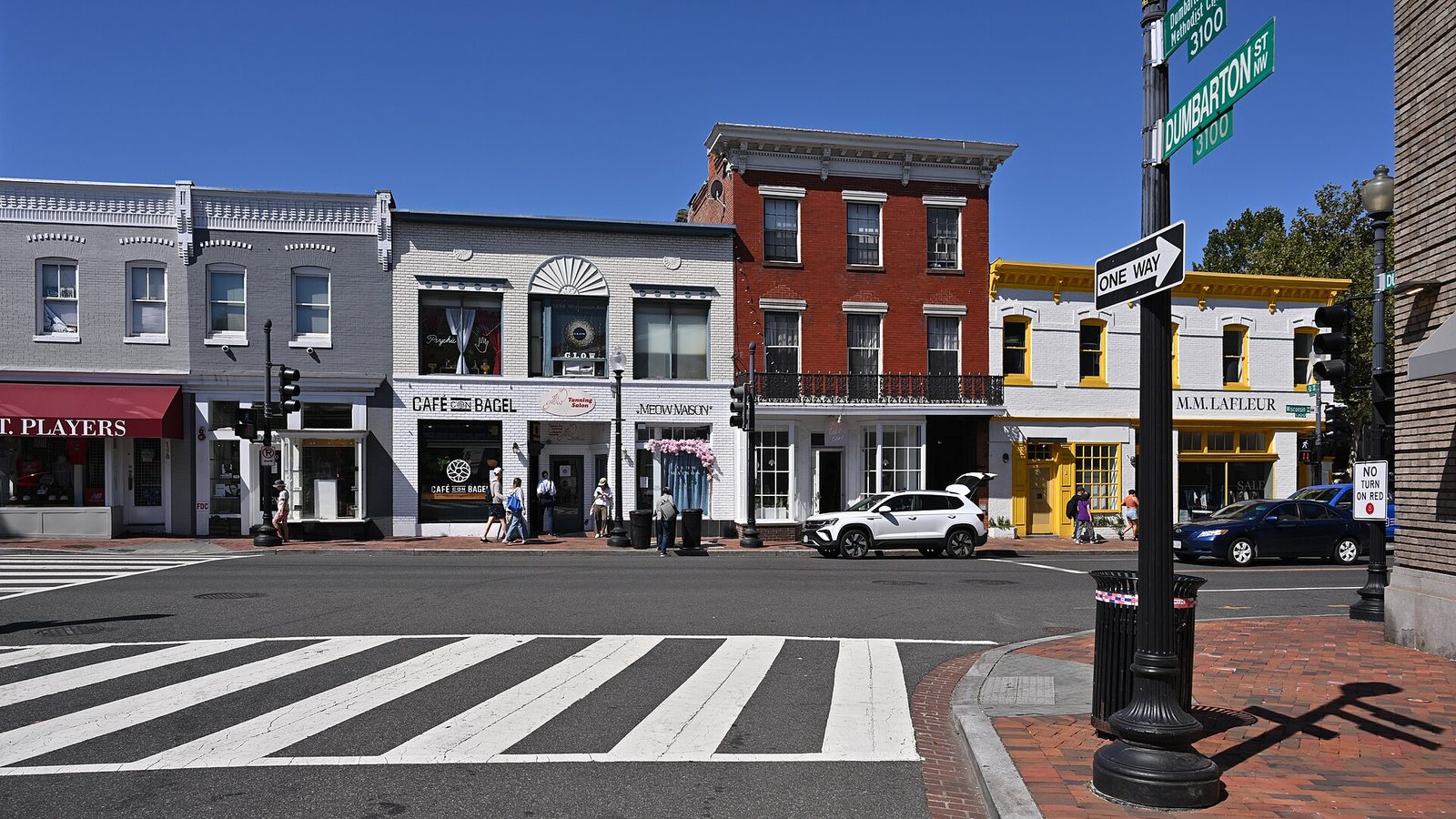
How can a judgment creditor reach a bank account in the capital region, and what do the exemptions cover?
After a creditor wins a judgment, it can ask the court for a process, called a garnishment, that directs a bank to hold funds, and each jurisdiction lists property that stays out of reach. The amounts are small compared with an operating account. The seizure guide and the frozen account guide explain how this works in the abstract. Here are the written numbers.
- Virginia. When a garnishment summons reaches a financial institution, a minimum protected balance, not exceeding $1,000 combined, is to be left available to the account holder with full and customary access. The amount adjusts for inflation from April 1, 2027. The text speaks of an account holder and does not address business accounts.
- Maryland. Section 11-504 exempts up to $500 in a deposit account without election, cash or property up to $6,000 if the debtor elects within 30 days of the attachment or levy (the $500 counts toward that cap), and up to $5,000 in tools and instruments needed for a trade or profession, except items kept for sale, lease or barter.
- The District. Section 15-501 exempts, for a head of family or householder, trade tools and professional books up to $1,625, which also applies to merchants, up to $850 in any property plus up to $8,075 of an unused residence exemption, and one motor vehicle up to $2,575.
Marcus’s account may hold $40,000 on a payroll morning. Against that, a $500 or $1,000 protected balance is a rounding error. Whether a company can use a protection written for a debtor or account holder is a question for the owner’s attorney, and so is how any of this interacts with a personal guarantee. The debtor rights guide is a place to start reading.
Myth If the contract names New York, the lawsuit has to be in New York.
Fact: For a covered contract with a Virginia recipient, Virginia law says a cause of action arising under it shall be brought in a court in the Commonwealth, and a term requiring suit elsewhere is unenforceable. Whether a contract is covered depends on its terms and the exemptions.
Myth Maryland banned confessed judgments.
Fact: Maryland’s highest court barred them in consumer contracts. Rule 2-611 still describes how a confessed judgment is entered and challenged, and its affidavit refers to consumer loans where the clause is prohibited. A lawyer decides how a business contract is classified.
Myth Federal interest on a late payment covers the debits while I wait.
Fact: At 4.75% for July through December 2026, interest on a $120,000 invoice paid 15 days late is $237.50, while the debits in that period can run past $12,000 in a hypothetical like Marcus’s.
Myth A state exemption keeps my business account safe.
Fact: Maryland protects $500 in a deposit account without election and up to $6,000 total if the debtor elects, and Virginia protects up to $1,000. Whether a company can claim them is for the owner’s attorney.
What do wage floors and payroll costs look like in 2026 and 2027?
Wage floors are the cost that moves on a published schedule, and they differ by jurisdiction. The District’s minimum wage rose from $17.95 to $18.40 an hour on July 1, 2026 for all employers regardless of size, and the base tipped wage rose from $10.00 to $10.30. Maryland’s state minimum is $15.00, but from July 1, 2026 Montgomery County requires $18.00 for employers with 51 or more employees, $16.50 for 11 to 50, and $15.95 for 10 or fewer. Prince George’s County requires $15.30 and Howard County $16.00.
$18.40
The District of Columbia minimum wage per hour from July 1, 2026, up from $17.95, for all workers regardless of employer size.
Source: D.C. Department of Employment Services, Office of Wage and Hour, Public Notice, 2026
Virginia is the one with a step scheduled for next year. Its minimum wage is $12.77 through the end of 2026, then $13.75 on January 1, 2027 and $15.00 on January 1, 2028, under legislation signed April 9, 2026. A full-time worker is about 2,080 hours a year. The 98-cent step in 2027 adds $2,038.40 per full-time worker, so a firm with 20 such workers adds $40,768 in annual payroll before taxes. In the District, the 45-cent step in July 2026 adds $936 per full-time worker. Tipped-wage rules differ again: Maryland’s minimum cash wage for tipped employees is $3.63, and Montgomery County requires at least $4.00 in direct pay.
Payroll comes on its own calendar, alongside the debit. A business that owes both can find a slow week arrives with two fixed obligations and no flexibility on either. The cash reserve guide describes a cushion built for that moment.
How do closures and seasons change a Washington sales curve?
Washington’s sales curve has sharp edges, because so much of it depends on federal offices being open and on visitors arriving. On Monday, January 26, 2026, the Office of Personnel Management announced that federal offices in the Washington area were closed, with maximum telework in effect, during a winter storm. A National Park Service release on March 5, 2026 projected Tidal Basin peak bloom between March 29 and April 1 and noted that blossoms typically remain on the trees for seven to 10 days once peak bloom begins. One is a lost day for a lunch counter near an agency; the other is a short, bright window.
Here is a hypothetical, with round numbers. A lunch counter near a federal office in Arlington sells $4,000 on a normal weekday and $900 on a closure day, and an advance debits $300 each day. On a normal day the debit is 7.5% of sales. On the closure day it is about one-third. Nothing about the contract changed; the sales curve did.
A fixed debit does not know it snowed. Look at your slowest week of the year, not your average one.
Seasonal owners should do this exercise in the quiet months, when there is time. The slow-season guide and the cash flow guide both work through it with a calendar.
What free business help exists in the capital region?
Several public and volunteer programs offer help with planning and cash flow, and none of them is connected to Hamilton & Merchant. The Maryland Small Business Development Center’s Corridor Region, which lists Montgomery and Prince George’s counties among others, says it provides free counseling and low-cost training to new and existing businesses. Fairfax County lists two Virginia small business development centers, the Community Business Partnership and Mason SBDC, and says these centers offer no-cost individualized consulting. The D.C. Small Business Development Center at Howard University describes itself as an accredited member of the national association, and the Howard University School of Business lists 202-806-1500 as its contact number.
SCORE Washington D.C. volunteers provide no-cost mentoring across the District, Prince George’s and Montgomery counties, and Northern Virginia; in fiscal year 2024 they helped 3,455 entrepreneurs in 8,000 mentoring sessions. For a lawyer, the D.C. Bar runs MyDCLawyer, a referral service with no charge to the person seeking a referral. None of these replaces an attorney licensed in your state when a lawsuit is involved. For choosing a debt-relief provider of any kind, the agency selection guide lists the questions to ask.
When should a Washington-area owner get help with merchant cash advance debt?
The signs can show up in the account before they show up in a conversation. Consider help when:
- a federal payment is late and the debits are not;
- you have two or more advances, or a renewal offer arrives before the last advance is repaid;
- you are using one advance to cover the debit of another;
- court papers, a notice of confessed judgment or a default notice arrive;
- the bank account is frozen or a funder is contacting your customers.
A first conversation with Hamilton & Merchant is free and confidential, and it happens by phone. It helps an owner understand the situation and the right kind of help; it is not legal or tax advice. Bring the contracts, the last three months of bank statements, a list of every advance with its daily or weekly debit, and any court papers. For a federal contractor, add the invoice dates and the agency’s payment dates. The how it works page describes the call, and the free diagnostic organizes the numbers beforehand.
On the call, expect questions rather than answers at first: how many advances there are, what each debits, which state the business is based in, whether any court paper has arrived, and whether anyone has signed a personal guarantee. The point is to sort the situation into what a lawyer should handle, what a CPA should look at, and what kinds of help are worth comparing. A one-page list gives the call something concrete to work from, whatever the next step turns out to be.
In a settlement program, the regular payments usually stop while each funder is negotiated, which puts the advances in default. Default can bring a lawsuit, added fees, damage to credit and a claim on any personal guarantee, so it is a decision to make with a lawyer and a CPA of your own, and not one to make alone. Some funders agree to a settlement and some don’t, and results vary. The personal guarantee guide explains the clause that creates the last of those risks.
Good help never promises a result, never charges before doing work, and never tells you to ignore a lawsuit. The vetting guide goes further.
Do this
- Bring the full paper trail to the first call.
- Ask who is licensed in your state.
- Write down the date every court paper was served.
Never do this
- Accept a promise about results.
- Pay up front for work not yet done.
- Ignore a summons, notice or default letter.
What should a Washington-area owner do this week?
Here is the order I would use, from the quickest steps to the ones that take a phone call.
- List every advance. Write the funder, the date, the amount, the daily or weekly debit, and the balance if you know it.
- Read three clauses in each contract. Find the forum clause, any confession of judgment or similar wording, and the personal guarantee. If your principal place of business is in Virginia, compare them with section 6.2-2234.
- Check for filings. Search your business name on Virginia’s court case information system, and on your local circuit clerk’s website, because Virginia has no statewide circuit search. In Maryland and the District, ask the clerk’s office how to search.
- Mark the dates. Add your next invoice due dates, the December 11, 2026 federal funding date, and January 1, 2027 for Virginia’s wage step.
- Run the numbers. Use the MCA cost calculator to turn each contract into a total cost.
- Call a lawyer licensed in your state, and consider the free resources above.
- Take a first conversation. Call Hamilton & Merchant for a free, confidential first conversation at (407) 993-1416.
If court papers arrive, write down the date and the way they were served, and take them to a lawyer that day. The default notice guide covers the first days.
Questions owners in Washington ask
What can a Washington-area business owner do about merchant cash advance debt?
Start by listing every advance with its daily or weekly debit, then gather the contracts and the last three months of bank statements and speak with a lawyer licensed in Virginia, Maryland or the District. Write down the date any court paper was served, because response deadlines are short. Hamilton & Merchant offers a free, confidential first conversation at (407) 993-1416.
Can a funder sue a Virginia business in New York?
Under Virginia Code section 6.2-2234, when a provider contracts with a Virginia recipient for sales-based financing, any cause of action arising under the contract must be brought in a court in the Commonwealth, and a term requiring suit elsewhere is unenforceable. Whether a given contract is covered depends on its terms and the statute’s exemptions, so a Virginia lawyer should read it.
How does a confessed judgment work in Maryland?
Under Maryland Rule 2-611, a creditor files a complaint with the written instrument and an affidavit, and the court directs the clerk to enter judgment if the papers comply. The defendant may then move to open, modify or vacate within the time for answering: 30 days after service, or 60 days if served outside Maryland but inside the United States. Maryland’s highest court barred the clauses in consumer contracts in 2020.
How long do I have to answer a lawsuit in Virginia, Maryland or Washington, D.C.?
In Virginia circuit court a response is due 21 days after service, and in the Civil Division of D.C. Superior Court it is also 21 days. In Maryland circuit court it is 30 days, or 60 days if served outside Maryland but inside the United States. A Virginia general district court summons states its own requirements. Count from the date of service and show the papers to a lawyer that day.
Does a late federal payment earn interest for a government contractor?
On a federal contract the standard due date is the 30th day after the billing office receives a proper invoice, or after acceptance if later. Interest then runs from the day after the due date at 4.75% for July 1 through December 31, 2026, on a 360-day year, unless a dispute over the amount delays payment. Interest compensates a late payment; it does not cover the gap in cash.
What does a bank leave in the account when a creditor garnishes it in Virginia or Maryland?
Virginia directs a bank, on receiving a garnishment summons, to hold exempt up to a combined $1,000 for the account holder, with full and customary access; the text does not address business accounts. Maryland section 11-504 exempts up to $500 in a deposit account without election. Whether a company can use either is a question for the owner’s attorney.
Running a business in the capital region?
Call Hamilton & Merchant at (407) 993-1416 for a free, confidential first conversation, or send us a message. Hamilton & Merchant is based in Orlando, Florida, and is not a law firm; nothing on this page is legal or tax advice.
Sources
- U.S. Census Bureau, Vintage 2025 Metropolitan Area Population Estimates, 2026.
- U.S. Bureau of Labor Statistics, Economy at a Glance: Washington-Arlington-Alexandria, September 2026.
- U.S. Bureau of Labor Statistics, Washington-Arlington-Alexandria nonfarm employment, September 2026.
- Federal Reserve Bank of Richmond, Recent Employment Changes in the DC Area, July 17, 2025.
- Destination DC, Washington, DC sees slight growth in visitation in 2025, May 6, 2026.
- Code of Virginia, Sections 6.2-2228 through 6.2-2238, Sales-Based Financing.
- ClearValue Lending, 50-State Comparison of merchant cash advance laws, 2026 (secondary source).
- Maryland General Assembly, Senate Bill 881 (2026 Regular Session).
- Maryland Rules, Rule 2-611, Confessed Judgment, and Rule 2-321, 2026 compilation.
- Financial Services Perspectives, Maryland Court of Appeals Bars Confessed Judgment Clauses in Consumer Contracts, February 2020.
- Code of Virginia, Section 16.1-77 and Section 17.1-513.
- Supreme Court of Virginia, Order amending Rule 3:8, June 18, 2025.
- Maryland Judiciary, About the District Court.
- District of Columbia Code, Section 11-1321 and Section 15-501; D.C. Superior Court Civil Rule 12.
- Virginia’s Judicial System, Find a Case.
- Code of Virginia, Section 34-4.3; Maryland Code, Courts and Judicial Proceedings, Section 11-504.
- D.C. Department of Employment Services, Public Notice: District of Columbia Minimum Wage Increase, 2026.
- Maryland Department of Labor, Maryland Minimum Wage and Overtime Law.
- Virginia Department of Labor and Industry, Minimum Wage Rate Increasing Effective January 1, 2026; Office of the Governor, News release, April 9, 2026.
- Committee for a Responsible Federal Budget, Government Shutdowns Q&A.
- Brownstein Hyatt Farber Schreck, CR Signed, Sealed and Delivered: Government Reopens, November 2025.
- The White House, Congressional Bill H.R. 6500 Signed into Law, September 2, 2026.
- Federal Acquisition Regulation, 32.904 and 52.249-2; 5 CFR 1315.10.
- U.S. Department of the Treasury, Bureau of the Fiscal Service, Prompt Payment.
- FedSmith, Winter Storm Prompts DC-Area Office Closures on Monday, January 24, 2026.
- National Park Service, News Release on cherry blossom peak bloom, March 5, 2026.
- Maryland Small Business Development Center, Corridor Region; Fairfax County, Entrepreneurship Ecosystem Portal; Howard University School of Business, Small Business Development Center.
- Patch, SCORE Washington D.C. Mentors Support Small Business Community; D.C. Bar, Lawyer Referral Service.