
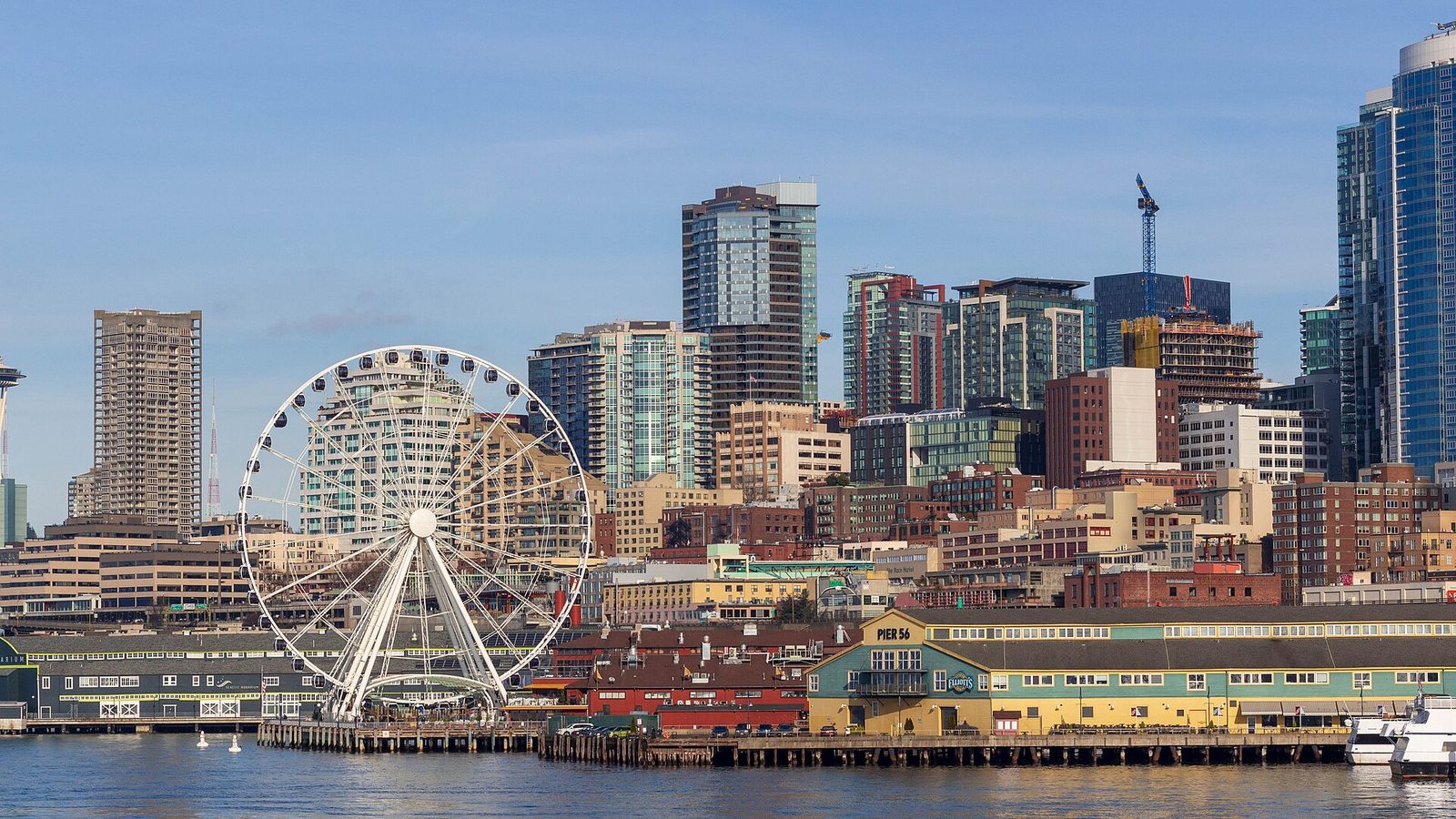
A business owner in the Seattle area can respond to merchant cash advance debt by first measuring what leaves each sale before the advance does, then gathering the contracts and bank statements for a free, confidential first conversation. In Washington that measurement starts with B&O tax on gross receipts, owed even in a month with no profit, and a $21.30 hourly wage floor inside Seattle. The worry is familiar: sales dip, and the debit still arrives.
Picture an owner like Marisol, who runs a 45-seat restaurant in Seattle with the equivalent of ten full-time employees and about $1.2 million in yearly sales. She is a composite, not a real client, and every number tied to her is hypothetical and rounded. She took two advances, one with a $500 daily debit and one with a $300 daily debit, and she now spends her mornings comparing the bank balance with the week’s taxes and payroll.
I will take it in the order an accountant would: define each term, put the costs in order, and work the arithmetic with round numbers. Washington has its own order of costs, and in it the gross-receipts tax sits ahead of profit. I will say plainly where the law is settled and where you need your own Washington attorney or CPA, because Hamilton & Merchant is not a law firm or a CPA firm and nothing here is legal or tax advice.
What does the Puget Sound economy look like for a business carrying daily debits?
It swings with the seasons, and that swing is what a fixed daily debit has to absorb. In the Seattle-Tacoma-Bellevue metro, leisure and hospitality employment ran 201.6 thousand in April 2026, 216.5 thousand in July and 208.4 thousand in September (preliminary), so about 15,000 more people worked in that sector in July than in April.
The metro’s unemployment rate was 4.9 percent for September 2026 (preliminary), with mining, logging and construction combined at 124.4 thousand jobs and manufacturing at 167.9 thousand. Construction is not counted on its own in that figure, so I will not split it out either.
Two port industries add to the seasonal picture. The Port of Seattle’s 2026 cruise season ended on Sunday, October 18, after 330 ship calls and nearly 2 million revenue passengers, with an estimated $1.2 billion in regional economic benefit and more than 5,120 direct and indirect jobs. And the Port’s fishing facilities, which began with Fishermen’s Terminal as its first operational property in 1914, were used by 275 commercial fishing vessels in 2023, about 209 of them fishing in Alaska, and commercial fishing at the Port directly supported nearly 5,800 jobs.
A restaurant near the waterfront, a supplier to the fishing fleet and a contractor working through the winter months run on different calendars, but a fixed amount pulled on a fixed schedule does not follow any of them. Restaurants and contractors are the two groups this page returns to most, and Hamilton & Merchant has guides for each at restaurants and contractors.
How does Washington’s B&O tax work in a month with no profit?
Washington’s business and occupation (B&O) tax is a gross receipts tax, which means it is figured on what the business takes in, not on what it keeps. The Department of Revenue says plainly that businesses cannot deduct expenses, so a month with a loss is still a month with a return to file and tax to pay.
The rate depends on the classification of the income. For 2026 the state lists retailing at 0.471 percent and wholesaling at 0.484 percent. Service and other activities carry three tiers set by the prior year’s income: 1.5 percent under $1 million, 1.75 percent from $1 million to $4,999,999 and 2.1 percent at $5 million or more, a three-rate structure in place since October 1, 2025. On January 1, 2027 the retailing rate in the statute becomes 0.5 percent.
Restaurant sales of prepared food fall under retailing. Take Marisol’s January: she rings up $70,000 in sales and loses money after paying staff, rent and food suppliers. Her state B&O is $70,000 multiplied by 0.00471, or $329.70, and it is the same $329.70 whether the month ends in the black or the red.
Washington’s B&O tax measures the top line, so the month you lose money is still a month you owe it.
The state also has a sales tax that restaurants collect from customers, with a state share of 6.50 percent in the fourth quarter of 2026. That money belongs in a different category from B&O, a point I return to below. How payments on an advance are treated on the return itself is covered in Merchant Cash Advance Taxes, and your own CPA should confirm how it applies to your books.
Does Seattle’s $2 million threshold change who owes the city’s B&O tax?
Yes, for the city tax. Effective January 1, 2026, Seattle raised its B&O threshold from $100,000 to $2 million. A business under the threshold owes no Seattle B&O tax for the year, but it still has to file a return reporting $0, and it still needs its annual business license.
$2 million
Seattle’s B&O threshold since January 1, 2026, up from $100,000; below it the tax is zero, but a $0 return is still required.
Source: City of Seattle, Seattle Shield Business & Occupation (B&O) Tax Changes, 2026
Above the threshold, a standard deduction of up to $2 million applies, taken against the highest-rate classification first. It cannot create a credit and it does not carry to the next year. The city’s own example: $2.1 million of taxable revenue less $2 million leaves $100,000 taxable. The 2026-through-2032 city rates are 0.342 percent for retail, wholesale and manufacturing and 0.658 percent for service and other business activities. As a worked case, a retailer with $2.5 million in taxable revenue would have $500,000 taxable and owe $500,000 times 0.00342, or $1,710.
Marisol’s $1.2 million is under the line, so her Seattle B&O is $0 and her state B&O is not. The threshold belongs to the city. The state tax in the previous chapter has no matching $2 million line.
Cities outside Seattle set their own rules. Tacoma, for example, runs its own gross receipts tax on gross income, with no deductions for labor, materials or other costs, and lists 0.4 percent for apportioned service income. An owner in Tacoma, Bellevue or Kent should read that city’s finance page and ask a CPA, because a business can owe a state return and a city return at once.
What do Seattle’s wage floor and leave premiums add to payroll?
They add a fixed layer of cost that moves each January. Seattle’s minimum wage is $21.30 an hour in 2026, up from $20.76, and the city has announced $22.14 for January 1, 2027, adjusted for inflation using the CPI-W for the Seattle-Tacoma-Bellevue area. The state minimum is $17.13 in 2026 and rises 3.5 percent to $17.73 in 2027.
$21.30
Seattle’s hourly minimum wage in 2026; it becomes $22.14 on January 1, 2027.
Source: City of Seattle Office of Labor Standards, 2026 and 2027 minimum wage announcements
Local rules differ inside the metro. Washington’s Department of Labor & Industries lists Tukwila at $21.65 an hour for covered employers in 2026, and unincorporated King County at $19.82 for employers with 16 to 499 employees and $18.32 for the smallest employers with under $2 million in gross revenue. Each place defines employer size its own way, so an owner on the Eastside or in South King County should check that jurisdiction before trusting a Seattle figure.
Paid Family and Medical Leave (PFML) adds a premium on wages: 1.13 percent in 2026, split 28.57 percent employer and 71.43 percent employee, and 1.2 percent from January 1, 2027, split 29.3 percent and 70.7 percent. Employers with fewer than 50 employees do not have to pay the employer share unless they opt in, but they must still collect the employee share or pay it on the employees’ behalf.
Workers’ compensation in Washington is also counted by hours worked; employers pay about 75 percent of the premium and workers about 25 percent. The 2026 average cost rose 4.9 percent, and L&I has proposed another 4.9 percent average increase for 2027, with final rates scheduled for adoption on November 30.
For Marisol, ten full-time equivalents at exactly $21.30 for 2,080 hours each is $443,040 a year, or $36,920 a month. At $22.14 the yearly figure is $460,512, which is $17,472 more, or $1,456 a month. The total PFML premium on that payroll is about $5,000 at 1.13 percent and about $5,500 at 1.2 percent; with fewer than 50 employees the employer share is optional, though the employees’ share still has to be collected. These are floors for illustration, not a statement of what any real restaurant pays. If payroll itself becomes the pressure, When Payroll Is Short covers the first steps.
How does a fixed daily debit sit against Seattle’s sales curve?
A fixed debit takes the same dollars in every month, so it takes a larger share of the weak months. A worked example with round, hypothetical numbers shows the gap.
Say Marisol’s sales, before sales tax, are $120,000 in July and $70,000 in January. Her two advances debit $500 and $300 a day, $800 together, and the debits run on 22 business days a month, so $17,600 leaves the account each month. In July that is 14.7 percent of sales. In January it is 25.1 percent.
Now stack the costs in order for January. Sales of $70,000 less the $17,600 in debits leaves $52,400. The state B&O of $329.70 and the $36,920 floor payroll from the last chapter come next, which leaves about $15,150 for food, rent, utilities, insurance, repairs and everything else. In January 2027 the wage step takes another $1,456 out of that. None of these numbers describes a real business; they show how the order of costs works.
One caution belongs here. A stopped debit can put an advance in default, and default can bring four risks: a lawsuit, added fees, damage to credit, and a claim on any personal guarantee. So the useful question is not how to make a debit stop but what the contract says about adjusting debits when receipts fall. A contract may include a reconciliation clause, and The MCA Reconciliation Right explains how to read yours. For the seasonal side, see Slow Season MCA Payments.
Which state taxes come due first, and what does a late filing cost?
Your state excise tax return comes due on a schedule set by the Department of Revenue, and a late payment adds a percentage penalty. How often you file depends on tax liability or estimated gross Washington income: annual tax liability of $1,050 or less files annually, $1,051 to $4,800 quarterly, and above $4,800 monthly. By income, annual filing covers $0 to $60,000 and monthly begins at $60,000, though construction and restaurants have no annual option.
Monthly returns are due on the 25th, quarterly returns at the end of the month after the quarter, and annual returns on April 15. Penalties under the statute are 9 percent if the payment is not received by the due date, 19 percent if it is not received by the last day of the following month, and 29 percent after the second month. On Marisol’s $329.70, that is about $30, then about $63, then about $96.
The state small business credit softens the tax for the smallest filers. It is $55 for each month of the reporting period for standard filers and $160 for filers reporting at least half their income under service and other activities and a few other listed classifications. If the monthly tax is above the maximum, the credit equals twice the maximum minus the tax, so it reaches zero at $110 of monthly tax, or $320 for the second group. By my arithmetic, a retailer reaches $110 of tax at about $23,355 of monthly sales, so a restaurant at Marisol’s size gets none. The statute lists higher amounts from January 1, 2029, so check the Department of Revenue’s current credit table each year.
If tax goes unpaid and a tax warrant is on file, the Department of Revenue can issue a notice and order to withhold and deliver to a person holding the taxpayer’s property. A bank must answer it in writing within 20 or 30 days and deliver the property on demand. That is why the state return belongs on the calendar as a fixed date.
Quick check
A Bellevue consulting firm took in $800,000 last year and expects about the same this year. Which state B&O rate applies to its service income?
See the answer
The 1.5 percent tier. The service and other activities rate is set by the prior year’s income, and $800,000 is under $1 million. If the firm had reached $1 million but stayed under $5 million, the rate would be 1.75 percent.
What are trust fund taxes, and who can be personally liable for them?
A trust fund tax is money you collect from someone else and hold for the government, such as the retail sales tax a restaurant adds to a check. It is not the business’s own income, which is why Washington treats it differently from B&O tax, and why the question of who pays it first matters when cash is thin.
Under RCW 82.32.145, when the Department of Revenue has issued a warrant for unpaid trust fund taxes and the entity is terminated, dissolved, abandoned or insolvent, it may pursue responsible individuals, meaning current or former officers, managers, members, partners and trustees who had the duty to remit. For responsible individuals other than chief executives and chief financial officers, the statute applies only if the failure to pay was willful, which it defines as an intentional, conscious and voluntary course of action. Chief executives and chief financial officers are treated more strictly, and the statute applies to them regardless of fault.
That rule is a reason to know who in your business signs the returns. Whether any of it applies to you is a question for a Washington CPA or attorney. The general principle that some creditors come first is laid out in The Creditor You Always Pay First.
How did the 2024 Boeing strike show up in the regional economy?
It showed up in the state’s job count within weeks. About 33,000 Boeing machinists in the Pacific Northwest struck from September 13, 2024, and voted on November 4, with 59 percent in favor, to accept a contract after 53 days.
30,700
The drop in Washington aerospace employment in October 2024, during the machinists’ strike.
Source: Washington Employment Security Department, November 2024 Monthly Employment Report
The Employment Security Department’s first estimate for October 2024 was a loss of 35,900 jobs statewide, seasonally adjusted, with aerospace down 31,000, and it called the drop largely a reflection of the now-resolved strike. The October figure was later revised to 33,600. Then November brought an estimated gain of 30,900 jobs, and the department’s chief labor economist described deep, temporary losses in October followed by large gains in November.
I include these numbers as facts about timing and nothing more. The point for an owner is the mismatch: a debit schedule is set in a contract, while a customer’s plant schedule is not. An owner who sells to the aerospace sector, or to the restaurants and shops around it, can use the same worksheet from the sales-curve chapter and plug in the weeks when orders paused.
What do Washington’s disclosure rules say about merchant cash advances?
This page does not rely on any Washington commercial-financing disclosure statute. Disclosure rules for commercial financing are set state by state, and they differ. The research page on state commercial financing and MCA laws tracks what has been enacted, and a Washington-licensed attorney can tell you what, if anything, applies to your contract.
A merchant cash advance is sold as a purchase of future receivables, and courts look at the actual terms of a contract to decide how to treat it. The glossary at the MCA glossary defines factor rate, holdback and the other terms in one place.
Where could a funder sue a Washington business, and how big can the case be?
A suit could be filed in a Washington court, or in a court the contract names, which can be in another state. Read the venue and governing-law paragraphs of each contract, and read them before you need them. If a judgment is entered elsewhere, Washington lets the holder file an authenticated copy with a superior court clerk, or with a district court clerk if it fits that court’s jurisdiction, and the clerk treats it like a Washington judgment.
| Item | What the law or rule says | Where it comes from |
|---|---|---|
| King County Superior Court | All civil filings must be made electronically; cases go to the Seattle area (north of I-90) or the Kent area (south); for other civil cases the area is where the defendant resides | King County Local Civil Rule 82 |
| District court | Civil claims up to $100,000, not counting interest, costs and attorneys’ fees | RCW 3.66.020 |
| Small claims | $10,000 if a natural person sues; $5,000 in all other cases | RCW 12.40.010 |
| Out-of-state judgment filed here | No execution until 10 days (superior court) or 14 days (district court) after proof of mailing of the notice | RCW 6.36.035 |
| Life of a judgment | 10 years, renewable for 10 more on timely application; generally no more than 20 years from entry | RCW 6.17.020 |
| Interest | The contract rate if the contract provides for interest and the judgment states it; a judgment outside the listed categories (such as child support, tort and consumer debt) bears the maximum rate under RCW 19.52.020 | RCW 4.56.110 |
Because the small claims limit when a business is the plaintiff is $5,000, a larger claim is filed in district court or superior court, and both have rules and deadlines for answering. If you receive court papers, the deadline printed on them matters more than any other date in your week. Out-of-State MCA Judgments explains the cross-border piece, and the MCA lawsuit guide covers the first steps after service.
Can a confession of judgment be used in Washington?
Washington has a statute for it, so the question is not academic. A confession of judgment is a signed statement in which a defendant agrees that a court may enter judgment for a stated sum. Under chapter 4.60 RCW, judgment may be entered on the defendant’s confession with the plaintiff’s assent, in an action before or after answer, and a judgment by confession may be entered without an action.
The statement has requirements. It must be in writing, signed by the defendant and verified under oath, must authorize judgment for a specified sum, and must concisely state the facts that created the debt and show the amount is justly due or to become due. Whether a confession clause in a particular contract can be used against a particular owner, and what defenses exist, is a matter for a Washington attorney. If your paperwork contains one, Confession of Judgment in MCA Contracts shows where to look.

How does a judgment creditor reach a bank account in Washington?
Through a writ of garnishment, which is a court document directed to the bank. After a judgment, the clerk of a superior or district court can issue the writ to a judgment creditor whose judgment is wholly or partly unsatisfied in that court. The bank is then required to hold funds up to a limit set by statute.
Under RCW 6.27.090 that limit is the unpaid judgment plus accrued interest, taxable costs, attorney fees and estimated garnishment costs, and the court can set a higher amount for good cause. The creditor must mail the writ, its affidavit and, for an individual debtor, a notice and claim form by certified mail on or before the date it serves the bank.
The clock for an exemption claim is short. A defendant claims an exemption by filing with the clerk not later than 28 days after the date stated on the writ. The creditor has 7 days after receipt to object, and a hearing is set within 14 days. The defendant carries the burden of proving the exemption, including documents that show the source and amount of the exempt funds. If you are served, bring the account statements to your attorney the same day.
Prejudgment garnishment is a separate track under chapter 6.26 RCW, with its own grounds, such as an attachment issued under chapter 6.25 RCW or a suit on a debt that is due, owing and unpaid, and a plaintiff whose writ was wrongfully obtained can owe the defendant actual damages. Frozen Business Bank Account and What an MCA Funder Can Seize walk through what an owner sees on the day it happens.
What do Washington’s exemptions protect?
They protect set amounts of an individual’s property, and the amounts are small next to a business account. RCW 6.15.010 exempts up to $3,000 of other personal property, and for debts other than private student loan and consumer debt, no more than $500 of that can be bank accounts or securities. For consumer debt the bank-account allowance is $2,000. The same statute exempts, for an individual, tools and supplies used in a trade up to $15,000, one motor vehicle up to $15,000 and household goods up to $6,500.
Look at the statute’s wording: it speaks of an individual and of his or her trade. It does not describe the account of a company that is a separate legal entity. How these exemptions apply to an owner who signed a personal guarantee, to a sole proprietor, or to a company’s own account is exactly the question for a Washington attorney, and I will not predict an outcome. For wages, RCW 6.27.150 states a general rule of the greater of 35 times the federal minimum hourly wage or 75 percent of disposable earnings, with different formulas in other subsections. Starting July 1, 2027, the Department of Revenue must adjust the RCW 6.15.010 personal-property amounts for inflation every three years.
Myth A slow month with no profit means no business tax is due to the state.
Fact: The B&O tax is figured on gross receipts, and the Department of Revenue says businesses cannot deduct expenses. A month with a loss still has a return and a payment.
Myth Seattle’s $2 million threshold means a small business owes no business tax anywhere.
Fact: The threshold applies to the city B&O tax. The state B&O has no such line; its small business credit is $55 or $160 per month and phases out at twice that amount in tax. A Seattle business under $2 million still files a $0 city return.
Myth A judgment from a New York court has no effect in Washington.
Fact: Washington lets an authenticated out-of-state judgment be filed with a superior or district court clerk and treats it like a Washington judgment. Execution waits 10 days in superior court or 14 days in district court after proof of mailing of the notice.
Myth The $500 bank account exemption covers a business’s account.
Fact: The $500 figure sits inside RCW 6.15.010’s $3,000 personal-property exemption for an individual. Your attorney decides how it applies to a company account or a guarantor.
What free public help exists around Puget Sound?
Three public or nonprofit resources are worth knowing about, and none of them is affiliated with Hamilton & Merchant. The Washington Small Business Development Center network offers one-on-one, confidential, no-cost advising on all phases of small business development. Washington State University hosts the program with the U.S. Small Business Administration, and advisors are often located at community colleges, economic development agencies or government agencies.
SCORE Greater Seattle is a nonprofit group of volunteer mentors, and its mentoring is described as free. Neither is a substitute for your own attorney or CPA, but either may be a place to get a second look at a cash-flow forecast.
For a lawyer, the Washington State Bar Association’s Legal Directory shows license information and discipline history, and every person who practices law in Washington must be licensed and in good standing with the bar. Use its advanced search to filter to those currently eligible to practice, then ask about experience with commercial debt before you hire. For tips on judging any outside help, see How to Find a Debt Relief Agency.
When should a Seattle-area owner get help with merchant cash advance debt?
Get help when the debits and the fixed costs together no longer fit inside your deposits, and before a lawsuit, a levy or a missed tax deadline forces the pace. For a business here, the concrete signs are these:
- The weakest month of the year no longer covers its debits, payroll and B&O together, and you have used money meant for taxes to cover a debit.
- You took a new advance to pay an existing one, or you have more than one debit leaving the account each day.
- A debit bounced, or a funder has sent a default notice, a demand letter or court papers.
- You signed a personal guarantee and no longer know what it exposes.
- Payroll or a state return was late or short, or you are weighing whether to skip one.
Hamilton & Merchant is based in Orlando, Florida, with no office in the Seattle area, so the first conversation happens by phone. You can call (407) 993-1416 for a free, confidential first conversation that helps you understand your situation and the right kind of help. It is not legal advice, and Hamilton & Merchant is not a law firm or a CPA firm. The call covers what you owe, to whom, on what schedule, and what kinds of options exist. The how it works page describes the call in more detail, and the free MCA diagnostic and MCA cost calculator help you gather numbers beforehand.
What to bring is short: every contract and any renewal paperwork, the last three months of bank statements, a list of each advance with its daily or weekly debit, any court papers or default letters, and your latest B&O and payroll filings.
Good help does this
- Explains the options in plain words and says what it cannot know.
- Tells you to bring your own Washington attorney and CPA in where the law or your return is concerned.
- Asks for the documents before it discusses a path.
Good help never does this
- Promises a result, a timeline or a number.
- Charges before any work is done.
- Tells you to ignore a lawsuit or court papers.
In a settlement program, regular payments stop while each funder is negotiated, which puts the advances in default. That raises the four risks again: a lawsuit, added fees, damage to credit, and a claim on any personal guarantee. Some funders agree to a settlement and some don’t, and results vary. How the process works in general is in How to Settle With an MCA Funder.
A good first call is about paperwork: you leave knowing what you owe, to whom, and what questions to take to your own attorney.
If you compare notes with owners in other states, the San Francisco Bay Area page sets out California’s rules, and the Denver page sets out Colorado’s.
What should a Seattle-area owner do this week?
- List every advance: the funder, the start date, the debit amount, how often it is pulled and the balance if the contract states one. Put the list on one page.
- Download the last three months of bank statements and mark each debit.
- Find your latest state excise tax return and your city return. If you are under Seattle’s $2 million line, confirm that the $0 return and the business license are in order. In Tacoma or another city, check that city’s tax office for its own rules.
- Search your business name and your own name in the King County Superior Court Clerk’s online portal, which covers cases filed from July 1979 to the present. If your business is in Pierce County, check that county’s clerk for its own search system.
- Write the January 1, 2027 changes on the calendar: Seattle $22.14, state $17.73, PFML 1.2 percent and the retailing B&O rate of 0.5 percent. Redo the monthly worksheet with those numbers.
- Look up a Washington attorney and a CPA in the WSBA directory and with your state’s CPA board, and book a first meeting with each.
- Take the free MCA diagnostic or call for the free, confidential first conversation, and bring the list from step one.
For a wider view of your rights in a collection, see Your Rights as a Debtor, and for how the personal guarantee is read, see Personal Guarantees: The Four Words.
Questions owners in Seattle ask
Do I owe Washington B&O tax if my Seattle business loses money?
Yes. Washington’s B&O tax is a gross receipts tax figured on gross income, and the Department of Revenue says businesses cannot deduct expenses, so a month with a loss still has a return and a payment. Restaurant sales of prepared food fall under retailing, listed at 0.471 percent for 2026 and set at 0.5 percent in the statute from January 1, 2027. A Washington CPA can say how it applies to your books.
Does Seattle’s $2 million threshold mean I skip the city B&O return?
No. Effective January 1, 2026, Seattle raised its B&O threshold from $100,000 to $2 million. A business under it owes no Seattle B&O tax but must still file a return reporting $0 and keep its annual business license. The threshold belongs to the city; the state B&O tax has no matching $2 million line, so a state return and payment can still be due.
What is the minimum wage in Seattle for 2026 and 2027?
Seattle’s minimum wage is $21.30 an hour in 2026, up from $20.76, and the city has announced $22.14 for January 1, 2027, adjusted using the CPI-W for the Seattle-Tacoma-Bellevue area. The state minimum is $17.13 in 2026 and $17.73 in 2027. Other places set their own rates; Tukwila lists $21.65 for covered employers, so check the jurisdiction where your employees work.
How does a judgment creditor garnish a business bank account in Washington?
After a judgment, the clerk of a superior or district court can issue a writ of garnishment to a creditor whose judgment is unsatisfied, and the bank must hold funds up to the unpaid judgment plus interest, costs, attorney fees and estimated garnishment costs. A defendant claims an exemption by filing within 28 days after the date on the writ and must prove it. Your own Washington attorney decides how the law applies to you.
Can a funder sue me in Washington, and which court would hear it?
A suit could be filed in a Washington court or in a court the contract names, which can be in another state. Washington district courts hear civil claims up to $100,000, not counting interest, costs and attorneys’ fees, and the small claims limit is $5,000 when the plaintiff is not a natural person. A judgment from another state can be filed with a Washington clerk and treated like a Washington judgment.
Where can a Seattle-area owner find public help with business debt?
The Washington Small Business Development Center network offers one-on-one, confidential, no-cost advising, and SCORE Greater Seattle describes its volunteer mentoring as free. Neither is affiliated with Hamilton & Merchant or a substitute for your own attorney or CPA. The WSBA Legal Directory shows license status and discipline history. Hamilton & Merchant offers a free, confidential first conversation at (407) 993-1416.
Running a business around Puget Sound?
Call Hamilton & Merchant at (407) 993-1416 for a free, confidential first conversation, or send us a message. Hamilton & Merchant is based in Orlando, Florida, and is not a law firm; nothing on this page is legal or tax advice.
Sources
- City of Seattle Office of Labor Standards, Office of Labor Standards Announces Seattle's 2026 Minimum Wage, September 30, 2025.
- City of Seattle Office of Labor Standards, 2027 minimum wage announcement, September 28, 2026.
- Washington Department of Labor & Industries, Washington's minimum wage rises to $17.73 an hour in 2027, September 30, 2026.
- Washington Department of Labor & Industries, Local minimum wage rates.
- Washington Employment Security Department, Paid Family & Medical Leave premium rate increases to 1.13% in 2026.
- Washington Employment Security Department, Paid Family & Medical Leave premium rate increases to 1.2% in 2027, October 16, 2026.
- Washington Department of Labor & Industries, Workers' comp rate for 2026, and proposed 2027 rate, September 22, 2026.
- Washington Department of Revenue, Business & occupation tax, and B&O tax classifications.
- Washington Department of Revenue, Service and Other Activities rate changes.
- Washington Department of Revenue, Filing frequencies & due dates.
- Washington Department of Revenue, Restaurants and retailers of prepared food, and Local sales & use tax rate table.
- Washington State Legislature, RCW 82.04.250, RCW 82.04.4451, RCW 82.32.090, RCW 82.32.145, RCW 82.32.235.
- City of Seattle, Seattle Shield Business & Occupation (B&O) Tax Changes, Director's Rule 5-013, and Tax Rates and Classifications.
- City of Tacoma, Business & Occupation (B&O) Tax.
- Washington State Legislature, RCW 6.15.010, RCW 6.27.020, RCW 6.27.090, RCW 6.27.130, RCW 6.27.150, RCW 6.27.160, RCW 6.26.010.
- Washington State Legislature, RCW 4.60.010, RCW 4.60.060, RCW 3.66.020, RCW 12.40.010, RCW 6.36.025, RCW 6.36.035, RCW 6.17.020, RCW 4.56.110.
- King County Superior Court, Local Civil Rule 82, and King County Department of Judicial Administration, records access.
- PBS NewsHour, Boeing factory strike ends as union workers vote to accept contract, November 2024.
- Washington Employment Security Department, October 2024 Monthly Employment Report, and November 2024 Monthly Employment Report.
- U.S. Bureau of Labor Statistics, Economy at a Glance: Seattle-Tacoma-Bellevue, WA.
- Port of Seattle, 2026 cruise season results, October 19, 2026, and Commercial fishing.
- Highline College Business Development Center, About Small Business Development Center; Coastal Community Bank, SCORE; Washington State Bar Association, How to find a lawyer using WSBA's Legal Directory.